Kumaraswamy urges auto sector to deepen EV localisation, PLI hits ₹45,477 crore
Synopsis
India's EV ambition got a policy reality check at ACMA's 66th session: Heavy Industries Minister H.D. Kumaraswamy told the auto sector that EV success isn't just a sales number — it's about how much technology India designs, how many MSMEs plug into new supply chains, and whether Indian products can win in global markets. With PLI investments crossing ₹45,477 crore and 67,000 jobs logged, the framework is showing results, but the harder push for deep localisation is just beginning.
Key Takeaways
Kumaraswamy addressed the 66th ACMA annual session in New Delhi on 2 September , urging deeper EV localisation and technology investment.
The automotive PLI scheme recorded cumulative investments of ₹45,477 crore and created more than 67,000 jobs as of 30 June 2026 .
The minister called for India to lead — not merely participate in — the global mobility transition, with an emphasis on export-oriented product development.
The Ministry of Heavy Industries will continue working with ACMA and SIAM to improve PLI implementation and address operational issues.
The auto component sector's MSME ecosystem feeds upstream industries including steel, electronics, engineering, chemicals, and logistics.
Kumaraswamy linked the sector's growth to India's Viksit Bharat 2047 developed-nation goal.
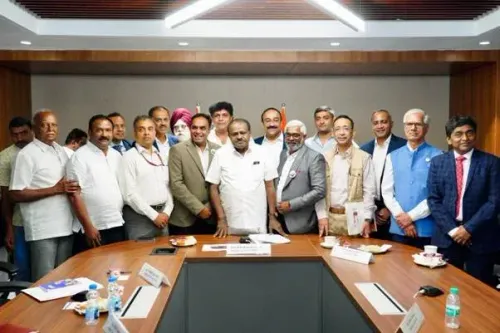
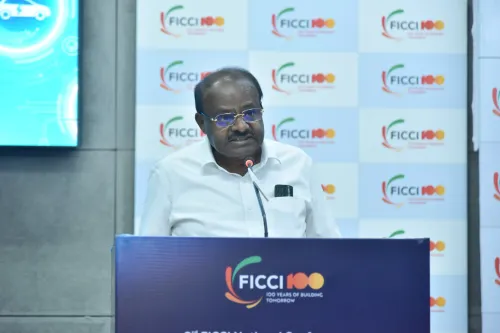
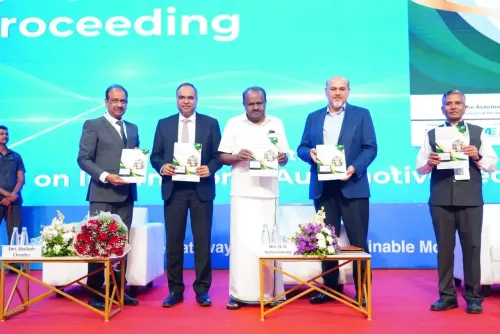
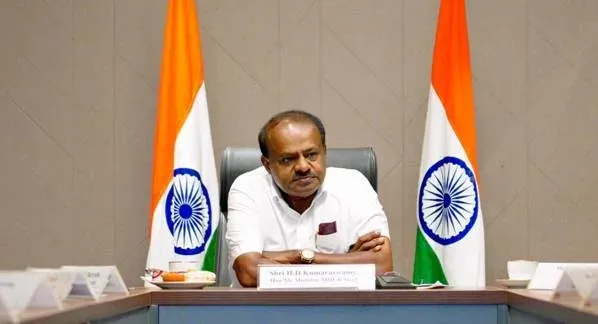
Union Minister for Heavy Industries H.D. Kumaraswamy on Wednesday, 2 September called on India's automotive and auto component industry to sharply scale up investments in technology, design, and domestic value addition, asserting that the country's electric mobility transition must be measured by far more than the number of electric vehicles sold. The minister made the remarks while addressing the 66th annual session of the Automotive Component Manufacturers Association (ACMA) in New Delhi.
Key Developments at the ACMA Session
Kumaraswamy laid out a multi-dimensional vision for India's next phase of mobility transformation — one centred on building industrial scale, deepening domestic localisation, accelerating innovation, and positioning India as a globally competitive hub for advanced and green mobility technologies. His address came as the automotive sector continues to navigate the twin pressures of a global EV transition and intensifying competition from Chinese and South Korean component makers.
'Our success cannot be measured only by the number of electric vehicles sold. It must also be measured by how much technology is designed in India, how much value is added domestically, how many MSMEs participate in the new supply chains and how effectively Indian products compete in global markets,' Kumaraswamy said.
PLI Scheme: Progress on the Ground
The minister cited concrete progress under the Production-Linked Incentive (PLI) scheme for the automobile and auto component industry. As of 30 June 2026, approved applicants under the scheme had reported cumulative investments of ₹45,477 crore, generating more than 67,000 employment opportunities, according to the minister. He described these results as 'encouraging', signalling that the scheme is gaining traction even as critics have historically questioned whether PLI disbursements translate into proportionate job creation.
Notably, this investment figure places the automotive PLI among the better-performing segments of the broader PLI programme, which spans multiple sectors. The auto component industry's MSME ecosystem — which anchors millions of livelihoods and feeds upstream sectors including steel, electronics, engineering, chemicals, logistics, and services — stands to benefit most from sustained domestic value addition.
The Push for Global Competitiveness
Kumaraswamy urged automobile and auto component manufacturers to invest 'more boldly' in cleaner, more efficient, and emerging technologies, with an explicit export orientation. 'India should not merely participate in the global mobility transition; India should help lead it,' he said. The call echoes a broader government push to convert India's large domestic market into a springboard for global supply chain integration — a goal that has gained urgency as Western original equipment manufacturers (OEMs) diversify away from China.
Ministry's Commitment and the Road Ahead
The Ministry of Heavy Industries committed to continuing its engagement with industry bodies, including ACMA and the Society of Indian Automobile Manufacturers (SIAM), to improve scheme implementation, resolve operational bottlenecks, and foster a more investment-friendly environment. Kumaraswamy linked these efforts to India's broader ambition of achieving developed-nation status by 2047. With global EV supply chains still being redrawn, the window for India to embed itself as a high-value manufacturing node remains open — but industry observers argue it will not stay open indefinitely.
Point of View
Not just units sold — is the right diagnostic, but the prescription remains vague. The PLI numbers (₹45,477 crore invested, 67,000 jobs) are headline-worthy, yet the automotive sector's localisation levels for critical EV components such as battery cells and power electronics remain dangerously low. India risks repeating its solar panel experience, where assembly scaled rapidly but core manufacturing stayed offshore. The minister's call to 'lead' the global transition needs a concrete localisation roadmap — not just exhortation — if it is to move industry beyond incremental compliance with PLI milestones.
NationPress
2 Sept 2026
Frequently Asked Questions
What did Minister H.D. Kumaraswamy say at the ACMA session?
Kumaraswamy urged the automotive and auto component industry to invest more in technology, design, and domestic value addition, saying India's EV transition should not be judged solely by vehicle sales numbers. He called on the sector to build scale, deepen localisation, and position India as a globally competitive hub for green mobility technologies.
How is the PLI scheme performing for the auto sector?
As of 30 June 2026, approved applicants under the automotive PLI scheme had reported investments of ₹45,477 crore and created more than 67,000 employment opportunities, according to the minister. He described these as 'encouraging results', indicating the scheme is gaining momentum.
Why does the minister say EV success cannot be measured only by sales?
Kumaraswamy argued that genuine progress in electric mobility requires measuring how much technology is designed in India, how much value is added domestically, how many MSMEs are integrated into new supply chains, and how competitive Indian products are in global markets — not just the volume of EVs sold.
Which industry bodies is the Ministry of Heavy Industries working with?
The Ministry of Heavy Industries has committed to working with the Automotive Component Manufacturers Association (ACMA) and the Society of Indian Automobile Manufacturers (SIAM) to improve PLI scheme implementation, resolve operational issues, and create a more investment-friendly environment.
How does the auto sector connect to India's broader economy?
The automotive and auto component industry supports millions of livelihoods and anchors a large MSME ecosystem. It also has a multiplier effect across upstream and downstream sectors including steel, electronics, engineering, chemicals, logistics, and services, making it central to India's industrial growth.