India must lead clean energy tech production, says HD Kumaraswamy at CII summit
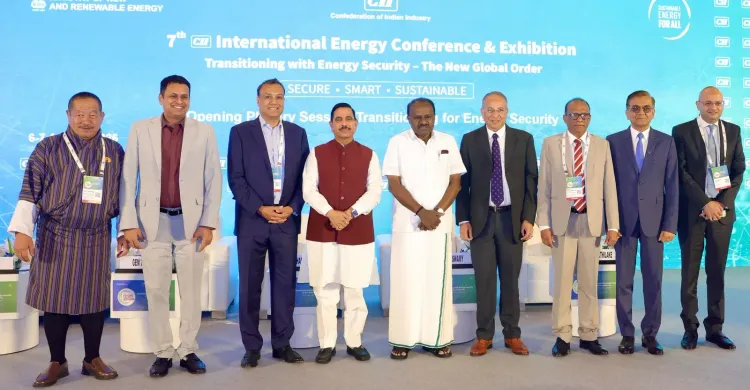
Synopsis
India's Steel and Heavy Industries Minister HD Kumaraswamy used the CII Energy Conference to lay out an ambitious case: India must stop being a consumer of clean energy technologies and start being their manufacturer. Backed by ₹18,100 crore in battery PLI, a ₹10,900 crore EV push, and a ₹7,280 crore rare earth magnets scheme, the policy architecture is substantial — but execution remains the defining challenge.
Key Takeaways
Kumaraswamy delivered the keynote at the 7th CII International Energy Conference in New Delhi on 6 August , calling India to become a global clean energy technology producer.
The PM E-DRIVE Scheme carries a ₹10,900 crore outlay to build complete electric mobility industrial ecosystems.
The PLI Scheme for Advanced Chemistry Cell Batteries commits ₹18,100 crore to establish 50 GWh of domestic battery manufacturing capacity.
A ₹7,280 crore scheme targets domestic manufacturing of Sintered Rare Earth Permanent Magnets to cut import dependence.
India is the world's second-largest steel producer ; the minister described steel as the backbone of the clean energy transition.
The minister called for collaboration across government, industry, academia, and finance, framing the strategy under Aatmanirbhar Bharat .
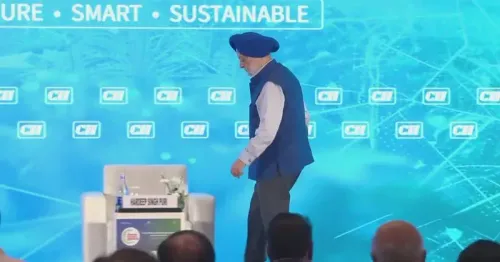
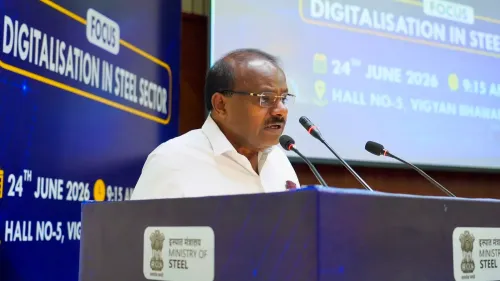
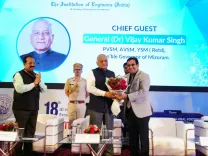
Union Minister for Steel and Heavy Industries H.D. Kumaraswamy on Thursday, 6 August called on India to emerge as a global producer of clean energy technologies, arguing that in a rapidly shifting world, national strength is defined not by energy access alone but by the capacity to manufacture, innovate, and build resilient supply chains. He was delivering the keynote address at the Special Plenary Session on 'Energy Security and Supply Chains' at the 7th CII International Energy Conference and Exhibition in New Delhi.
India's Manufacturing Ambition in Clean Energy
Kumaraswamy outlined India's strategy to become a global manufacturing hub for clean energy technologies under the leadership of Prime Minister Narendra Modi, stressing that industrial capability and energy security are now inseparable goals. He noted that recent geopolitical disruptions, supply chain shocks, and intensifying competition for critical minerals have fundamentally reshaped global industrial priorities.
'India should not merely become one of the world's largest consumers of clean energy technologies. India must become one of the world's leading producers of the equipment, materials and technologies that will drive the global energy transition,' the minister said.
Steel as the Backbone of Energy Transition
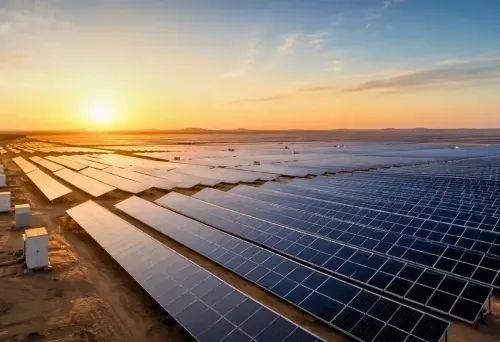
Describing steel as foundational to the clean energy shift, Kumaraswamy said every major investment — from solar parks and wind turbines to transmission networks, battery facilities, ports, and green hydrogen projects — depends fundamentally on steel. As the world's second-largest steel producer, India is well positioned to meet both domestic infrastructure demands and growing global appetite for sustainable steel, he said.
The minister also stressed the urgency of transitioning to Green Steel, calling low-carbon steel production both an environmental necessity and an economic imperative. The Union government is promoting renewable energy deployment in steel manufacturing, energy-efficient technologies, and accelerated decarbonisation across the steel value chain.
Key Schemes: PM E-DRIVE and PLI for Batteries
On the heavy industries front, Kumaraswamy highlighted the PM E-DRIVE Scheme, with a financial outlay of ₹10,900 crore, as reflecting the Centre's integrated approach to building complete industrial ecosystems rather than simply encouraging vehicle adoption. The scheme simultaneously generates demand and strengthens domestic manufacturing, localisation, and supply chain resilience, he said.
He also drew attention to the Production Linked Incentive (PLI) Scheme for Advanced Chemistry Cell Batteries, under which the Union government has committed ₹18,100 crore to establish 50 GWh of domestic battery manufacturing capacity — a move aimed at reducing dependence on imported battery technologies.
Critical Minerals and Rare Earth Magnets
Recognising that access to critical minerals has become a strategic necessity, the minister said India is actively strengthening domestic capabilities while expanding international cooperation in rare earths, advanced materials, and mineral processing. He cited the ₹7,280 crore Scheme for Promotion of Manufacturing of Sintered Rare Earth Permanent Magnets as a major step towards reducing import dependence and securing supply chains across automotive, defence, renewable energy, and aerospace sectors.
Call for Broader Collaboration
Kumaraswamy called for deeper collaboration between government, industry, academia, research institutions, and financial organisations, asserting that resilient supply chains cannot be built through policy interventions alone. The minister framed India's overarching approach as rooted in the vision of Aatmanirbhar Bharat — building globally competitive domestic manufacturing while remaining integrated with trusted international value chains. With multiple large-scale schemes now operational, the policy architecture is in place; execution and cross-sector coordination will determine whether India meets its clean energy manufacturing targets.
Point of View
Supply chains, and strategic autonomy. Yet the gap between scheme announcements and on-ground manufacturing capacity remains wide: India's battery PLI, for instance, has seen slower-than-projected uptake. The rare earth magnets scheme addresses a genuine vulnerability — China controls an overwhelming share of global rare earth processing — but domestic mineral processing expertise is still nascent. The minister's call for government-industry-academia collaboration is correct in diagnosis; what is missing is a credible accountability mechanism to track whether these outlays translate into actual manufacturing output rather than committed capacity on paper.
NationPress
20 Sept 2026
Frequently Asked Questions
What did HD Kumaraswamy say at the CII Energy Conference?
Union Minister H.D. Kumaraswamy said India must become a global producer of clean energy technologies, not just a consumer. Speaking at the 7th CII International Energy Conference in New Delhi on 6 August, he outlined schemes worth over ₹36,000 crore across batteries, electric mobility, and rare earth magnets to build domestic manufacturing capacity.
What is the PM E-DRIVE Scheme?
The PM E-DRIVE Scheme is a Central government initiative with a financial outlay of ₹10,900 crore designed to build complete electric mobility industrial ecosystems. According to Kumaraswamy, it simultaneously generates demand for EVs and strengthens domestic manufacturing, localisation, and supply chain resilience.
How much has the government committed to battery manufacturing under the PLI scheme?
The Union government has committed ₹18,100 crore under the PLI Scheme for Advanced Chemistry Cell Batteries to establish 50 GWh of domestic battery manufacturing capacity. The goal is to reduce India's dependence on imported battery technologies.
What is India's rare earth permanent magnets scheme?
The ₹7,280 crore Scheme for Promotion of Manufacturing of Sintered Rare Earth Permanent Magnets aims to reduce India's import dependence and secure critical supply chains for the automotive, defence, renewable energy, and aerospace sectors. Kumaraswamy described it as a major step towards strategic supply chain security.
Why is steel central to India's clean energy transition?
According to Kumaraswamy, steel underpins every major clean energy investment — from solar parks and wind turbines to transmission networks, battery facilities, and green hydrogen projects. As the world's second-largest steel producer, India is positioned to meet both domestic and global demand for sustainable steel.