Nvidia Backs US Manufacturing, Supply Chains and Energy
Synopsis
Nvidia declared on 1 July 2026 that the company and its partners are investing in American manufacturing, supply chains, energy grids, and skilled workforces. The statement aligns with the CHIPS and Science Act's $52 billion push to reshore semiconductor production and reduce US dependence on Asian foundries amid intensifying tech competition with China.
Key Takeaways
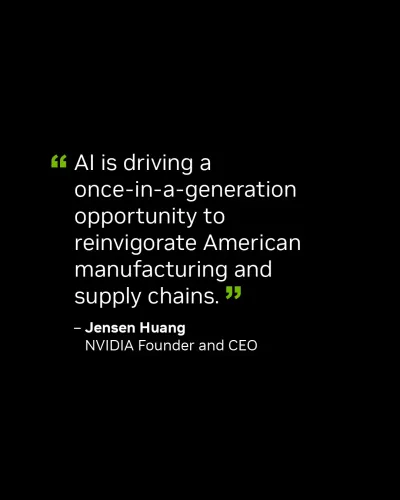
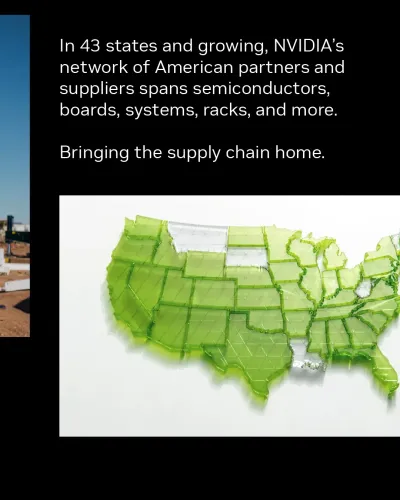
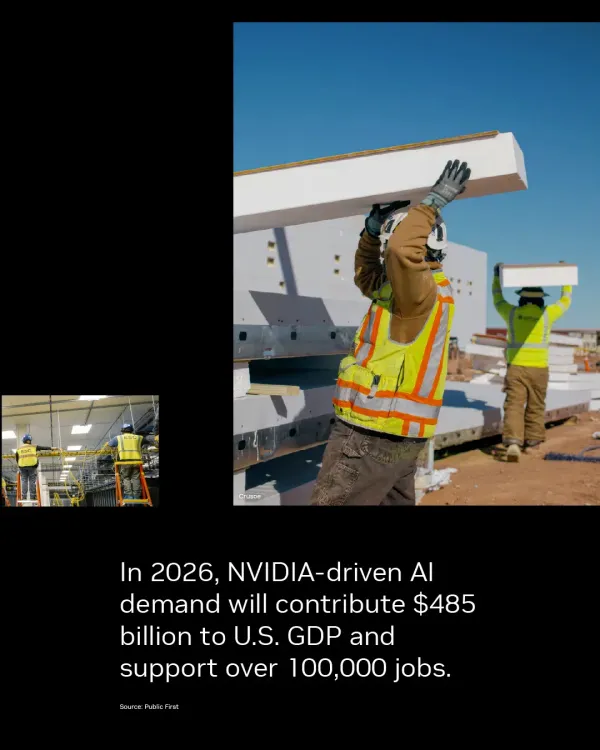
Nvidia publicly committed on 1 July 2026 to investing alongside partners in American manufacturing, supply chains, energy grids, and skilled workforces .
The commitment aligns with the CHIPS and Science Act of 2022 , which authorised $52 billion in federal subsidies to reshore semiconductor production.
Energy grid investment is a critical component, as AI data centres and chip fabs are among the most power-intensive industrial operations in the US.
TSMC's Arizona fabs — which manufacture chips for Nvidia — represent a key node in the domestic supply chain Nvidia's investments are designed to support.
Similar domestic investment pledges have been made by Intel and Samsung , reflecting a broader industry alignment with US industrial policy.
Concrete figures on partners and capital commitments are yet to be disclosed; Commerce Department grant awards will be a key indicator to watch.
Chip giant Nvidia reaffirmed on Wednesday, 1 July 2026 that the company and its partners are channelling investments into American manufacturing, supply chains, energy grids, and skilled workforces, signalling a deepening alignment with Washington's industrial policy agenda.
Context
In a post on X, Nvidia stated: 'NVIDIA and our partners are investing in American manufacturing, supply chains, energy grids, and skilled workforces.' The statement is notably broad, covering four pillars — production capacity, logistics resilience, power infrastructure, and human capital — that together underpin a domestic semiconductor ecosystem.
The post arrives at a moment when US technology policy is intensely focused on reducing dependence on Asian chip foundries. Nvidia, headquartered in Santa Clara, California, is the dominant supplier of data-centre accelerators and graphics processing units globally, making its investment posture a bellwether for the wider industry.
Policy Backdrop
The backdrop is the CHIPS and Science Act of 2022, which authorised $52 billion in federal subsidies and tax credits to reshore semiconductor manufacturing and expand research and development inside the United States. The law is administered by the US Department of Commerce, which has been awarding grants to firms that commit to building or expanding domestic facilities.
An earlier Executive Order on America's Supply Chains (2021) had already directed a government-wide review of critical technology dependencies, including semiconductors and energy infrastructure. Nvidia's stated focus on energy grids is particularly salient: advanced chip fabrication and AI data centres are among the most power-intensive industrial operations, and grid capacity has emerged as a binding constraint on expansion plans across the sector.
Taiwanese foundry giant TSMC — which manufactures advanced chips for Nvidia — has separately announced multiple fabrication plants in Arizona under CHIPS Act incentives, creating a supply-chain node that Nvidia's own investment commitments are designed to complement.
Stakeholders and Impact
The constituencies most directly affected span several sectors. Semiconductor workforce programmes stand to benefit from Nvidia's pledge on skilled labour, as the industry faces a well-documented shortage of trained technicians and engineers. US energy utilities are being drawn into the chip-manufacturing buildout as demand for reliable, high-capacity power grows alongside data-centre construction.
AI data-centre operators — who are among Nvidia's largest customers — have a direct stake in the stability of domestic supply chains, since disruptions to chip availability translate immediately into delayed deployments of artificial-intelligence infrastructure. Nvidia's public commitment reinforces investor and customer confidence that supply will keep pace with surging demand.
The broader pattern mirrors commitments made by Intel and Samsung, both of which have leveraged CHIPS funding for US expansion. Nvidia's statement positions the company alongside those peers in the national industrial-policy conversation, even as Nvidia's own chip designs are fabricated externally rather than in company-owned fabs.
What's Next
Analysts and policymakers will watch for Commerce Department grant awards to Nvidia's manufacturing and supply-chain partners, as well as state-level permitting decisions for new energy infrastructure tied to chip plants. The specifics of which partners are involved, and the scale of capital committed, remain to be detailed in subsequent disclosures.
As US-China technology competition continues to shape export-control regimes and investment screening, Nvidia's domestic manufacturing posture will remain under close scrutiny from both Washington and global markets. The company's next earnings call and any formal CHIPS Act filing will be key moments for concrete figures to emerge.
Point of View
Supply chains, energy, and workforce is a carefully calibrated corporate signal — one that echoes the language of US industrial policy almost verbatim. By framing the commitment as a joint effort with 'partners,' Nvidia is positioning itself as an orchestrator of a broader ecosystem rather than a lone actor, which matters politically as CHIPS Act grant decisions hinge on ecosystem-level impact. The emphasis on energy grids is telling: it acknowledges that the bottleneck in America's AI-infrastructure race is no longer just silicon, but power. This statement, arriving mid-2026, suggests Nvidia is actively managing its regulatory and political relationships in Washington as export controls and supply-chain legislation continue to evolve.
NationPress
1 Jul 2026
Frequently Asked Questions
What is Nvidia investing in inside the United States?
Nvidia has stated it and its partners are investing in American manufacturing, supply chains, energy grids, and skilled workforces, covering the full industrial stack needed to support domestic chip and AI-infrastructure production.
How does the CHIPS Act relate to Nvidia's US investment plans?
The CHIPS and Science Act of 2022 authorised $52 billion in federal subsidies to reshore semiconductor manufacturing. Nvidia's investment posture aligns with the law's goals, and its manufacturing partners — including foundries like TSMC — have received or sought CHIPS Act funding for US facilities.
Does Nvidia manufacture its own chips in the United States?
Nvidia designs its chips but relies on external foundries, most notably TSMC, for fabrication. TSMC is building multiple fabs in Arizona under CHIPS Act incentives, which form part of the domestic supply chain Nvidia references.
Why is energy grid investment important for Nvidia and chip manufacturing?
Advanced semiconductor fabs and AI data centres are among the most power-intensive industrial operations. Grid capacity has become a binding constraint on expansion, making energy infrastructure investment a central pillar of any serious domestic chip-manufacturing strategy.
Which other companies have made similar US manufacturing commitments?
Intel and Samsung have both pledged significant US manufacturing investments and are leveraging CHIPS Act funding, placing them alongside Nvidia in the broader US industrial-policy push to reduce reliance on Asian chip supply chains.