Nvidia Unveils OpenShell Architecture to Fence AI Agents
Synopsis
Nvidia CEO Jensen Huang has introduced the OpenShell Reference Architecture, a framework that lets enterprises set hard behavioural boundaries for AI agents and cut them off the moment they overstep — marking Nvidia's move from AI compute provider to AI governance layer.
Key Takeaways
Nvidia announced the OpenShell Reference Architecture on 21 October 2026 .
The framework enables businesses to define operational boundaries for autonomous AI agents and enforce an immediate stop when those limits are breached.
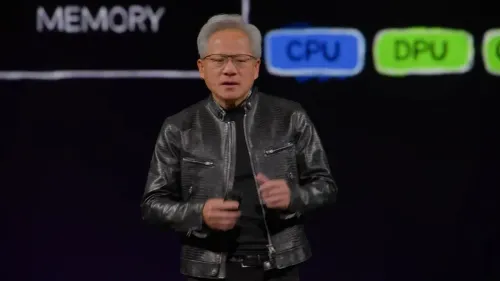
Jensen Huang , Nvidia CEO, introduced the architecture, framing it as a global agent-security solution.
The announcement targets enterprises deploying agent-based AI across live workflows, where containment failures carry real business and reputational risk.
Nvidia positions OpenShell as a practical deployment guardrail, distinct from regulatory compliance tools.
Enterprise adoption metrics and partner integrations will determine whether OpenShell becomes a de facto industry standard.
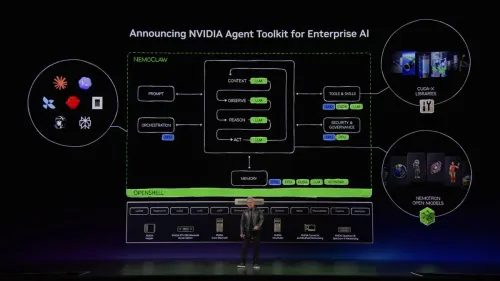
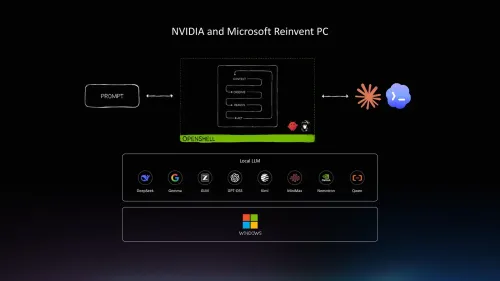
AI agents are powerful — and increasingly hard to stop once they start running. On Wednesday, 21 October 2026, chip giant Nvidia announced the OpenShell Reference Architecture, a framework designed to let businesses draw hard boundaries around autonomous AI agents and shut them down the moment they stray outside those limits.
What OpenShell Actually Does
Jensen Huang, Chief Executive Officer of Nvidia Corporation, introduced the architecture as a practical answer to one of enterprise AI's sharpest pain points: containment. As businesses deploy AI agents across workflows — scheduling, coding, customer service, supply-chain decisions — the question of 'what happens when the agent does something it shouldn't' has moved from a theoretical worry to a boardroom priority. OpenShell positions itself as the guardrail layer that answers that question with an enforceable 'stop'.
According to Nvidia's announcement, the architecture helps enterprises 'set boundaries for AI agents and stop them when they step outside those boundaries.' The framing is deliberately operational, not regulatory — this is about deployment control, not compliance paperwork.
Why Agent Containment Has Become Urgent
The push for AI guardrails has been building since autonomous, agent-based workflows began proliferating in earnest in the early 2020s. Large language models evolved from answering questions to executing multi-step tasks across live systems — booking, writing, transacting — and each new capability added a new category of risk. The industry has responded with a wave of safety-layer tooling, and Nvidia, already the dominant supplier of AI compute infrastructure, is now staking a claim in the governance layer that sits above the silicon.
Reference architectures are a well-worn Nvidia move: provide a blueprint that partners can build on, accelerate enterprise adoption, and deepen platform lock-in. OpenShell follows that playbook, but the target — not raw performance, but behavioural constraint — marks a meaningful shift in what Nvidia considers its product surface.
What Enterprises and Developers Should Watch Next
The real test of OpenShell will be adoption metrics and the depth of partner integrations that follow. Reference architectures live or die by the ecosystem that builds on top of them. If major cloud providers and enterprise software vendors plug into the framework, it could become the de facto standard for agent security — giving Nvidia influence over how AI systems are controlled, not just how they are powered.
For Indian enterprises accelerating AI deployment — from IT services giants in Bengaluru to financial-services firms in Mumbai — a credible containment standard from a trusted infrastructure provider could clear a significant procurement hurdle. Safety guarantees are often the last blocker before large-scale agent rollout.
Huang's two-word closing framing — 'Securing agents around the world' — signals that Nvidia intends OpenShell not as a niche add-on, but as a global infrastructure layer. Whether the architecture delivers on that ambition depends on the technical documentation, the partner list, and the first real-world deployments that follow this announcement.
Point of View
And by offering a reference architecture rather than a finished product, Nvidia is playing the platform game: define the standard, let the ecosystem build on it, and deepen your indispensability. For Indian IT and BFSI sectors racing to deploy autonomous agents, a credible safety standard from the dominant AI infrastructure provider could accelerate procurement decisions significantly.
NationPress
21 Oct 2026
Frequently Asked Questions
What is Nvidia OpenShell Reference Architecture?
OpenShell is a framework introduced by Nvidia CEO Jensen Huang that allows businesses to set behavioural boundaries for AI agents and automatically stop them if they operate outside those boundaries.
Why do AI agents need containment or boundary frameworks?
Autonomous AI agents execute multi-step tasks across live business systems. Without hard limits, an agent can take unintended actions — triggering transactions, sending communications, or modifying data — making containment a critical safety and compliance requirement.
How does Nvidia's OpenShell differ from AI safety regulations?
OpenShell is an operational deployment tool, not a compliance instrument. It gives enterprises direct technical control over agent behaviour at runtime, independent of any government regulatory framework.
Will OpenShell affect Indian enterprises using AI agents?
Indian IT services and financial-services companies deploying AI agents could adopt OpenShell as a governance layer, potentially clearing safety-related procurement blockers for large-scale agent rollouts.
What should enterprises watch for after the OpenShell announcement?
Key signals will be the release of detailed technical documentation, announcements of cloud or software partner integrations, and early enterprise adoption case studies that test the architecture in production environments.