Nvidia Vera Rubin GPU Enters Full Production With Microsoft

Synopsis
Nvidia has confirmed its Vera Rubin GPU architecture is in full production, crediting Microsoft teams for the milestone. The launch marks the next step in Nvidia's multi-year GPU cadence following the Blackwell generation, with major implications for Azure-based AI workloads.
Key Takeaways
Nvidia officially confirmed on August 21, 2026 that the Vera Rubin GPU architecture has entered full production.
Nvidia publicly credited Microsoft teams for enabling the production ramp milestone.
Vera Rubin is the successor to the Blackwell architecture, which itself entered production in 2025 .
Hyperscalers like Microsoft co-engineer rack systems, cooling, and software stacks alongside Nvidia chips — not just buy them.
Full production status means Rubin-based capacity on Azure is expected to expand for enterprise AI customers in the coming quarters.
The next chapter in AI infrastructure just went live. Chip giant Nvidia confirmed on Friday, August 21, 2026 that its Vera Rubin GPU architecture has ramped into full production — and it called out Microsoft by name for making the milestone happen.
The post, shared on Nvidia's official X account, reads: 'NVIDIA Vera Rubin is ramping into full production. Congrats to the teams at Microsoft who made this exciting milestone happen.' The phrasing is deliberate — this is not a roadmap tease or a lab demo. Full production means chips are moving.
Vera Rubin: The Architecture That Follows Blackwell
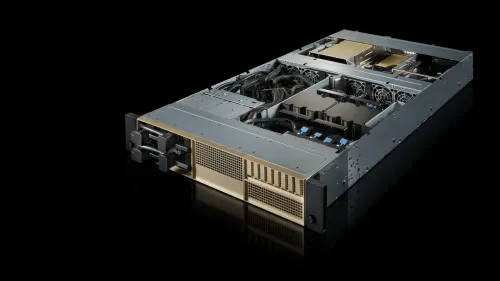
Nvidia has operated on a relentless multi-year cadence of GPU generations, each one tuned for larger, more demanding AI models. Blackwell, the architecture that succeeded the Hopper generation, entered its own production ramp in 2025. Vera Rubin is the next step — named, in Nvidia's tradition, after a pioneering scientist. Each new generation does not simply offer more raw compute; it reshapes what AI workloads are even possible to run at scale. For hyperscalers — the cloud giants who absorb the bulk of Nvidia's output — early access to a new architecture is a competitive weapon. Getting Vera Rubin into production first is not a ceremonial ribbon-cutting. It is a capacity advantage that ripples directly into what enterprise customers can build and deploy on the cloud.Why Microsoft's Role Matters Here
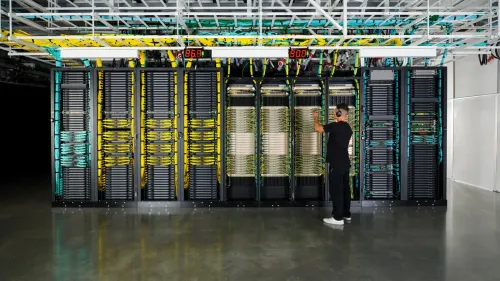
Nvidia singling out Microsoft is significant. Major cloud providers do not simply order chips and wait for delivery — they co-engineer the surrounding systems: the rack designs, the cooling infrastructure, the networking fabric, and the software stack that makes a GPU cluster actually run. Microsoft's Azure platform has been a flagship destination for Nvidia's AI compute, and that partnership clearly extended deep into the Vera Rubin ramp. The acknowledgement signals that this was not a solo sprint. It was a coordinated push between Nvidia's silicon teams and Microsoft's infrastructure engineers — the kind of collaboration that compresses the gap between 'chip announced' and 'chip available to customers.'What Enterprise AI Customers Should Watch Next
With Vera Rubin in full production, the near-term signals to track are Rubin-based system announcements at major industry events and updates to Azure's capacity tiers for enterprise customers. When a new Nvidia generation hits production, the downstream effect — new model capabilities, lower inference costs, expanded availability — typically follows within quarters, not years. Nvidia has, once again, moved the line forward. The question now is how fast the rest of the industry catches up.Point of View
Not a vendor transaction. Each new Nvidia architecture arriving faster than the last compresses the window rivals have to close the compute gap. For India's growing cohort of AI-native startups and enterprises building on Azure, Vera Rubin entering production is a leading indicator: next-generation inference capacity will arrive on hyperscaler shelves sooner than prior cycles suggested. The real story is not just a new chip — it is the industrialisation of AI infrastructure at a pace that is rewriting competitive timelines across the entire industry.
NationPress
22 Aug 2026
Frequently Asked Questions
What is Nvidia Vera Rubin?
Vera Rubin is Nvidia's next-generation GPU architecture, succeeding the Blackwell generation that entered production in 2025. It is designed for large-scale AI workloads in data centres.
Why did Nvidia thank Microsoft for the Vera Rubin production milestone?
Microsoft co-engineered the systems — including rack design, cooling, and software infrastructure — needed to bring Vera Rubin into full production on its Azure cloud platform, making it a joint milestone rather than Nvidia's alone.
What does 'full production' mean for Nvidia Vera Rubin?
Full production means chips are being manufactured and deployed at scale, moving beyond early samples or limited availability. It signals that cloud providers can begin expanding customer access.
How does Vera Rubin affect Azure AI services?
With Vera Rubin in full production, Microsoft Azure is expected to offer expanded AI compute capacity based on the new architecture, enabling more powerful and potentially more cost-efficient AI workloads for enterprise customers.
What comes after Nvidia Blackwell?
Vera Rubin is the GPU generation that follows Blackwell in Nvidia's multi-year architecture cadence, continuing the company's pattern of naming chips after pioneering scientists.