Nvidia Vera Rubin AI Platform Enters Full Production

Synopsis
Nvidia has declared its Vera Rubin platform — a pod-scale, multi-rack AI system built for agentic workloads — in full production as of June 2026, succeeding the Blackwell generation and signalling a major step forward in integrated AI infrastructure availability.
Key Takeaways
Nvidia confirmed on 1 June 2026 that the Vera Rubin AI platform is now in full production , moving beyond preview availability.
The platform is a multi-rack, pod-scale system designed specifically for agentic AI workloads requiring autonomous, multi-step reasoning.
Vera Rubin unifies five connected rack-scale systems , including the Nvidia Vera Rubin NVL72 and Vera CPU rack , built through 'extreme co-design'.
The platform succeeds Nvidia's Blackwell architecture, continuing the company's multi-year GPU generation cadence from Hopper through Blackwell to Rubin.
Primary beneficiaries include cloud providers, hyperscalers, and enterprise data-centre operators building next-generation AI infrastructure.
Deployment announcements and performance benchmarks from major cloud providers will be key indicators of the platform's commercial uptake.
Chip giant Nvidia announced on Monday, 2 June 2026 that its Vera Rubin platform — a multi-rack, pod-scale AI infrastructure system — has entered full production, marking the transition from hardware preview to volume availability for data-centre operators and cloud providers worldwide.
What Is the Vera Rubin Platform?
The Vera Rubin platform is Nvidia's next-generation AI compute architecture, succeeding the Blackwell generation unveiled in 2024. Named after the pioneering astronomer whose research on galaxy rotation curves transformed astrophysics, the platform is purpose-built to handle agentic AI — systems capable of autonomous, multi-step reasoning and action rather than simple inference.
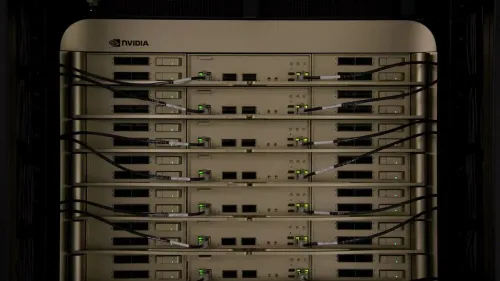
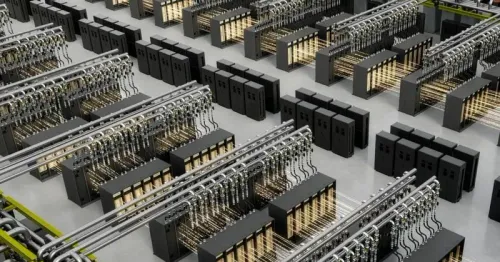
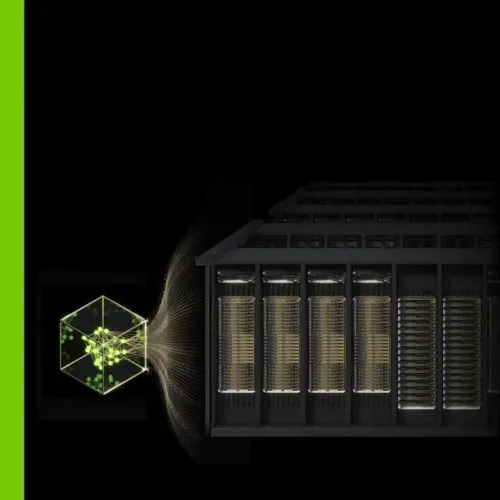
According to Nvidia's post, the platform is 'built through extreme co-design' and unifies five connected rack-scale systems, including the Nvidia Vera Rubin NVL72 and the Vera CPU rack. The architecture integrates tightly coupled compute, networking, and memory resources at pod scale, a design philosophy Nvidia has pursued progressively since the Hopper generation.
Context: Nvidia's Platform Cadence
Nvidia has maintained an aggressive multi-year cadence of GPU platform generations — from Hopper to Blackwell and now to Rubin — each iteration expanding rack-scale integration and raw compute density. The Blackwell architecture set a benchmark for large-scale AI training and inference when it launched, and the Rubin generation is positioned as the infrastructure layer for the next wave of AI workloads.
The emphasis on 'full production' is commercially significant. In the AI hardware supply chain, the gap between architectural announcement and volume shipment has historically been a critical bottleneck for cloud providers and enterprise customers planning capacity. Nvidia's declaration signals that Vera Rubin systems are now available for broad deployment, not merely limited sampling.
Stakeholder and Industry Impact
Cloud providers, hyperscalers, and data-centre operators are the primary immediate beneficiaries, as pod-scale systems of this kind form the backbone of large language model training and agentic AI deployment infrastructure. AI developers building autonomous agent frameworks will have access to hardware optimised specifically for the multi-step, high-throughput workloads their applications demand.
The platform's co-design approach — integrating CPU, GPU, and networking at the rack level — also reflects a broader industry shift away from discrete component procurement toward turnkey AI infrastructure. This has implications for competitors in the accelerated-computing space, where differentiation increasingly depends on full-stack integration rather than chip performance alone.
What to Watch Next
Industry observers will track deployment announcements from major cloud providers as the first signal of how widely and quickly Vera Rubin systems are being absorbed into production AI infrastructure. Performance benchmarks comparing Rubin pods to prior Blackwell configurations will be closely scrutinised by AI researchers and enterprise buyers alike.
Nvidia's upcoming earnings disclosures are expected to provide production volume figures and design-win updates that will clarify the commercial scale of the Rubin rollout. The pace of adoption will also be a bellwether for how rapidly the broader AI industry is moving toward agentic workloads as a primary compute use case.
Point of View
Reinforcing its position as the default infrastructure layer for enterprise AI. For India's rapidly expanding cloud and AI sector, where domestic hyperscalers and government-backed compute programmes are racing to build sovereign AI capacity, the availability of pod-scale agentic AI hardware opens a new procurement window. The broader implication is that agentic AI — not merely generative AI — is now the hardware design target, reshaping how the entire accelerated-computing supply chain is oriented.
NationPress
15 Oct 2026
Frequently Asked Questions
What is the Nvidia Vera Rubin platform?
The Nvidia Vera Rubin platform is a multi-rack, pod-scale AI infrastructure system designed for agentic AI workloads. It succeeds the Blackwell architecture and unifies five connected rack-scale systems through tight co-design of CPU, GPU, and networking components.
What does 'full production' mean for Nvidia Vera Rubin?
'Full production' means the Vera Rubin platform has moved beyond limited sampling or preview availability and is now being manufactured and shipped at volume, allowing cloud providers and data-centre operators to place large-scale orders and plan deployments.
What is agentic AI and why does it need special hardware?
Agentic AI refers to systems that can autonomously plan and execute multi-step tasks, rather than simply responding to a single prompt. These workloads demand higher sustained throughput and tighter memory-compute integration than standard inference, which is why Nvidia designed the Rubin platform specifically around them.
How does Vera Rubin differ from Nvidia Blackwell?
Vera Rubin is Nvidia's successor to the Blackwell generation, offering deeper rack-scale co-design and targeting agentic AI workloads. While Blackwell focused on large-scale training and inference, Rubin integrates five rack-scale systems into a unified pod optimised for next-generation autonomous AI applications.
Which companies will use the Nvidia Vera Rubin platform?
The primary customers are expected to be major cloud providers, hyperscalers, and enterprise data-centre operators globally. Deployment announcements from these organisations will confirm the commercial rollout scale of the Vera Rubin platform.