Nvidia Blackwell Tops MLPerf Training 6.0 Benchmarks
Synopsis
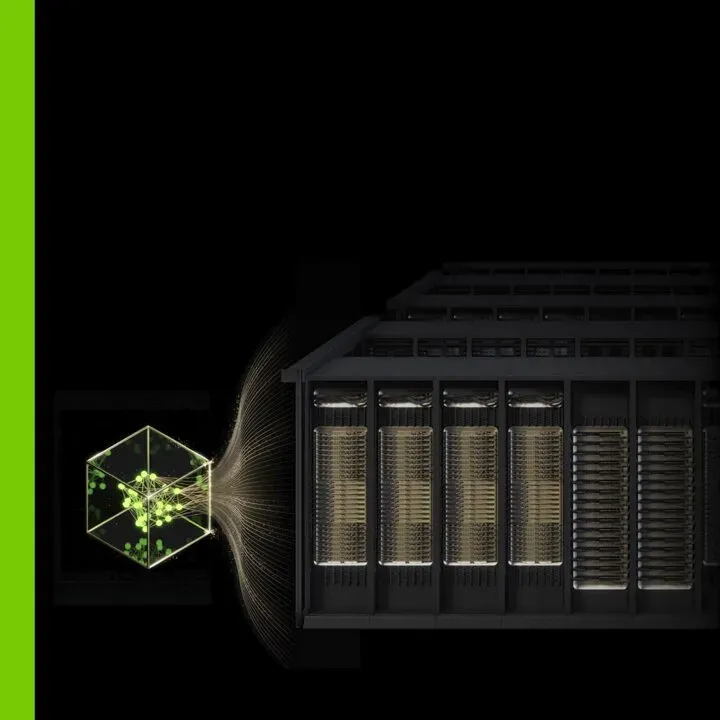
Nvidia's Blackwell platform swept MLPerf Training 6.0, posting top marks for speed and scale. The company also spotlighted enterprise reliability features — the RAS Engine and Resiliency Extension — designed to cut interruptions and speed recovery in massive AI training runs, reinforcing Blackwell's case for hyperscale deployments.
Key Takeaways
Nvidia's Blackwell platform claimed first place in MLPerf Training 6.0 for both fastest performance and largest scale.
The benchmark is run by MLCommons and is the industry's primary standard for comparing AI training hardware.
Blackwell succeeds the Hopper architecture , unveiled at Nvidia's GTC conference in March 2024 .
The RAS Engine and NVIDIA Resiliency Extension are highlighted as tools to reduce interruptions and speed recovery in large training jobs.
Nvidia faces growing competition from cloud-provider custom ASICs and navigates tightening US export controls on advanced AI chips.
Full MLPerf Training 6.0 results from MLCommons and Blackwell system availability timelines from cloud providers are the next key disclosures to watch.
Chip giant Nvidia announced on Tuesday, June 16, 2026, that its Blackwell platform has swept the MLPerf Training 6.0 benchmark suite, claiming top positions for both fastest performance and largest scale across the industry-standard evaluation run by MLCommons.
Context
The MLPerf Training benchmark is the most widely recognised measure of machine learning hardware performance, pitting accelerators from competing vendors against one another on standardised workloads. Nvidia stated that the Blackwell platform delivered 'fastest performance and largest scale' in the latest round, continuing a streak of top placements the company has maintained across successive MLPerf cycles.
The Blackwell architecture was unveiled at Nvidia's GTC conference in March 2024 as the direct successor to the Hopper platform, designed from the ground up for the demands of training very large foundation models across clusters of tens of thousands of GPUs.
Policy Backdrop
Nvidia's dominance in AI accelerators has come under increasing scrutiny from two directions: the rise of custom ASICs developed by major cloud providers, and tightening export controls on advanced AI chips imposed by the United States government. Each new MLPerf round is therefore watched closely as a signal of whether the competitive gap is narrowing.
For India, where hyperscale data centre investment and sovereign AI initiatives have accelerated sharply, Blackwell's benchmark leadership carries direct procurement implications. Indian cloud operators and research institutions evaluating AI infrastructure are among the global stakeholders tracking these results.
Reliability Features at the Fore
Beyond raw speed, Nvidia highlighted two enterprise-grade capabilities that distinguish the Blackwell platform for production deployments. The Reliability, Availability, and Serviceability (RAS) Engine is designed to reduce unplanned interruptions, while the NVIDIA Resiliency Extension accelerates recovery when faults do occur — both critical when a single training run can span weeks across thousands of accelerators.
The emphasis on these features signals a shift in how Nvidia is positioning Blackwell: not merely as the fastest option, but as the most operationally dependable one for hyperscale data centres and AI training teams running mission-critical workloads. Downtime during a large model training job can translate into enormous wasted compute costs.
What's Next
The full MLPerf Training 6.0 results publication by MLCommons will provide a complete picture of how competing platforms from cloud-provider custom silicon and other chip vendors fared. Availability timelines for Blackwell-based systems from major cloud providers remain a key variable for enterprises planning AI infrastructure upgrades.
As demand for accelerated computing continues to surge alongside the proliferation of frontier AI models, each successive MLPerf round is likely to intensify the benchmark competition — making Nvidia's ability to defend its lead in Training 7.0 and beyond the metric to watch.
Point of View
Where downtime in a multi-week training run is a decisive variable. For India's emerging sovereign AI and data centre ecosystem, benchmark leadership of this kind directly shapes procurement decisions by government-backed compute initiatives and private cloud operators. The broader arc is clear: as foundation model training scales into the hundreds-of-thousands-of-GPU range, the vendor that can guarantee uptime at scale — not merely peak FLOPS — will own the market.
NationPress
16 Sept 2026
Frequently Asked Questions
What is MLPerf Training 6.0?
MLPerf Training 6.0 is the sixth major round of the MLPerf Training benchmark suite, run by the industry consortium MLCommons, which measures how quickly different hardware platforms can train standard machine learning models.
What is the Nvidia Blackwell platform?
The Nvidia Blackwell platform is the company's latest generation of AI accelerator architecture, announced at GTC in March 2024 as the successor to the Hopper platform, designed for large-scale AI model training.
What is the Nvidia RAS Engine?
The Reliability, Availability, and Serviceability (RAS) Engine is a feature of the Blackwell platform aimed at reducing unplanned interruptions during large AI training jobs running across thousands of GPUs.
Why does MLPerf matter for AI chip buyers in India?
MLPerf results are the primary independent benchmark used by data centre operators, cloud providers, and research institutions — including those in India — to compare AI hardware before making large infrastructure investments.
Who are Nvidia's main competitors in AI training chips?
Nvidia faces competition from custom ASICs built by major cloud providers such as Google, Amazon, and Microsoft, as well as from other chip vendors, all of whom also submit results to MLPerf rounds.