Samsung adviser warns China chip expansion may end AI memory boom by 2028
Synopsis
A former head of Samsung's semiconductor unit warns that Chinese chipmakers adding 300,000 wafers of capacity over three years could capture 12–13% of the DRAM market and derail the AI memory boom as soon as 2028 — a threat the industry's current euphoria is largely ignoring.
Key Takeaways
Kyung Kye-hyun , adviser to Samsung Electronics and former head of its semiconductor business ( December 2021–May 2024 ), warned the AI memory 'super cycle' could fade by 2028 .
Chinese chipmakers already hold roughly 20 per cent of the global NAND flash market, according to Kyung .
ChangXin Memory Technologies (CXMT) could push China's DRAM market share above 10 per cent , with Kyung projecting a rise to 12–13 per cent .
Chinese firms plan to add 300,000 wafers of capacity over the next three years, leveraging cost advantages and state subsidies.
Samsung and SK Hynix currently benefit from strong AI data-centre demand but face a structural pricing threat if Chinese supply floods the market.
The warning was delivered at a forum hosted by the National Academy of Engineering of Korea on Monday, 19 May 2026 .
Samsung Electronics adviser Kyung Kye-hyun warned on Monday, 19 May 2026 that the AI-driven 'super cycle' in memory chips risks losing momentum as early as 2028, citing aggressive capacity expansion by Chinese chipmakers and potential pullbacks in global tech spending. The caution comes even as South Korea's memory sector posts strong results this year.
The Warning From Seoul
Speaking at a forum hosted by the National Academy of Engineering of Korea, Kyung said: 'South Korea's memory chip industry is performing very strongly this year and some forecasts suggest conditions could improve further next year. But caution is needed for 2027, particularly 2028.' Kyung led Samsung's semiconductor division from December 2021 to May 2024 before transitioning to an advisory role.
China's Expanding Footprint
Chinese chipmakers have already claimed roughly 20 per cent of the global NAND flash market, according to Kyung. He flagged that their share of the DRAM market could surpass 10 per cent, with ChangXin Memory Technologies (CXMT) playing a pivotal role in that push. 'Chinese companies are planning to increase capacity by 300,000 wafers over the next three years, and I'm concerned this could allow them to capture around 12 to 13 per cent market share,' he said.
Why It Matters for Korean Chipmakers
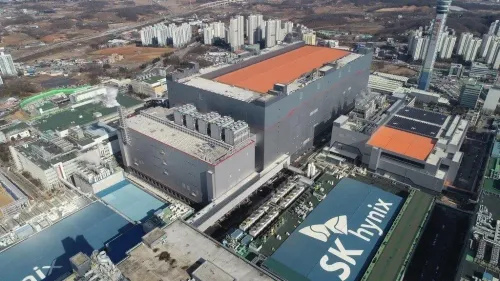
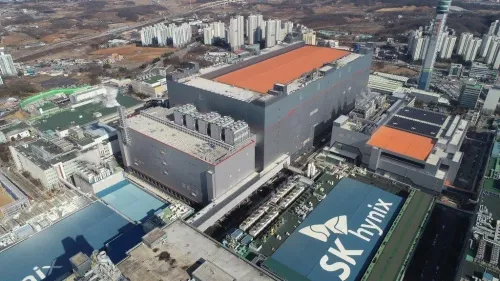
Samsung and SK Hynix are currently riding a wave of surging demand for memory chips — a critical bottleneck in AI data centres powering workloads for firms dependent on Nvidia hardware. Industry analysts note that Yangtze Memory Technologies and CXMT are scaling NAND and DRAM output by leveraging cost advantages and state subsidies, a combination that could structurally undercut Korean pricing power.
The Competitive Backdrop
The memory chip market has been a rare bright spot for South Korea amid broader semiconductor geopolitical tensions. Yet the same subsidised industrial playbook that disrupted solar panels and electric vehicles is now being applied to chips. Chinese firms' capacity additions are not contingent on near-term profitability, making them a sustained competitive threat even if global AI spending remains robust.
What's Next
The immediate outlook through 2026 and into 2027 remains favourable for Samsung and SK Hynix, with AI infrastructure build-outs continuing to absorb supply. The critical inflection point, according to Kyung, arrives when Chinese capacity additions coincide with any moderation in hyperscaler capex — a scenario the industry will be watching closely heading into 2028.
Point of View
But China's state-backed capacity push introduces a structural variable that pure demand forecasting misses: these fabs do not need to be profitable to keep running. What mainstream coverage frames as a cyclical risk is arguably a permanent market-share transfer in slow motion — the same script that played out in solar and steel. SK Hynix's lead in high-bandwidth memory for Nvidia GPUs offers some insulation, but commodity DRAM and NAND are far more exposed. The real question for 2027–2028 is whether hyperscaler AI capex remains elevated enough to absorb both Korean and Chinese supply simultaneously — and that is far from guaranteed.
NationPress
5 Oct 2026
Frequently Asked Questions
What did Samsung's adviser warn about China's chip expansion?
Kyung Kye-hyun , an adviser to Samsung Electronics , warned that China's rapid chipmaking capacity expansion could end the AI-driven memory chip 'super cycle' by 2028 . He said Chinese firms plan to add 300,000 wafers of capacity over three years, potentially giving them 12–13 per cent of the DRAM market.
How much of the memory chip market do Chinese companies already control?
Chinese chipmakers have captured approximately 20 per cent of the global NAND flash market, according to Kyung . Their DRAM share is lower but could exceed 10 per cent with the expansion of ChangXin Memory Technologies (CXMT) .
Which Chinese companies are expanding memory chip production?
Yangtze Memory Technologies and ChangXin Memory Technologies (CXMT) are the primary Chinese firms scaling up NAND and DRAM output respectively. Both companies are reportedly leveraging cost advantages and government subsidies to fund their expansion.
Are Samsung and SK Hynix currently doing well in memory chips?
Yes — Samsung and SK Hynix are currently posting strong earnings driven by surging demand for memory chips used in AI data centres. The concern raised by Kyung is not about the present but about a potential oversupply scenario materialising in 2027–2028 .
Why is 2028 the key risk year for the memory chip market?
According to Kyung Kye-hyun , Chinese capacity additions over the next three years will begin to weigh on global supply around 2027 and more acutely in 2028 . If this coincides with any slowdown in AI infrastructure spending, Korean chipmakers could face simultaneous price and volume pressure.