Telangana Police launches AI-powered Dial 112 emergency system, cuts response processing by 30%
Synopsis
Telangana Police has launched an AI-powered Dial 112 platform that already cuts emergency call-processing time by nearly 30% — and is about to add aerial drones as first responders. With 1,860 patrol vehicles digitally integrated and a state response average of 10 minutes 30 seconds against a national average of 18 minutes, Telangana is setting a new benchmark for technology-driven public safety in India.
Key Takeaways
Telangana Police launched the AI-enabled TG-ERSS Dial 112 platform on 5 August at the Telangana Integrated Command and Control Centre in Hyderabad .
Overall call-centre processing time has been cut from 190 seconds to 133 seconds — a reduction of nearly 30 per cent .
Telangana's overall emergency response average stands at 10 minutes 30 seconds , well ahead of the national average of approximately 18 minutes .
The platform handles nearly 14 lakh IVR calls , 18,000 emergency calls , and dispatches around 7,500 incidents daily with 164 trained personnel .
A total of 1,860 patrol vehicles across all 31 Police Units are digitally integrated with the system.
AI-enabled drones will be deployed as aerial first responders in Hyderabad , Cyberabad , Malkajgiri , and Future City Commissionerates in the next phase.
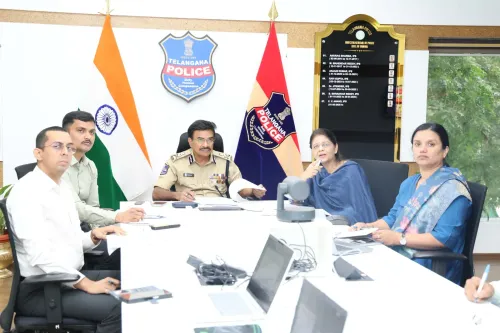
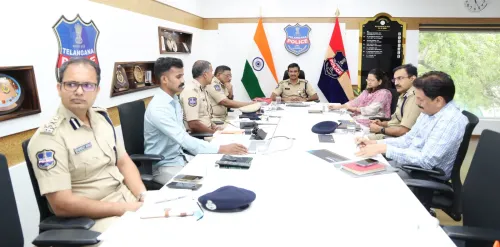
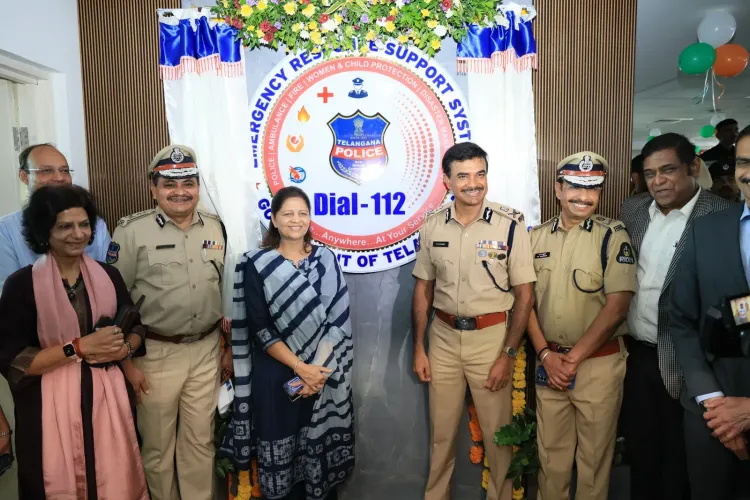
Telangana Police on 5 August launched the Telangana Emergency Response Support System (TG-ERSS) – Dial 112, an Artificial Intelligence-enabled integrated emergency platform that unifies police, fire, ambulance, women safety, child protection, and disaster response services under a single national number. The system, inaugurated at the Telangana Integrated Command and Control Centre (TGiCCC) in Hyderabad, marks the most significant upgrade to the state's emergency infrastructure in recent years.
Key Features of the AI-Enabled Platform
The upgraded TG-ERSS platform brings together a wide array of intelligent capabilities designed to reduce delays and improve accuracy at every stage of emergency handling. These include AI-based incident prioritisation by severity, smart call routing, intelligent filtering of duplicate and non-emergency calls, voice-to-text transcription of emergency conversations, and AI-assisted dispatch of field resources.
Advanced caller-location identification is enabled through Location-Based Services, Advanced Location Services, and Google Maps integration. Real-time operational dashboards, performance analytics, and a unified single-window interface for call takers and dispatchers further strengthen the platform's operational backbone.
Measurable Gains in Call-Handling Speed
Director General of Police C.V. Anand, who inaugurated the system in the presence of senior police officers, government officials, and partner agency representatives, said the upgraded platform has already delivered measurable improvements. Average call-taker time has dropped from 100 seconds to 69 seconds, while dispatcher time has fallen from 90 seconds to 64 seconds. Overall call centre processing time has been reduced from 190 seconds to 133 seconds — an improvement of nearly 30 per cent.
The DGP emphasised that every second saved at the processing and dispatch stage could prove critical in protecting life, preventing escalation, and ensuring timely assistance to those in distress.
Telangana's Response Times vs National Average
Telangana currently records an average emergency response time of approximately six minutes in urban areas, 15 minutes in rural areas, and 10 minutes 30 seconds as the overall state average. According to the DGP, this is significantly better than the national average of approximately 18 minutes, placing Telangana among the leading states in emergency-response performance.
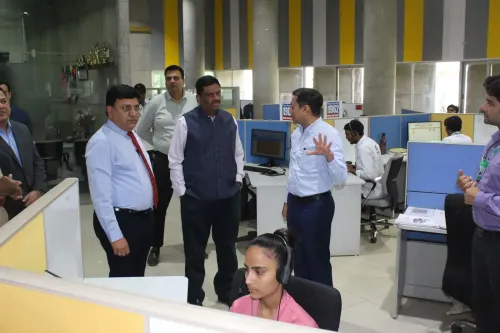
The TG-ERSS Dial 112 centre operates round the clock with 164 trained personnel and 900 SIP-based communication channels. On any given day, nearly 14 lakh calls reach the Interactive Voice Response system, approximately 18,000 emergency calls are answered by call takers, and around 7,500 emergency incidents are dispatched to field units.
Fleet Integration and Drone Rollout
A total of 1,860 patrol vehicles — comprising 788 four-wheelers and 1,072 two-wheelers — have been digitally integrated with the platform across all 31 Police Units in Telangana. The system automatically identifies and recommends the nearest available patrol vehicle, enabling faster deployment and closer monitoring of each incident from call receipt to closure.
In the next phase of modernisation, AI-enabled drones will be introduced on a pilot basis across the Hyderabad, Cyberabad, Malkajgiri, and Future City Commissionerates. These drones will serve as aerial first responders, providing real-time visual intelligence during fires, road accidents, disasters, law and order situations, crowd incidents, and search-and-rescue operations. This expansion signals that Telangana's AI-driven emergency model is designed to evolve well beyond its current form.
Point of View
Quantifiable gains: a 30% cut in processing time and a state response average that beats the national figure by nearly eight minutes. The harder question is whether these metrics hold as call volumes grow and drone operations add operational complexity. India's emergency response landscape has long suffered from the gap between control-room capability and last-mile execution; the real test of TG-ERSS will come not at inauguration, but in the field performance data six months from now.
NationPress
20 Sept 2026
Frequently Asked Questions
What is the Telangana Emergency Response Support System (TG-ERSS) Dial 112?
TG-ERSS Dial 112 is an AI-enabled integrated emergency response platform launched by Telangana Police that unifies police, fire, ambulance, women safety, child protection, and disaster response services under the single national emergency number 112. It was inaugurated on 5 August at the Telangana Integrated Command and Control Centre in Hyderabad by Director General of Police C.V. Anand.
How much faster is emergency call processing under the new system?
The upgraded platform has reduced overall call-centre processing time from 190 seconds to 133 seconds — an improvement of nearly 30 per cent. Call-taker time dropped from 100 seconds to 69 seconds, and dispatcher time fell from 90 seconds to 64 seconds.
How does Telangana's emergency response time compare to the national average?
Telangana's overall emergency response average is approximately 10 minutes 30 seconds, compared to a national average of around 18 minutes. Urban response averages around six minutes, while rural areas average 15 minutes, according to the state police.
What AI features does the TG-ERSS Dial 112 platform include?
The platform features AI-based incident prioritisation by severity, intelligent filtering of duplicate and spam calls, smart call routing, AI-assisted field dispatch, voice-to-text transcription, advanced caller-location identification via Google Maps and Location-Based Services, and real-time operational dashboards. It also integrates 1,860 patrol vehicles across 31 Police Units.
When will AI drones be deployed under the Dial 112 system?
AI-enabled drones are set to be introduced on a pilot basis in the next phase of modernisation, covering the Hyderabad, Cyberabad, Malkajgiri, and Future City Commissionerates. The drones will act as aerial first responders providing real-time visual intelligence during emergencies such as fires, road accidents, and search-and-rescue operations.