UBTech U1 humanoid robots enter Chinese homes at up to 990,000 yuan
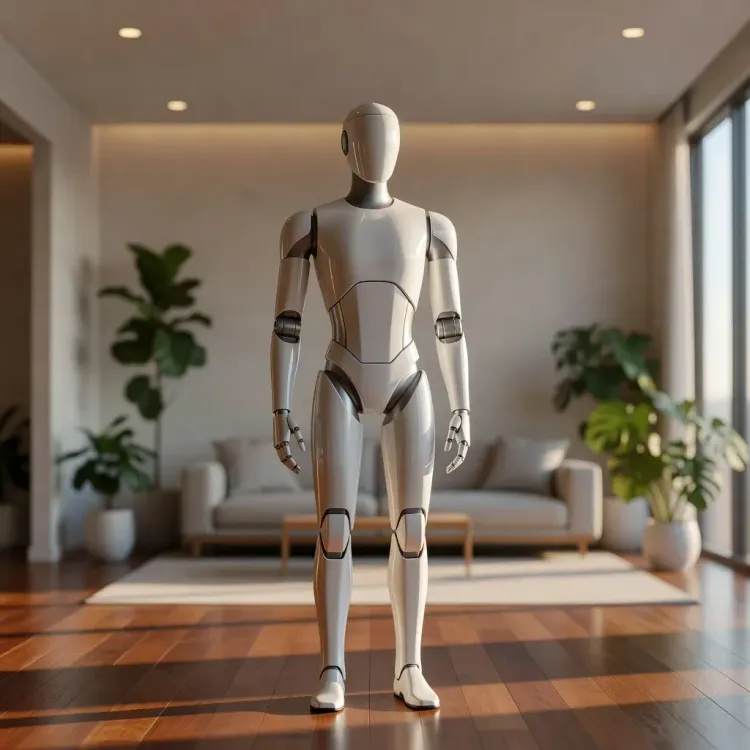
Synopsis
UBTech Robotics crossed 13,361 pre-orders for its U1 consumer humanoid in under 30 days — priced up to 990,000 yuan — signalling that China's living-room robot market is no longer theoretical.
Key Takeaways
UBTech Robotics recorded 13,361 pre-orders for its U1 humanoid robot series by June 30, 2026 , less than a month after pre-sales opened.
Initial deliveries are scheduled to begin on September 16, 2026 .
The U1 line-up — Lite , Pro , and Ultra — is priced between 119,800 yuan and 990,000 yuan .
Beijing investor Song , aged 39 , paid 159,800 yuan (US$23,680) for the U1 Pro female variant, citing a desire to embrace cutting-edge technology.
The robots are designed for emotional companionship, featuring facial expressions, voice interaction, and AI -driven conversation, according to UBTech .
UBTech is among the first Chinese manufacturers to attempt large-scale commercialisation of humanoid robots for home use.
UBTech Robotics, the Shenzhen-based robotics company, has begun taking consumer orders for its U1 humanoid robot series, recording 13,361 pre-orders by June 30, 2026 — less than a month after pre-sales opened in early June — with initial deliveries scheduled to begin on September 16. The milestone marks one of the first large-scale attempts by a Chinese firm to move humanoid robots from factory floors into private living rooms.
Who is buying — and why
Song, a 39-year-old investor from Beijing, paid 159,800 yuan (US$23,680) for the female version of the U1 Pro, fully aware the machine would not be cooking meals or scrubbing floors. 'The happiest part is often the waiting,' he said, describing the purchase as an embrace of cutting-edge technology rather than a practical household upgrade. Early adopters like Song represent a niche but fast-growing segment of China's so-called companionship economy.
The U1 line-up: specs and pricing
The U1 series spans three models — Lite, Pro, and Ultra — covering a range from partial-body units to full-sized humanoids. Prices run from 119,800 yuan to 990,000 yuan, according to the company. Designed primarily for emotional companionship, the robots are capable of facial expressions, voice interaction, and AI-driven conversations, UBTech said.
Why it matters: the living-room frontier
For years, humanoid robots have been confined to factory floors and structured assembly lines, where tasks are repetitive and environments are controlled. Household humanoids face a fundamentally different challenge: navigating unpredictable spaces, interacting naturally with people, and delivering genuine companion value — or eventually, domestic help. UBTech is among the first Chinese manufacturers attempting that leap at commercial scale.
The competitive backdrop
China's robotics sector has seen a surge of investment and policy support, with firms racing to commercialise humanoid platforms ahead of global rivals. Unlike industrial robots optimised for throughput, consumer humanoids must clear a far higher bar for social acceptability and reliability in unstructured home environments. The speed of UBTech's pre-order uptake — more than 13,000 units in under 30 days — suggests early-adopter demand is real, even at price points that remain out of reach for most households.
What's next
With deliveries set to begin in September 2026, the true test will be whether the U1 series can sustain satisfaction beyond the novelty phase — and whether UBTech can scale production without quality compromises. How early owners rate the robots' AI interaction and durability will likely shape the trajectory of China's broader consumer humanoid market in the months ahead.
Point of View
Not just marketing noise — clearing 13,000 units in under a month at prices exceeding US$17,000 at the entry level suggests a latent premium market that most Western analysts have dismissed as years away. What mainstream coverage misses is that China's companionship economy — driven by an ageing population and single-person households — gives consumer humanoids a clearer near-term use case than pure domestic utility. The deeper story is industrial: Chinese robotics firms are using consumer launches to accelerate the software and AI feedback loops that will eventually make their industrial platforms more competitive globally. Investors should watch whether UBTech's September delivery cadence holds — any slip would expose the gap between pre-order enthusiasm and actual manufacturing readiness.
NationPress
16 Sept 2026
Frequently Asked Questions
What is the UBTech U1 humanoid robot and how much does it cost?
The UBTech U1 is a consumer humanoid robot series from Shenzhen -based UBTech Robotics , designed primarily for emotional companionship. It comes in three models — Lite , Pro , and Ultra — priced between 119,800 yuan and 990,000 yuan .
When will UBTech U1 robots be delivered to buyers?
Initial deliveries of the UBTech U1 series are scheduled to begin on September 16, 2026 , according to the company. Pre-sales opened in early June 2026 .
How many pre-orders has UBTech received for its humanoid robot?
UBTech Robotics said its U1 series had accumulated 13,361 orders by June 30, 2026 — less than a month after pre-sales launched. The figure covers all three models in the line-up.
What can the UBTech U1 humanoid robot actually do at home?
The U1 series is built for emotional companionship rather than domestic chores, according to UBTech . The robots are capable of facial expressions, voice interaction, and AI -driven conversations.
How does UBTech's consumer robot compare to industrial humanoids?
Unlike industrial humanoids designed for repetitive tasks in controlled factory environments, the UBTech U1 must navigate unpredictable home spaces and interact naturally with people. UBTech is among the first Chinese firms to attempt this transition at commercial scale.