Xi Jinping to address WAIC 2026 as China-US AI rivalry intensifies

Synopsis
President Xi Jinping's personal address at WAIC 2026 in Shanghai elevates AI to a state-level strategic imperative — a direct response to US chip export controls that are forcing China to accelerate tech self-reliance at unprecedented speed.
Key Takeaways
President Xi Jinping is scheduled to speak at the opening of the 2026 World Artificial Intelligence Conference (WAIC) in Shanghai on Friday, 17 July 2026 .
WAIC is China's largest annual AI industry event, and Xi's personal attendance marks a significant elevation of its strategic importance.
Washington's export controls on advanced semiconductors and restrictions on US AI model access are driving Beijing's push for tech self-reliance.
Memory chipmaker CXMT was valued at US$85 billion in a record Shanghai IPO, reflecting strong domestic investor confidence in China's semiconductor sector.
AI startup StepFun reportedly claimed to have unveiled the world's first AI smartphone ahead of the conference.
China's chip exports reportedly nearly doubled in the first half of 2026 , according to available data.
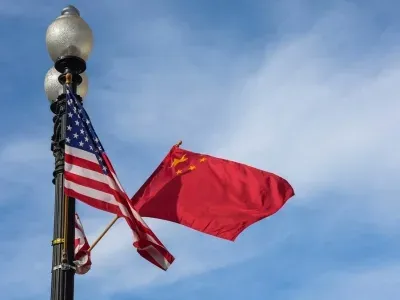
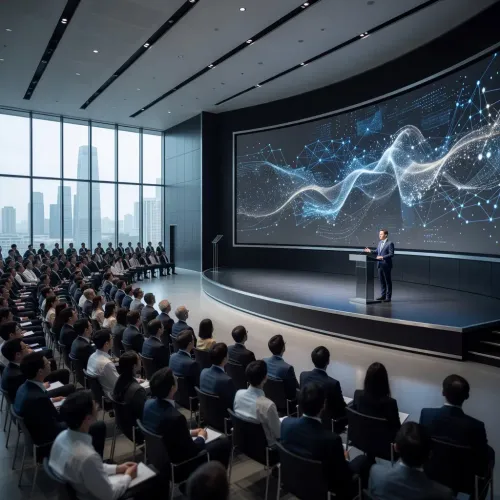
Chinese President Xi Jinping is set to speak at the opening of the 2026 World Artificial Intelligence Conference (WAIC) in Shanghai on Friday, 17 July 2026, signalling that artificial intelligence has become a central pillar of China's technological and geopolitical strategy. The annual event, China's largest dedicated AI gathering, draws heightened significance this year given the escalating technology rivalry between Beijing and Washington.
Xi's Attendance Elevates AI to Strategic Priority
President Xi's personal appearance at WAIC is a deliberate signal that Beijing views AI development not merely as an industrial objective but as a cornerstone of national strategy. Such direct leadership involvement at a technology conference is rare, and analysts note it reflects the urgency with which China is pursuing AI supremacy amid sustained external pressure.
The move mirrors Xi's past pattern of personally championing sectors — from semiconductors to electric vehicles — that Beijing has designated as strategic industries requiring state-level coordination.
US Export Controls Sharpen the Competitive Backdrop
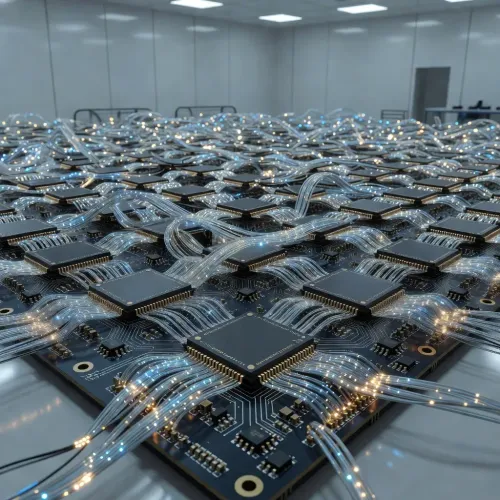
Washington continues to enforce strict export controls on advanced semiconductors, limiting China's access to the most powerful chips needed to train frontier AI models. Restrictions on overseas access to leading US AI platforms have further pushed global businesses to explore alternatives, according to industry observers.
Against this backdrop, Beijing is accelerating its push for tech self-reliance, with domestic champions including Huawei stepping up efforts to fill the hardware gap left by restricted access to US-designed chips.
Key Developments Surrounding WAIC 2026
Several major announcements are converging around the conference. China memory giant CXMT was valued at US$85 billion in a record Shanghai IPO, underscoring investor appetite for domestic semiconductor capacity. AI startup StepFun reportedly claimed it has unveiled the world's first AI smartphone ahead of the event.
Meanwhile, China's chip exports reportedly nearly doubled in the first half of the year, a figure that will likely feature in Beijing's narrative of technological resilience at the conference.
Why It Matters: Low-Cost Models Reshape Global AI Demand
As US AI development costs soar, global businesses are increasingly pivoting to China's lower-cost, open-weight AI models, according to reports. This trend positions Chinese AI firms as credible alternatives in markets across Asia, Africa, and Latin America, where cost sensitivity is high.
The shift threatens to erode the premium pricing power that US AI companies have relied upon, while expanding China's soft-power footprint through technology exports.
What's Next
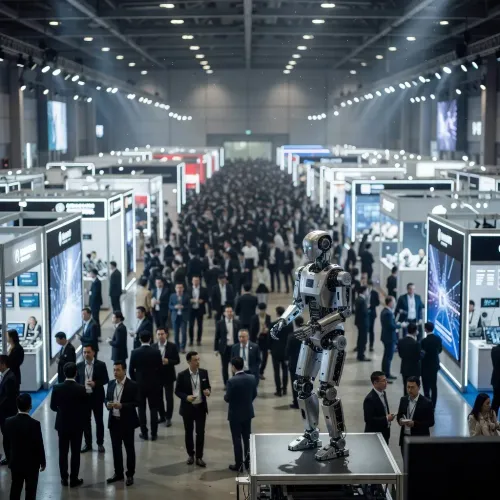
All eyes will be on Xi's speech for policy signals — particularly any announcements on state funding for AI infrastructure, regulatory frameworks for humanoid robotics, or new directives for domestic chip development. The competitive dynamic between Beijing and Washington over AI standards, talent, and hardware access is expected to intensify through the remainder of 2026.
Point of View
Cost-sensitive markets are quietly standardising on Chinese open-weight models, creating a bifurcated global AI ecosystem that export controls alone cannot reverse. The CXMT IPO valuation of US$85 billion suggests domestic capital markets are pricing in a prolonged decoupling scenario, not a temporary trade dispute. The real variable to watch is whether Xi's speech announces concrete state procurement commitments that could turbocharge Chinese AI infrastructure spending in the second half of 2026.
NationPress
15 Oct 2026
Frequently Asked Questions
Why is Xi Jinping speaking at WAIC 2026?
President Xi Jinping is addressing the 2026 World Artificial Intelligence Conference to signal that AI development is a top-level national priority for China . His personal attendance elevates the event beyond an industry gathering, indicating that Beijing views AI as central to both its economic and geopolitical strategy amid intensifying rivalry with the United States .
What is the World Artificial Intelligence Conference (WAIC)?
The World Artificial Intelligence Conference (WAIC) is China's largest annual event dedicated to the AI industry, held in Shanghai . It brings together domestic and international technology companies, policymakers, and researchers to showcase AI advancements and set industry direction.
How do US export controls affect China's AI ambitions?
Washington's export controls restrict China's access to advanced semiconductors essential for training frontier AI models, forcing Beijing to accelerate domestic chip development. Companies like Huawei are working to fill the hardware gap, while Chinese AI firms are developing lower-cost, open-weight models that are gaining traction globally as alternatives to expensive US AI platforms.
What is CXMT and why is its IPO significant?
CXMT is a Chinese memory chip manufacturer that was valued at US$85 billion in a record Shanghai IPO. The valuation reflects strong domestic investor confidence in China's ability to build an independent semiconductor supply chain, a critical component of its AI self-reliance strategy.
Which Chinese AI companies are making headlines at WAIC 2026?
AI startup StepFun reportedly claimed to have unveiled the world's first AI smartphone ahead of WAIC 2026 . Huawei is also a key player to watch, given its role in developing domestic chip alternatives. More broadly, China's chip exports reportedly nearly doubled in the first half of 2026 , pointing to a rapidly expanding domestic AI hardware ecosystem.