Akash Deep returns after 18 months: 'Gambhir sir would message me during rehab'
Synopsis
Akash Deep didn't just take three wickets on his Test comeback — he revealed the human story behind it. Coach Gautam Gambhir personally messaged the Bengal pacer throughout an 18-month injury lay-off, a detail that reframes how India's current coaching setup operates behind the dressing-room doors.
Key Takeaways
Akash Deep returned to Test cricket after over 18 months away due to a back injury, playing in Wellington on 20 November 2026 .
He claimed 3 wickets as New Zealand were bowled out for 368 , with Henry Nicholls (175*) and Glenn Phillips (118) the top scorers.
Head coach Gautam Gambhir reportedly messaged Akash regularly during rehab, urging him to 'come back even stronger.' India ended Day 2 at 159/1 , with KL Rahul unbeaten on 52 and Yashasvi Jaiswal scoring a brisk 85 off 89 balls .
India trail by 209 runs with 9 wickets remaining heading into Day 3.
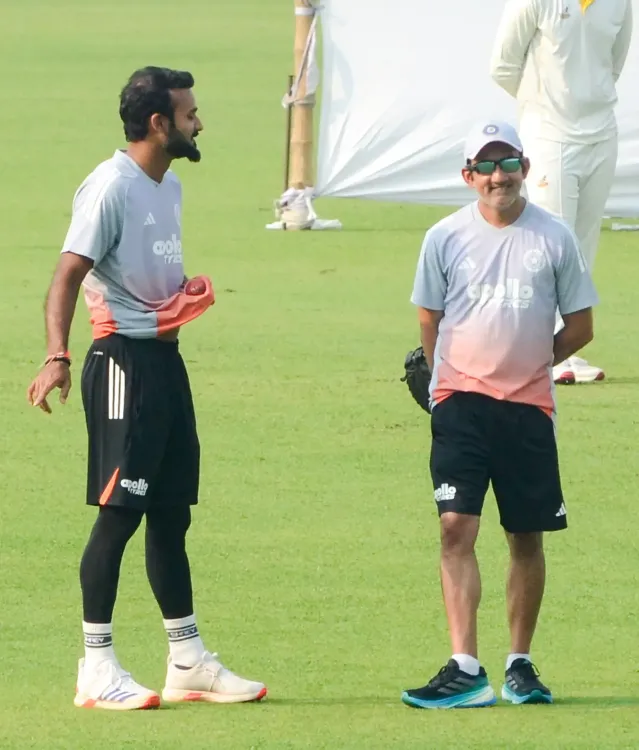
India fast bowler Akash Deep made a striking return to Test cricket in Wellington on 20 November 2026, claiming three wickets as New Zealand were bowled out for 368 in their first innings — and credited head coach Gautam Gambhir with keeping him motivated through what he described as a gruelling rehabilitation from a back injury lasting over one and a half years.
Gambhir's Personal Touch During Rehab
Speaking to reporters after the second day's play, Akash revealed that Gambhir stayed in consistent contact throughout the recovery period, well before the Bengal pacer was anywhere near a return to the national side. 'It is quite difficult as a fast bowler to suffer a back injury and then think about making a comeback; it is definitely very challenging. But one good thing for me was that our coach, GG sir (Gautam Gambhir), even during that time, would always follow up with me, message me, ask how my rehab was going, and tell me to come back even stronger. All of that served as great motivation and was very positive for me,' Akash said.
The pacer added that the injury period became an opportunity for self-improvement. 'During my injury period, I tried to work even harder on myself — on how much stronger I could get and how much more I could improve my skills. Today, even after returning to international cricket after one and a half years, I did not feel like I was playing an international match after such a long gap. So I am very happy about that,' he said.
Three Wickets on Comeback Day
Akash's return proved immediately impactful. New Zealand, who had reached 317/6 at one stage, were bowled out for 368, with the Indian pacers claiming the final four wickets in the closing sessions. Henry Nicholls scored an unbeaten 175 and Glenn Phillips contributed 118 before Akash — with patience and tactical variation — ended Phillips's innings in a manner he explained in detail after the day's play.
'I had been trying to bowl in specific areas for quite some time because the ball was not moving much or doing much off the pitch. So, with patience, I was trying to bowl in one area. On that particular ball, I put in a bit of extra effort to make it do a bit more, and it came out just the way I had planned,' he said. Akash also described the deliberate change of line he used to unsettle the batter: 'I was bowling wide so that the batsman would be tempted to play. I bowled five or six balls from wide, and the batsman started playing at me… Then I suddenly came closer to the stumps, and he got out on the second ball.'
India's Disciplined Bowling Effort
Reflecting on the team's collective performance with the ball, Akash pointed to the advantage of a fresh new ball and the physical freshness it allowed the pace unit. 'In the last two sessions, the ball was a little old. The wicket was good after lunch. It was slow. Today, it was a new ball. We got some rest. We were fresh. That was the only difference,' he said. The remark underlines how much India's pace attack relies on the specific conditions offered by a new ball, particularly when the pitch offers limited assistance.
India's Solid Reply
At stumps on Day 2, India were placed at 159/1 in reply to New Zealand's 368. KL Rahul was unbeaten on 52, with Devdutt Padikkal on 15. Yashasvi Jaiswal provided an aggressive platform, smashing 85 off 89 deliveries with 16 boundaries before his dismissal. India trail by 209 runs with nine wickets in hand as the match moves into Day 3.
Akash Deep's comeback, backed by a coach who reportedly never stopped believing in him, sets up what could be a defining Test for both the player and India's campaign in Wellington.
Point of View
Hands-on culture Gambhir is trying to build. Whether that translates to consistent results for India's pace unit will be tested over the remainder of the New Zealand series. For now, three wickets on return day is the best possible answer Akash could have given.
NationPress
20 Nov 2026
Frequently Asked Questions
Why was Akash Deep out of the Indian Test team?
Akash Deep was sidelined due to a back injury that kept him out of international cricket for over one and a half years. Back injuries are particularly challenging for fast bowlers due to the physical demands of the role.
What did Gautam Gambhir do to support Akash Deep during his recovery?
According to Akash Deep, head coach Gautam Gambhir personally messaged him during his rehabilitation, regularly checking on his progress and encouraging him to return stronger. Akash credited this direct communication as a key source of motivation.
How did Akash Deep perform on his Test comeback in Wellington?
Akash Deep took 3 wickets in New Zealand's first innings of 368 in the Wellington Test on 20 November 2026. His dismissal of Glenn Phillips (118) was particularly notable, executed through deliberate change of line and length.
What is India's score after Day 2 of the Wellington Test?
India ended Day 2 at 159/1, trailing New Zealand's first-innings total of 368 by 209 runs. KL Rahul was unbeaten on 52, with Yashasvi Jaiswal having contributed a rapid 85 off 89 deliveries earlier.
Who were the top scorers for New Zealand in the Wellington Test?
Henry Nicholls scored an unbeaten 175 and Glenn Phillips contributed 118 as New Zealand posted 368 in their first innings. India took the final four wickets after New Zealand had reached 317/6.