CAF Appeals Board clears Eto'o, overturns stadium ban and $20,000 fine

Synopsis
CAF's Appeals Board has wiped out every sanction against Samuel Eto'o — the four-match stadium ban and $20,000 fine imposed after Cameroon's AFCON quarterfinal defeat to Morocco. FECAFOOT's challenge that the original process was rushed and unjustified has been vindicated, raising pointed questions about the consistency of CAF's first-instance disciplinary decisions.
Key Takeaways
The CAF Appeals Board overturned all sanctions against FECAFOOT president Samuel Eto'o Fils on Wednesday evening , with immediate effect.
Original penalties included a four-match stadium ban and a fine of $20,000 , imposed by the CAF Disciplinary Board .
The sanctions arose from Eto'o's alleged conduct during the 2025 AFCON quarterfinal between Cameroon and Morocco on 9 January 2026 .
FECAFOOT had argued the disciplinary process was expedited and did not meet fair-trial standards.
Eto'o was re-elected FECAFOOT president in November 2025 for a term running through 2029 .
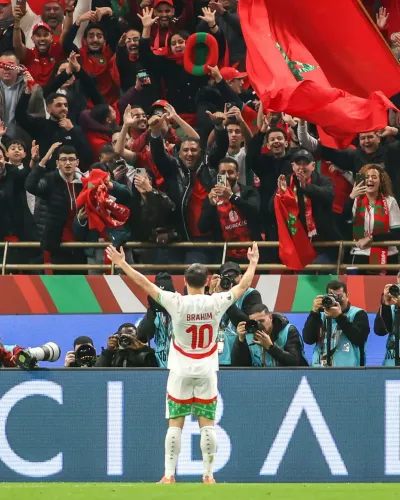
The Confederation of African Football (CAF) Appeals Board has overturned all sanctions against Cameroon Football Federation (FECAFOOT) president Samuel Eto'o Fils, setting aside a four-match stadium ban and a $20,000 fine with immediate effect. The ruling, delivered on Wednesday evening, relates to an incident during Match 46 of the 2025 Africa Cup of Nations — the quarterfinal between Cameroon and Morocco on 9 January 2026.
What the Original Sanctions Covered
The CAF Disciplinary Board had earlier found Eto'o in breach of the governing body's statutes on loyalty, integrity, and sportsmanship, reportedly stemming from his conduct during Cameroon's quarterfinal defeat to Morocco. The penalties imposed were a four-match ban from CAF stadiums and a fine of $20,000.
FECAFOOT had challenged the ruling, contending that the disciplinary process was expedited and fell short of the standards required for a fair hearing. The federation also stated the original decision 'lacks any explicit justification.'
Appeals Board Ruling and Its Significance
The CAF Appeals Board sided with Eto'o, setting aside the earlier decision in its entirety. FECAFOOT welcomed the reversal, describing it as evidence of the Appeals Board's independence and its commitment to impartial justice in African football.
'FECAFOOT acknowledges the decision of its president to exercise, within the prescribed time limits and procedures, the appeals processes provided for by the applicable regulations,' the federation said in a statement, reaffirming its full support for Eto'o.
Eto'o's Standing in Cameroonian Football
Four-time African Player of the Year Samuel Eto'o Fils was first elected FECAFOOT president in 2021 and was re-elected in November 2025 for a fresh four-year term, extending his mandate through 2029. The sanctions, had they stood, would have significantly curtailed his ability to represent the federation at CAF-sanctioned events.
Eto'o's club career spanned Barcelona, Inter Milan, and Chelsea, among others. As a player, he helped Cameroon clinch two Africa Cup of Nations titles and an Olympic gold medal.
Broader Implications for CAF Governance
The case draws attention to procedural standards within CAF's disciplinary machinery. FECAFOOT's pointed critique — that the original process was rushed and lacked explicit justification — mirrors broader debates across African football governance about transparency and due process. Notably, this is not the first time a CAF disciplinary ruling has been reversed on appeal, raising questions about the consistency of first-instance decisions.
With Eto'o's sanctions now fully cleared, FECAFOOT's focus is expected to return to Cameroon's preparations for upcoming continental competitions and domestic football development under his continued leadership.
Point of View
The vindication matters beyond optics: a sitting federation president barred from CAF stadiums would have been an extraordinary and operationally disruptive outcome. The deeper issue is whether CAF's judicial bodies are consistently applying procedural rigour at the first instance, or whether appeals are functioning as a corrective patch for avoidable errors below.
NationPress
21 Sept 2026
Frequently Asked Questions
Why was Samuel Eto'o banned by CAF?
The CAF Disciplinary Board found Eto'o in breach of its statutes on loyalty, integrity, and sportsmanship, reportedly over his conduct during Cameroon's quarterfinal defeat to Morocco at the 2025 Africa Cup of Nations on 9 January 2026. The penalties imposed were a four-match stadium ban and a $20,000 fine.
What did the CAF Appeals Board decide?
The CAF Appeals Board overturned all sanctions against Eto'o on Wednesday evening, setting aside both the four-match ban and the $20,000 fine with immediate effect. FECAFOOT described the ruling as evidence of the board's independence and commitment to impartial justice.
What grounds did FECAFOOT use to appeal the sanctions?
FECAFOOT argued that the original disciplinary process was expedited and did not meet the standards of a fair trial, and that the ruling lacked any explicit justification. The federation said it supported Eto'o in exercising his right to appeal within prescribed procedures.
What is Samuel Eto'o's current role in football administration?
Samuel Eto'o Fils is the president of the Cameroon Football Federation (FECAFOOT). He was first elected to the role in 2021 and was re-elected in November 2025 for a new four-year term running through 2029.
What is Samuel Eto'o's football legacy?
Eto'o is a four-time African Player of the Year and one of Africa's greatest footballers. He played for Barcelona, Inter Milan, and Chelsea, and as a Cameroon international he won two Africa Cup of Nations titles and an Olympic gold medal.