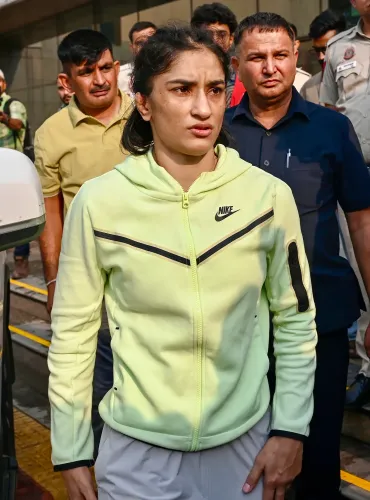
Vinesh Phogat gets Delhi HC relief for Asian Games 2026 trials
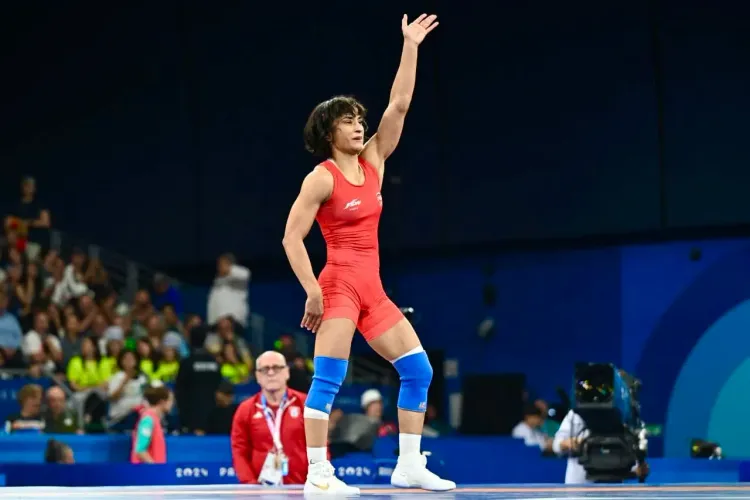
Synopsis
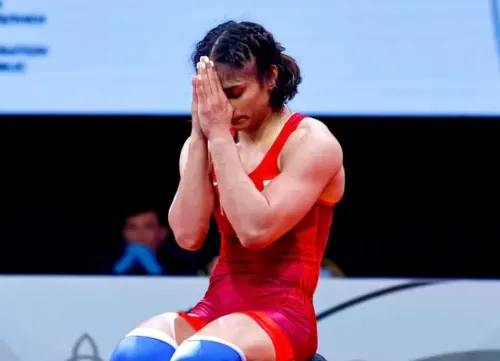
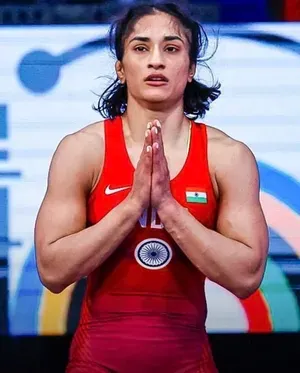
The Delhi High Court has delivered a landmark ruling for female athletes in India — holding that a sporting federation cannot exclude a woman from trials because her maternity sabbatical caused her to miss qualifying events. For Vinesh Phogat, already a figure of national controversy after Paris 2024, this is both a legal victory and a pointed judicial indictment of the WFI's conduct.
Key Takeaways
The Delhi High Court on 23 May directed the WFI to allow Vinesh Phogat to compete in Asian Games 2026 selection trials on 30-31 May .
The Bench ruled that Phogat's exclusion stemmed directly from her maternity sabbatical, which coincided with the qualifying tournaments — a ground the Court held unconstitutional under Articles 14 and 21 .
The Court called WFI's show-cause notice language — branding her Paris Olympics 2024 weigh-in disqualification a 'national embarrassment' — 'deplorable' and 'vindictive', noting CAS had found no wrongdoing.
Two independent observers from SAI and IOA will oversee the trials; the process must be video-recorded .
Phogat's participation remains subject to the outcome of the pending writ petition before the single-judge Bench.
The Delhi High Court on 23 May granted wrestler Vinesh Phogat the right to participate in the Asian Games 2026 selection trials, ruling that motherhood cannot be treated as a disability or a ground for exclusion from professional sporting opportunities. The order marks a significant judicial rebuke of the Wrestling Federation of India (WFI)'s eligibility framework.
What the Court Ordered
A Division Bench comprising Chief Justice Devendra Kumar Upadhyaya and Justice Tejas Karia directed the WFI to allow Phogat to participate in the trials scheduled for 30 and 31 May. The Bench also ordered that the entire trial process be video-recorded and directed the Union government to nominate two independent observers from the Sports Authority of India (SAI) and the Indian Olympic Association (IOA) to oversee proceedings.
The Court allowed Phogat's appeal against an earlier interim order passed by a single judge, holding that the three-time Olympian had established a prima facie case against the WFI's selection policy and the circular restricting trial participation to medal winners of select domestic events held in 2025 and 2026.
The Maternity Exclusion at the Core
The Bench found that the WFI's policy framework failed to account for Phogat's maternity-related sabbatical and post-partum recovery period, which coincided precisely with the qualifying tournaments prescribed under the eligibility criteria.
'Motherhood must be viewed as a natural and deeply significant aspect of life that deserves accommodation and institutional sensitivity. Therefore, the law must ensure that motherhood does not become a ground for exclusion or marginalisation of female athletes such as the Appellant,' the Court said.
The Bench further held that any legal or regulatory framework that 'either expressly or impliedly disadvantages a woman on account of pregnancy or post-partum recovery would clearly violate the principles of non-discrimination enshrined in Articles 14 and 21 of the Constitution.'
Court's Sharp Rebuke of WFI's Show-Cause Notice
The order strongly disapproved of language used in a WFI show-cause notice issued to Phogat earlier in May, which had characterised her disqualification from the Paris Olympics 2024 final — after she failed the weigh-in — as a 'national embarrassment.' The Court called these remarks 'deplorable', describing them as 'pre-mediated' and 'vindictive.'
Notably, the Court of Arbitration for Sport (CAS) had already recorded that there was 'no wrongdoing' on Phogat's part in the Paris incident. The Bench said the WFI's observations showed 'mala fide intent' against the athlete.
WFI's Defence and the Court's Response
The WFI had opposed the plea during the hearing, arguing that its policy and circular were uniformly applicable to all athletes and that the federation lacked the discretion to carve out individual exemptions. The Court was unpersuaded.
The Bench took note of past WFI practices that had permitted 'iconic players' to participate in selection trials despite not meeting standard eligibility conditions, calling the revised policy a 'significant deviation' from earlier practice and prima facie arbitrary.
'In the interest of sport and justice… it is necessary that the Appellant is permitted to participate in the Selection Trials,' the order stated, adding that if Phogat were excluded, the pending writ petition before the single judge would itself become infructuous.
What Happens Next
The Court clarified it had not expressed any final opinion on the merits of the case. All questions relating to the validity of the WFI's selection policy dated 25 February 2026, the selection circular of 6 May, and the show-cause notice of 9 May will be decided in the pending writ petition before the single-judge Bench. Phogat's participation in the trials remains subject to the outcome of that main matter.
Point of View
Which means it was effectively designed to penalise female athletes for childbirth. That a federation with this track record was also issuing show-cause notices calling a Paris Olympics disqualification a 'national embarrassment' — after CAS had cleared the athlete — suggests the problem is not procedural but institutional. The broader question is whether the Ministry of Sports will use this ruling as a prompt to mandate maternity policies across all national federations, or whether this remains a one-athlete, one-courtroom fix.
NationPress
26 Sept 2026
Frequently Asked Questions
What did the Delhi High Court rule in Vinesh Phogat's case?
The Delhi High Court ruled on 23 May that the WFI cannot exclude Vinesh Phogat from the Asian Games 2026 selection trials on the grounds that her maternity sabbatical caused her to miss qualifying events. The Court held this would violate Articles 14 and 21 of the Constitution and directed the WFI to allow her to compete in the trials on 30-31 May.
Why was Vinesh Phogat initially excluded from the Asian Games 2026 trials?
The WFI's selection policy required participants to be medal winners at specified domestic events held in 2025 and 2026. Phogat missed those tournaments due to a maternity-related sabbatical and post-partum recovery, rendering her ineligible under the federation's criteria.
What did the Court say about the WFI's show-cause notice?
The Court called the language in the WFI's show-cause notice 'deplorable', 'pre-mediated', and 'vindictive.' The notice had described Phogat's disqualification from the Paris Olympics 2024 final as a 'national embarrassment', despite the Court of Arbitration for Sport having already recorded that there was no wrongdoing on her part.
Is Vinesh Phogat's selection for Asian Games 2026 confirmed?
No. The Court has only permitted her to participate in the selection trials on 30-31 May. Her participation remains subject to the outcome of the pending writ petition before the single-judge Bench, which will decide the validity of the WFI's selection policy and related notices.
What oversight measures did the Court put in place for the trials?
The Court directed that the trials be video-recorded in full. It also ordered the Union government to nominate two independent observers — one each from the Sports Authority of India and the Indian Olympic Association — to oversee the process and submit a report to the single judge hearing the main matter.