SC refuses stay on Delhi HC order allowing Vinesh Phogat in Asian Games trials
Synopsis
The Supreme Court refused to block Vinesh Phogat's participation in the Asian Games 2026 trials — but it wasn't a clean win. The bench flagged her anti-doping whereabouts compliance and pushed back on the Delhi HC's 'exclusionary' label for WFI's policy, signalling the larger legal battle is far from over.
Key Takeaways
The Supreme Court on 29 May declined to stay the Delhi High Court order permitting Vinesh Phogat to participate in Asian Games 2026 selection trials on 30–31 May .
The court issued notice on the WFI 's Special Leave Petition and will examine broader legal issues at a later stage.
The bench flagged Phogat 's failure to keep anti-doping authorities informed of her whereabouts as a 'critical obligation.' The Supreme Court questioned the Delhi HC 's prima facie finding that the WFI 's framework was 'exclusionary,' noting the policy was framed in February 2026 and applied uniformly.
The Delhi HC had ruled that motherhood cannot be grounds for exclusion and directed trials to be video-recorded under SAI and IOA observers.
Phogat's participation remains subject to the outcome of a pending writ petition on the validity of the WFI 's selection policy.
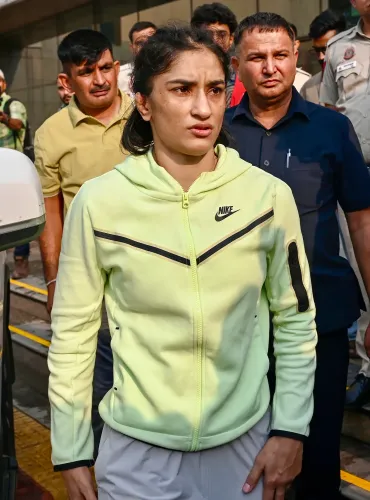
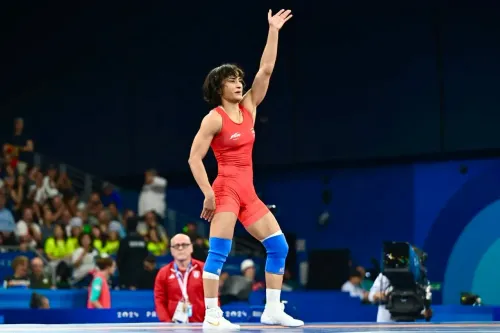
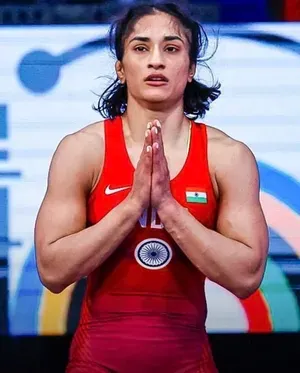
The Supreme Court on Friday, 29 May declined to stay the Delhi High Court's order permitting wrestler Vinesh Phogat to compete in the Asian Games 2026 selection trials, even as it agreed to examine the Wrestling Federation of India (WFI)'s challenge to the relief granted to the three-time Olympian. Phogat is now cleared to participate in the trials scheduled for 30 and 31 May.
What the Supreme Court Ordered
A bench of Justice PS Narasimha and Justice Alok Aradhe issued notice on the WFI's Special Leave Petition (SLP) while directing that Phogat 'shall be permitted to participate in the selection trials for the Asian Games 2026.' The court indicated it would take up the broader legal questions raised in the SLP at a later date, allowing the Delhi High Court's interim directions to remain operative for now.
Anti-Doping Concerns Flagged
During the hearing, the bench expressed concern over Phogat's compliance with anti-doping obligations, specifically her failure to keep authorities informed of her whereabouts during the relevant period. The court observed that adherence to anti-doping protocols — including timely participation in tests and whereabouts disclosure — is a critical obligation for athletes, and flagged the issue for future consideration.
Supreme Court's Reservations About HC Findings
The apex court also took objection to certain observations made by the Delhi High Court at the interim stage, particularly its prima facie finding that the WFI's eligibility framework was 'exclusionary' in nature. The Supreme Court questioned the basis for such a characterisation at the interim stage, noting that the WFI's selection policy was framed in February 2026 and applied uniformly to all athletes. Nevertheless, it chose not to disturb Phogat's participation in the trials pending further examination.
What the Delhi High Court Had Ruled
In its order passed last week, a Division Bench of Chief Justice Devendra Kumar Upadhyaya and Justice Tejas Karia held that motherhood cannot be treated as grounds for exclusion from professional opportunities. The bench found that the WFI's policy failed to account for Phogat's maternity-related sabbatical and post-partum recovery, which coincided with the qualifying events. 'Motherhood must be viewed as a natural and deeply significant aspect of life that deserves accommodation and institutional sensitivity,' the High Court had said, while finding a prima facie case in Phogat's favour.
The High Court had also directed that the selection trials be video-recorded and conducted under independent observers nominated by the Sports Authority of India (SAI) and the Indian Olympic Association (IOA). Phogat's participation remains subject to the outcome of the pending writ petition before a single-judge bench examining the validity of the WFI's policy, selection criteria, and show-cause notice.
Background and What Comes Next
The WFI had moved the Supreme Court arguing that Phogat did not fulfil the eligibility criteria prescribed under its selection policy. This is the latest chapter in a prolonged legal and institutional dispute surrounding the wrestler, who returned to competitive sport after a maternity break. With the trials proceeding as scheduled, the substantive legal questions — around athlete eligibility, anti-doping compliance, and the scope of institutional accommodation for maternity — will now be adjudicated by the Supreme Court at a later hearing. The outcome could set a precedent for how Indian sports federations frame policies for athletes returning from maternity leave.
Point of View
But the bench's pointed remarks on anti-doping compliance and its discomfort with the 'exclusionary' characterisation signal that the WFI's appeal has legs. The deeper issue — whether Indian sports federations must build maternity accommodation into eligibility frameworks — remains unresolved and will likely define the final ruling. If the SC ultimately sides with the WFI on policy uniformity, it could undo the HC's broader precedent on maternity rights in sport even while Phogat competes. India has no codified framework for athlete maternity rights, and this case may force one into existence.
NationPress
14 Oct 2026
Frequently Asked Questions
What did the Supreme Court decide in the Vinesh Phogat Asian Games case?
The Supreme Court on 29 May declined to stay the Delhi High Court's order allowing Vinesh Phogat to participate in the Asian Games 2026 selection trials on 30 and 31 May. It issued notice on the WFI's Special Leave Petition and will examine the larger legal questions at a future hearing.
Why did the WFI challenge the Delhi High Court order?
The Wrestling Federation of India argued that Phogat did not meet the eligibility criteria set out in its selection policy, which was framed in February 2026 and applied uniformly to all athletes. The WFI contended that the Delhi HC improperly overrode this framework at the interim stage.
What did the Delhi High Court rule on Vinesh Phogat's participation?
A Delhi HC Division Bench held that motherhood cannot be grounds for exclusion from professional opportunities and found that the WFI's policy failed to account for Phogat's maternity sabbatical and post-partum recovery. It directed that trials be video-recorded under independent observers from SAI and IOA.
What anti-doping concerns did the Supreme Court raise?
The Supreme Court flagged Phogat's failure to keep anti-doping authorities informed of her whereabouts during the relevant period, describing it as a critical obligation for athletes. The bench noted the issue for consideration at a later stage of the proceedings.
What happens next in the Vinesh Phogat legal case?
Phogat will compete in the selection trials on 30–31 May subject to the ongoing litigation. The Supreme Court will subsequently hear the WFI's SLP on the substantive questions around eligibility, anti-doping compliance, and the validity of the WFI's selection policy — a ruling that could set a precedent for maternity rights in Indian sport.