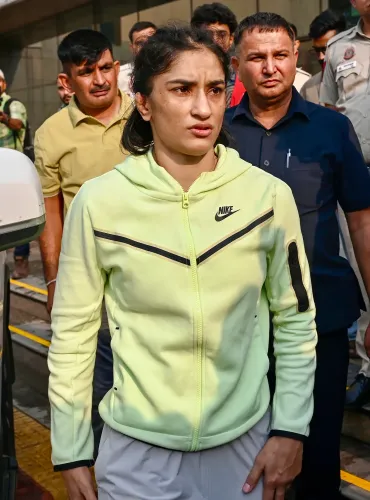
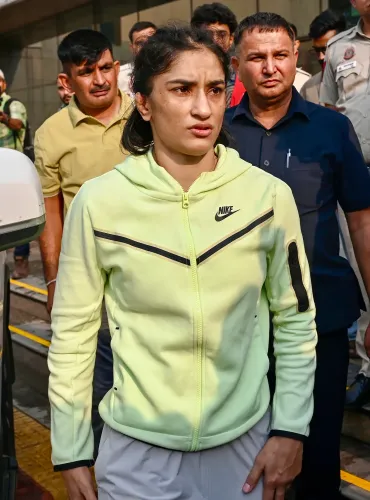
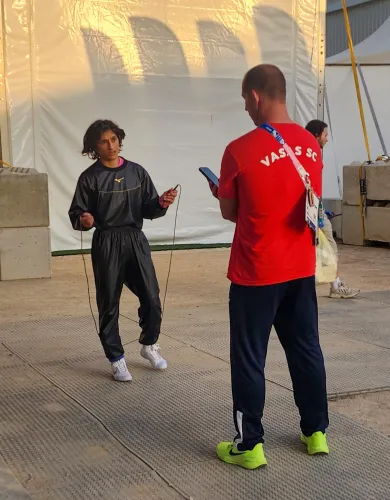
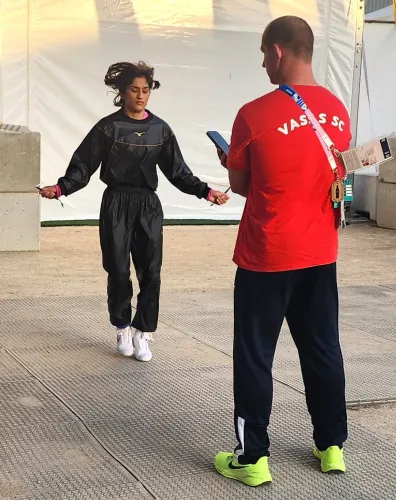
WFI to allow Vinesh Phogat in Asian Games trials after Delhi HC order
Synopsis
The WFI has backed down from challenging the Delhi High Court order that reinstates Vinesh Phogat into the Asian Games 2026 selection trials — but her actual Asiad participation is still in doubt because India's entry list was already sent to Japan. The court's rebuke of the WFI for treating maternity as a disqualifier is the sharpest judicial intervention in Indian wrestling governance in recent memory.
Key Takeaways
The Wrestling Federation of India (WFI) will not challenge the Delhi High Court order allowing Vinesh Phogat to compete in Asian Games 2026 selection trials.
Trials are scheduled for 30 and 31 May in New Delhi and will be video-recorded and monitored by SAI and IOA observers.
Phogat's final Asiad participation remains uncertain as India's entry list was already submitted to Japan before the court ruling.
If included, she would compete in the 50kg category as an 'iconic player.' The court condemned the WFI for using Phogat's Paris Olympics weigh-in disqualification against her, calling the language 'deplorable' and 'vindictive.' The Bench held that motherhood cannot be used as grounds to exclude female athletes from professional competition.
The Wrestling Federation of India (WFI) has confirmed it will not challenge the Delhi High Court order directing it to allow Vinesh Phogat to compete in the Asian Games 2026 selection trials, scheduled for 30 and 31 May in New Delhi. Federation sources confirmed the stance on Sunday, 24 May, a day after the court issued its ruling in favour of the Olympian and two-time World Championships medallist.
What the Court Directed
The Delhi High Court ordered the WFI to permit Phogat to participate in the upcoming trials and mandated that the entire selection process be video-recorded and overseen by independent observers from the Sports Authority of India (SAI) and the Indian Olympic Association (IOA). A Division Bench headed by Chief Justice Devendra Kumar Upadhyaya delivered the interim relief, observing that barring Phogat from the trials would render her pending writ petition meaningless.
The Bench stated that allowing her to compete was necessary 'in the interest of sport and justice.'
WFI's Response and the Asiad Uncertainty
'We respect the court order and the WFI will not challenge the decision. Let her compete in the trials,' federation sources said. However, the WFI flagged a logistical complication: the list of participants for the Asian Games had already been submitted to Japan earlier this month, before the court's intervention.
When asked whether Phogat could make the final squad if she wins the trials, sources indicated it was no longer entirely within the federation's control. 'If, by any chance, we manage to include her as an iconic player, she will have to compete in the 50kg category,' they said. Her participation in the Asiad, therefore, remains uncertain despite the legal victory.
Court's Rebuke on Maternity and Exclusion
The court was sharply critical of the WFI's selection framework, holding that the federation's policy failed to adequately account for Phogat's maternity-related break and post-partum recovery, which overlapped with the qualifying competitions listed under eligibility criteria.
'Motherhood must be viewed as a natural and deeply significant aspect of life that deserves accommodation and institutional sensitivity. Therefore, the law must ensure that motherhood does not become a ground for exclusion or marginalisation of female athletes such as the appellant,' the Bench observed.
The court also condemned the language in a show-cause notice the WFI had issued to Phogat earlier this month, which referenced her disqualification from the Paris Olympics final after failing the weigh-in. The Bench described the federation's characterisation of that incident as a 'national embarrassment' as 'deplorable' and 'vindictive.'
Background: What Phogat Had Argued
Phogat had challenged the WFI's Asian Games selection policy issued in February, along with a subsequent circular and the show-cause notice, contending she had been unfairly excluded despite formally informing both international and domestic authorities about her maternity-related sabbatical. During hearings, the WFI maintained that its policy applied uniformly to all wrestlers and that no exemptions were permissible.
The court, however, noted that earlier WFI guidelines had allowed 'iconic players' to compete in selection trials even without fulfilling standard eligibility conditions — a precedent that undermined the federation's uniformity argument.
What Happens Next
Phogat will now be eligible to compete at the trials on 30 and 31 May in New Delhi. Whether she ultimately travels to the Asian Games will depend on the outcome of those trials, the WFI's ability to add her name to the already-submitted entry list, and any further legal or administrative developments. The case has drawn fresh attention to how Indian sports bodies accommodate female athletes during and after pregnancy.
Point of View
Not voluntary — and the federation's own hedging on Asiad inclusion reveals that compliance with the letter of the court order may not translate into meaningful opportunity. The 'entry list already sent to Japan' argument is a convenient administrative buffer that could yet deny Phogat the prize even if she wins the trials. More broadly, the court's maternity ruling is a landmark for Indian women's sport: it establishes that recovery from childbirth is not a voluntary absence and that federation eligibility windows must account for it. The WFI's use of the Paris weigh-in incident as a rhetorical weapon in a show-cause notice — a moment that was already a source of national grief — reflects an institutional culture that the court was right to call out as vindictive.
NationPress
10 Oct 2026
Frequently Asked Questions
What did the Delhi High Court order regarding Vinesh Phogat?
The Delhi High Court directed the WFI to allow Vinesh Phogat to compete in the Asian Games 2026 selection trials on 30 and 31 May in New Delhi. The court also ordered that the trials be video-recorded and monitored by independent observers from SAI and IOA.
Will Vinesh Phogat definitely compete at the Asian Games 2026?
Not necessarily. While the court has secured her right to participate in the selection trials, her actual Asiad participation is uncertain because India's entry list was already submitted to Japan before the ruling. The WFI indicated she could only be included as an 'iconic player' in the 50kg category, which is not guaranteed.
Why did the court criticise the WFI's selection policy?
The Delhi High Court held that the WFI's policy failed to account for Phogat's maternity-related break and post-partum recovery, which overlapped with the qualifying competitions in the eligibility criteria. The court ruled that motherhood cannot be used as a basis to exclude female athletes from professional opportunities.
What was the WFI's show-cause notice about, and why did the court object?
The WFI had issued a show-cause notice to Phogat that referenced her disqualification from the Paris Olympics final after she failed the weigh-in, describing it as a 'national embarrassment.' The Delhi High Court called this language 'deplorable' and 'vindictive,' criticising the federation for weaponising a painful incident against the athlete.
What is Vinesh Phogat's background in wrestling?
Vinesh Phogat is an Olympian and two-time World Championships medallist who is among India's most decorated wrestlers. She had informed both domestic and international authorities about her maternity-related sabbatical, which the WFI's selection policy did not accommodate.