FIFA World Cup 2026 final unites nations beyond football: Shaji Prabhakaran
Synopsis
With 2 billion viewers expected and a $40 billion global economic footprint, the 2026 FIFA World Cup final between Spain and Argentina is being framed as far more than a football match. Former AIFF general secretary Shaji Prabhakaran argues it is the world's single greatest assembly of culture, hope, and human connection — a claim the numbers appear to support.
Key Takeaways
Shaji Prabhakaran , former general secretary of the All India Football Federation (AIFF) , called the 2026 FIFA World Cup final a global celebration transcending sport.
The final between Spain and Argentina is expected to be watched by 2 billion people worldwide.
The 2026 World Cup has reportedly generated more than $40 billion in global economic impact, including $20 billion within the United States alone.
The expanded 48-team format was credited with delivering high-quality competition and broader global participation.
Prabhakaran highlighted football's humanitarian role, saying the sport provides hope and joy to communities facing hardship.
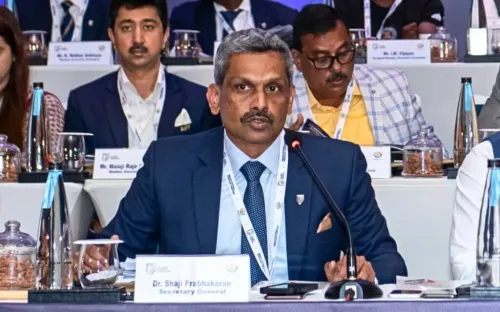
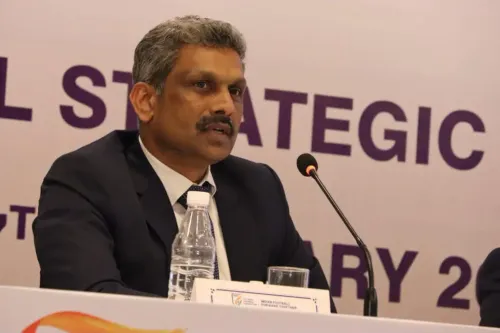
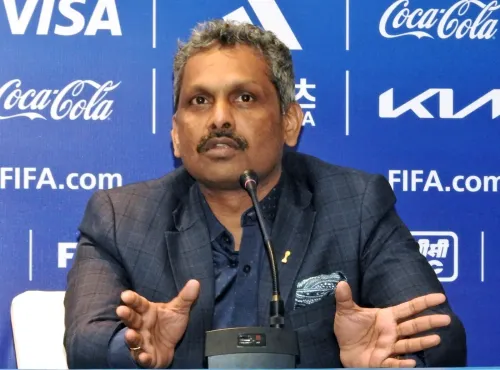
The 2026 FIFA World Cup final between Spain and Argentina is far more than a match to determine the planet's best football side, according to Shaji Prabhakaran, former general secretary of the All India Football Federation (AIFF). Speaking ahead of the title clash, Prabhakaran described the summit contest as a global celebration that transcends sport itself, reflecting football's unique power to bridge cultures, communities, and nations.
A Tournament That Delivered
Prabhakaran said the expanded 48-team format had raised the competitive bar across the board. 'This World Cup so far has been remarkable in terms of what we could witness with the expansion of 48 teams and the way the competition went, and there were real top-class performances, and the final between Spain and Argentina is huge,' he said.
The larger field, introduced for the 2026 edition, was designed to broaden global participation and, by most assessments, delivered on its promise of high-quality football alongside unprecedented geographic diversity in the knockout rounds.
Football as a Force Beyond the Game
Prabhakaran was emphatic that the World Cup's significance extends well beyond ninety minutes of play. 'Football brings people together and nations together and where it is the biggest celebration and it is where the biggest assembly of culture happens,' he said. He added that the impact reaches not just hardcore fans but ordinary citizens worldwide — a testament to football's unmatched global reach.
On the humanitarian dimension, Prabhakaran noted that football provides hope and emotional sustenance to communities facing hardship. 'It also lifts the spirits of people who are kind of suffering because that gives a lot of joy and satisfaction in the life and then they try to look for hope and football gives them that hope,' he said.
Economic Impact: Over $40 Billion Globally
The former AIFF chief highlighted the tournament's formidable economic footprint, citing figures that underscore its scale. 'Economically, it is a huge success, and there is a report in the US that it has contributed $20 billion within the US economy; that's huge, and $20 billion outside the US, there is more than $40 billion impact of this World Cup globally,' Prabhakaran said.
Such numbers position the 2026 FIFA World Cup as one of the most economically consequential sporting events in history, reinforcing arguments for continued investment in football infrastructure across host and participating nations alike.
2 Billion Eyes on the Final
With the Spain-Argentina final expected to draw a global television and streaming audience of 2 billion people, Prabhakaran said the sheer scale of viewership encapsulates what makes football irreplaceable. 'Tomorrow when the final will be, it will be watched by 2 billion people; that is huge, humongous, and that's what football does to the world,' he said.
The final is widely anticipated to be one of the most-watched broadcasts in television history, pitting two of the sport's most decorated nations against each other on the grandest stage. As the world prepares to tune in, Prabhakaran's assessment frames the occasion not merely as a football match, but as a rare moment of collective human experience.
Point of View
Yet that number deserves scrutiny: past host-nation impact assessments have often blended direct revenue with speculative multipliers. More credible is the cultural argument. A Spain-Argentina final, featuring the reigning European champions against the defending World Cup holders, is the kind of fixture that genuinely stops the world. India, still outside the World Cup conversation competitively, has a particular stake in the AIFF's engagement with this moment — the 48-team format is the clearest pathway yet for an Indian qualification bid, and Prabhakaran's enthusiasm signals that the federation understands the window.
NationPress
19 Jul 2026
Frequently Asked Questions
Who is Shaji Prabhakaran and why is his view on the FIFA World Cup significant?
Shaji Prabhakaran is the former general secretary of the All India Football Federation (AIFF), India's apex governing body for football. His perspective carries weight because he has represented Indian football at international forums, including FIFA and AFC, making him one of the country's most senior football administrators.
What is the expected global viewership for the 2026 FIFA World Cup final?
The 2026 FIFA World Cup final between Spain and Argentina is expected to be watched by approximately 2 billion people worldwide, according to Prabhakaran. That would place it among the most-watched broadcasts in television history.
What is the economic impact of the 2026 FIFA World Cup?
According to Prabhakaran, the 2026 FIFA World Cup has contributed $20 billion to the US economy and generated more than $40 billion in total global economic impact. These figures, he said, make the tournament an enormous financial success for host nations and the broader global economy.
How has the 48-team format changed the 2026 FIFA World Cup?
The expanded 48-team format, introduced for the 2026 edition, increased the number of participating nations and broadened global representation in the tournament. Prabhakaran said it delivered high-quality competition throughout, with top-class performances across the knockout rounds.
Why does Prabhakaran describe football as a humanitarian force?
Prabhakaran argued that football goes beyond sport by providing hope, joy, and emotional uplift to communities facing hardship. He said the World Cup, in particular, acts as a unifying global event that benefits not just dedicated fans but ordinary citizens across the world.