F1 is extremely expensive, talent exists: Jeet Jhabakh on India's F1 gap
Synopsis
India's first all-Indian FIA APRC champion Jeet Jhabakh has put a number to the dream: an F1 car costs between ₹100 crore and ₹180 crore, and the grid has just 22 seats for the entire world. His verdict — talent is not the problem, money and infrastructure are — reframes India's F1 absence as a structural failure, not a sporting one.
Key Takeaways
Jeet Jhabakh , India's FIA Asia-Pacific Rally Champion , says the absence of Indian drivers in Formula One stems from cost, not lack of talent.
A modern F1 car costs between ₹100 crore and ₹180 crore , making sponsorship and institutional backing essential for any realistic F1 bid.
Only Narain Karthikeyan and Karun Chandhok have ever competed in an F1 Grand Prix as Indian drivers.
India's F4 Indian Championship is described as competitive domestically, but costs escalate sharply upon moving to the international circuit.
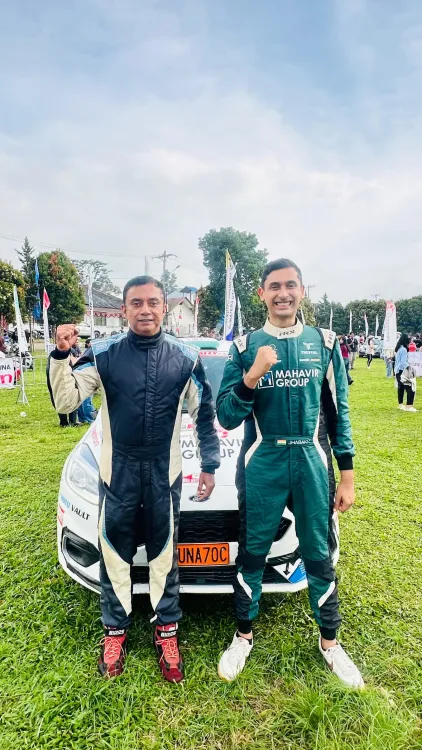
Jhabakh and co-driver Musa Sherif became the first all-Indian duo to win the FIA APRC, the first 2WD winner in the title's 38-year history .
Jhabakh called for stronger infrastructure and commercial backing to convert India's raw driving talent into global contenders.
Indian rally racing champion Jeet Jhabakh has pointed to the prohibitive cost of Formula One — and the lack of adequate infrastructure and corporate backing — as the primary reasons why India remains largely absent from the sport's starting grid, despite possessing genuine driving talent.
Cost Barrier at the Core
Speaking in an interview, Jhabakh, who recently created history by winning the FIA Asia-Pacific Rally Championship (APRC), was candid about the financial reality facing aspiring Indian F1 drivers. 'The amount of money that goes into it is phenomenal, and the amount of time that you have to put into it is absolutely crazy,' he said.
A modern F1 car is estimated to cost between ₹100 crore and ₹180 crore, and that is before accounting for the continuous research, development, and performance upgrades that teams invest in throughout a season. For drivers without wealthy sponsors or family backing, the ladder to the top tier of motorsport is effectively out of reach.
Chandhok and Karthikeyan: Pioneers Who Opened Doors
Jhabakh acknowledged that Narain Karthikeyan and Karun Chandhok — the only two Indians to have competed in a Formula One Grand Prix to date — fundamentally shifted the ambition ceiling for Indian motorsport enthusiasts. 'The fact that both Karun Chandhok and Narain Karthikeyan went to Formula One opened the doors for Indian motorsport, and a lot of youngsters felt that they could reach the top step because two of them have already done it,' Jhabakh said.
However, he added that many young drivers, including himself, underestimate just how expensive F1 is at the outset. Notably, Arvid Lindblad, the current Racing Bulls driver who is of Indian origin through his British-Indian mother and Punjabi maternal grandparents, was born in Surrey and races under the British flag — meaning he does not count as an Indian representative in the sport.
India's Junior Series: Competitive but Insufficient
Jhabakh highlighted the F4 Indian Championship as a positive domestic development, describing the junior series as 'competitive' and accessible to a wider pool of talent. The problem, he explained, begins the moment a driver attempts to go international. 'As soon as you go international, you realise that the money involved is so high — unless someone is backing you or you have your own backing, it's very tough to climb up the step consistently,' he said.
He also underscored the structural scarcity at the top: with only 22 seats available on the entire F1 grid at any given time, competition is global and fierce. 'Some of us might be extremely good too, but money becomes a little bit of a barrier over there, so if you don't have sponsorships, no matter how much time and effort you put in, it's a very, very slight chance that you'll be picked up by one of the teams,' Jhabakh noted.
Jhabakh's Historic FIA APRC Title
Jhabakh himself is a testament to what Indian motorsport can achieve when talent finds the right opportunity. Competing alongside co-driver Musa Sherif, he became the first member of an all-Indian driver-and-co-driver pair to win the FIA APRC crown — a feat made even more remarkable by the fact that he clinched the title in the two-wheel-drive (2WD) category, not the conventional four-wheel-drive (4WD) class. It was the first time in the championship's 38-year history that a 2WD driver had won the overall title.
'I've been in motorsport for a while, but rallying has hardly been two years for me; this is my third full year. We went international and it kind of clicked for us,' Jhabakh reflected. He described the win as something that 'raised the ceiling' for Indian motorsport overall, adding that he had not expected to reach this milestone so early in his rallying career.
What Needs to Change
For Jhabakh, the solution is straightforward in principle if difficult in execution: greater infrastructure investment and sustained commercial backing for promising young Indian drivers. 'Talent exists; we have a lot of great drivers over here; we just need the right infrastructure to push us up there,' he said. As Indian motorsport slowly builds momentum — driven in part by his own landmark achievement — the question of whether the country can close the gap to Formula One will depend heavily on whether sponsors and institutions step up to match the ambition.
Point of View
Not just a sporting one. India has produced FIA champions and F1 drivers before, yet the pipeline remains broken — because motorsport funding in India is almost entirely contingent on individual family wealth or one-off corporate deals, neither of which scales. The F4 Indian Championship is a start, but it is a domestic solution to a global cost problem. Until Indian companies invest in motorsport the way Red Bull, Mercedes, and Ferrari invest in their academies, the gap between the talent Jhabakh describes and the F1 grid will remain structural rather than incidental.
NationPress
12 Nov 2026
Frequently Asked Questions
Why are there so few Indian drivers in Formula One?
According to Jeet Jhabakh, the primary barrier is cost — a modern F1 car alone costs between ₹100 crore and ₹180 crore, and teams require continuous investment in upgrades and R&D. Without strong sponsorship or institutional backing, even talented Indian drivers cannot sustain the financial demands of climbing the international motorsport ladder.
Which Indians have competed in Formula One?
Only two Indians — Narain Karthikeyan and Karun Chandhok — have competed in a Formula One Grand Prix. Racing Bulls driver Arvid Lindblad is of partial Indian heritage but was born in Surrey and races under the British flag.
What did Jeet Jhabakh win that makes him historically significant?
Jhabakh and co-driver Musa Sherif became the first all-Indian driver-and-co-driver pair to win the FIA Asia-Pacific Rally Championship (APRC). They also made history as the first 2WD entrants to win the title in the championship's 38-year history.
What is the F4 Indian Championship and does it help develop F1 talent?
The F4 Indian Championship is a junior domestic racing series that Jhabakh describes as competitive and accessible to a wide pool of local drivers. However, he cautions that once a driver moves to the international arena, the financial gap widens dramatically, often halting careers that show genuine promise.
What does Jeet Jhabakh say India needs to produce F1 drivers?
Jhabakh argues that raw talent already exists in India and points to the need for the right infrastructure and sustained commercial backing to push drivers up the global racing ladder. Without sponsorship, he said, even highly skilled drivers have only a slim chance of being picked up by an F1 team.