FIFA World Cup 2026 ball Trionda sent to ISS to study microgravity balance
Synopsis
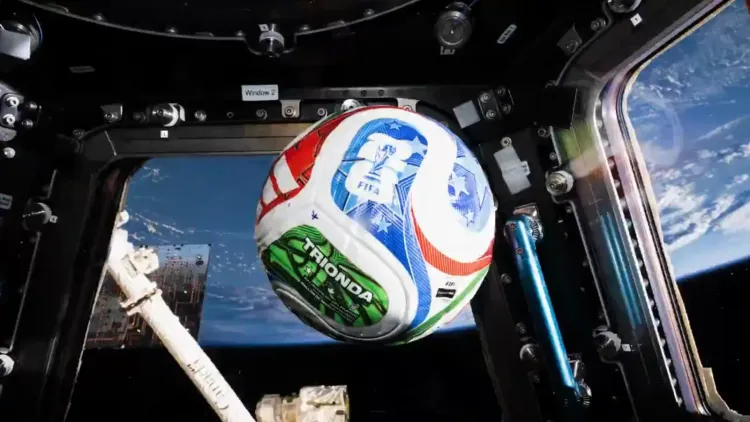
The FIFA World Cup 2026's official match ball, the Adidas Trionda, has been taken to the International Space Station — not as a publicity stunt, but to recreate a 2019 microgravity study that shaped how modern footballs are engineered. The findings directly influence ball balance, sensor placement, and ultimately the VAR calls that decide tournament outcomes.
Key Takeaways
NASA sent the Adidas Trionda — official ball of the FIFA World Cup 2026 — to the International Space Station (ISS) to study ball balance in microgravity.
The experiment recreates a 2019 ISS National Laboratory study on how a football's internal mass affects motion, stability, and rotation.
Findings have improved understanding of how match-ball sensors influence performance, contributing to FIFA tournament ball development.
The Trionda features a four-panel construction with deep seams for in-flight stability and a 500Hz motion sensor chip feeding real-time data to the VAR system.
The ball's design honours the three host nations — Canada , Mexico , and the United States — through colour, iconography, and its name, which means 'three waves' in Spanish.
The official match ball of the FIFA World Cup 2026, the Adidas Trionda, has been sent to the International Space Station (ISS) as part of a science demonstration examining how a football's centre of mass and balance behave in microgravity. NASA announced the experiment, describing it as a rare convergence of space research and sports engineering that has direct implications for how match balls perform on the pitch.
The Science Behind the Experiment
The current ISS crew recreated a 2019 experiment — originally conducted in partnership with the ISS National Laboratory — using the new Trionda to compare how differently balanced footballs spin and move when gravity is removed from the equation. According to NASA, the findings from that original study improved understanding of how a ball's internal mass distribution affects its motion, stability, and rotation during play.
Crucially, the research also shed light on how embedded technologies — particularly match-ball sensors — can influence ball performance. NASA said the work contributed to studies used in the development and evaluation of footballs for major international tournaments, including FIFA World Cup competitions.
What NASA and Adidas Are Demonstrating
Through a joint STEMonstration, NASA and Adidas are now presenting that science to a broader audience. The demonstration shows how the same physics governing motion in space also shape how a football curves, dips, and spins in front of millions of viewers on Earth. 'Helping to improve the beautiful game is just one of the ways NASA science done on the International Space Station makes life better for people on Earth,' NASA noted in its communication on the experiment.
About the Trionda Ball
The name Trionda translates from Spanish as 'three waves,' a nod to the fluid geometry of its brand-new four-panel construction. The ball's red, green, and blue colour scheme pays homage to the three host nations — Canada, Mexico, and the United States — while iconography specific to each country adorns the surface: a maple leaf for Canada, an eagle for Mexico, and a star for the United States. Gold embellishments pay tribute to the FIFA World Cup Trophy.
According to FIFA, the four panels incorporate intentionally deep seams designed to produce optimal in-flight stability by ensuring sufficient and evenly distributed drag as the ball travels through the air. Embossed icons — visible only up close — are said to elevate grip when striking or dribbling in wet or humid conditions.
Connected Ball Technology
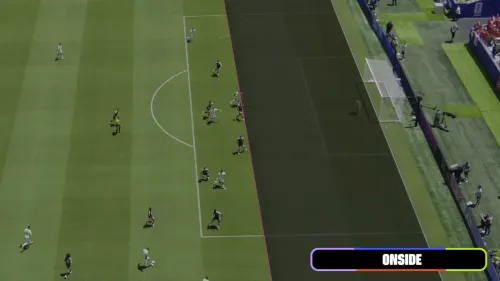
The Trionda also features a state-of-the-art 500Hz motion sensor chip that delivers real-time data on every element of the ball's movement. This information is transmitted directly to the video assistant referee (VAR) system, enhancing match officials' decision-making — including on offside calls. The technology builds on connected ball systems used in previous FIFA tournaments, representing a further step in the integration of sports science and officiating.
With the 2026 FIFA World Cup set to be the largest edition of the tournament in history, the Trionda's journey to the ISS underscores how cutting-edge research — conducted hundreds of kilometres above Earth — continues to shape the game played on the ground.
Point of View
The engineering behind the ball may matter as much as the players kicking it.
NationPress
21 Jun 2026
Frequently Asked Questions
Why was the FIFA World Cup 2026 ball Trionda sent to space?
The Trionda was sent to the International Space Station to study how a football's centre of mass and balance affect its motion, stability, and rotation in microgravity. The experiment, a recreation of a 2019 ISS study, helps engineers understand how embedded technologies like match-ball sensors influence performance during play.
What is the Adidas Trionda and what does the name mean?
The Trionda is the official match ball of the FIFA World Cup 2026, designed by Adidas. Its name translates from Spanish as 'three waves,' reflecting its fluid four-panel construction and paying homage to the three host nations — Canada, Mexico, and the United States.
What technology is inside the Trionda ball?
The Trionda contains a 500Hz motion sensor chip that tracks every element of the ball's movement in real time. This data is transmitted directly to the video assistant referee (VAR) system, improving decision-making on offside calls and other match incidents.
How does the microgravity experiment improve footballs on Earth?
By removing gravity from the equation, researchers can isolate how internal mass distribution affects a ball's spin and stability. The findings from the 2019 study contributed to the development and evaluation of FIFA tournament balls, including improvements to sensor placement and panel construction that affect real-match performance.
What design features does the Trionda have?
The Trionda uses a four-panel construction with intentionally deep seams for even drag and in-flight stability. Its red, green, and blue colour scheme represents the three host nations, with a maple leaf for Canada, an eagle for Mexico, and a star for the United States. Gold embellishments pay tribute to the FIFA World Cup Trophy.