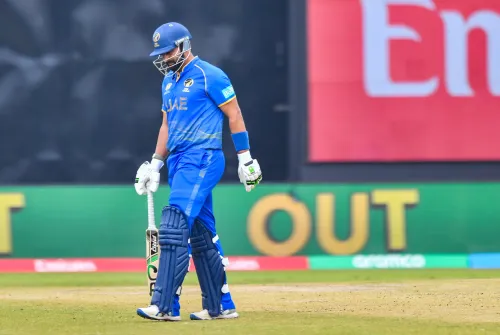
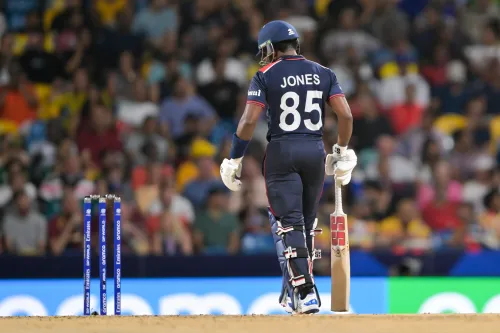
USA cricketer Akhilesh Reddy banned 8 years under ICC Anti-Corruption Code
Synopsis
A USA cricketer with just four T20 Internationals to his name has been handed one of cricket's longest corruption bans — eight years — after an ICC Tribunal found he tried to fix an Abu Dhabi T10 match, solicited a teammate to concede runs, and then deleted WhatsApp messages to obstruct the investigation. The case exposes the vulnerability of associate-nation tournaments to corruption.
Key Takeaways
Bodugum Akhilesh Reddy , 26 , has been banned from all cricket for eight years by an ICC Anti-Corruption Tribunal.
The ban is backdated to 21 November 2025 , when he was first provisionally suspended.
Corrupt activities were linked to the 2025 Abu Dhabi T10 (ADT10) tournament in the UAE .
Reddy was found guilty of attempting to fix a match, soliciting a teammate ('Player A') to concede runs, and deleting WhatsApp messages to obstruct the ACU probe.
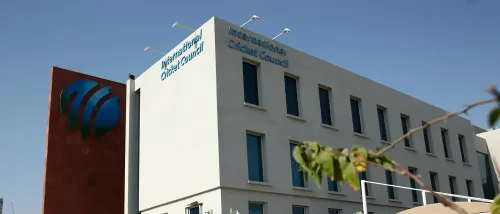
The three-member Tribunal was chaired by Michael J Beloff KC , alongside Justice Kate O'Regan and Lloyd Mhishi .
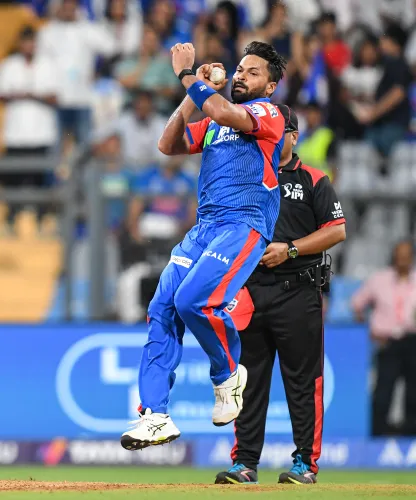
Reddy had represented the USA in four T20 Internationals , taking one wicket .
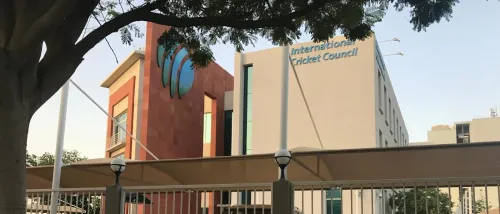
Bodugum Akhilesh Reddy, a cricketer representing the United States of America (USA), has been handed an eight-year ban from all forms of cricket after an International Cricket Council (ICC) Anti-Corruption Tribunal found him guilty of breaching three counts of the Anti-Corruption Code. The ban, backdated to 21 November 2025, stems from corrupt activities linked to the 2025 Abu Dhabi T10 (ADT10) tournament in the United Arab Emirates (UAE).
What the Tribunal Found
The ICC had been appointed by the Emirates Cricket Board (ECB) to serve as the Designated Anti-Corruption Official (DACO) for the league. Following formal tribunal proceedings, Reddy was found guilty of violating three specific articles of the Anti-Corruption Code.
Under Article 2.1.1, he was found to have attempted to fix or improperly influence the result, progress, or conduct of matches in the ADT10 2025. Under Article 2.1.4, he was found guilty of soliciting or facilitating another participant to commit a similar breach. The third charge, under Article 2.4.7, related to obstructing the DACO's investigation by deleting data and messages from a mobile device.
The Hotel Room Incident
The charges trace back to the morning of 19 November 2025, when Reddy allegedly approached a teammate — identified only as 'Player A' — in a hotel room shortly before the opening match of the Aspin Stallions. According to the Tribunal, Reddy asked 'Player A' to 'give runs' — that is, concede extra runs while bowling — reportedly at the behest of team management.
When 'Player A' refused and reported the approach to the ICC Anti-Corruption Unit (ACU), he was dropped from the starting XI shortly before the match began. The sequence of events was central to the Tribunal's findings on the first two charges.
Evidence Deletion and Failed Defence
On the third charge, Reddy admitted to manually deleting WhatsApp text messages and call logs exchanged with 'Player A' on the morning of 19 November 2025. He claimed the deletion was routine 'data hygiene' on his iPhone, but the Tribunal rejected that defence, ruling that he had intentionally destroyed potentially incriminating material ahead of the ACU investigation.
The Tribunal and Reddy's Cricket Record
The sanctions were determined by a three-member panel comprising Michael J Beloff KC (Chair), Justice Kate O'Regan, and Lloyd Mhishi. Reddy, 26, made his international debut for the USA against the Cayman Islands in the North America T20 Cup and has featured in four T20 Internationals, taking one wicket. His eight-year suspension, backdated to his provisional ban on 21 November 2025, effectively ends his international career at the highest level for the foreseeable future.
The case is among the most serious corruption findings involving a USA cricket representative and adds to the ICC's ongoing efforts to police associate-nation tournaments, where anti-corruption oversight has historically been harder to enforce.
Point of View
Precisely because oversight infrastructure is thinner and players are more financially vulnerable. The ICC's appointment as DACO for the Abu Dhabi T10 was meant to close that gap — and it did, this time. But the fact that a player felt emboldened enough to approach a teammate in a hotel room on match morning, and then delete evidence on his phone, suggests the deterrence message has not fully landed in lower-tier circuits. With the USA hosting the 2024 T20 World Cup having raised the profile of American cricket, the governing bodies now face pressure to match that visibility with robust, permanent anti-corruption structures — not tournament-by-tournament appointments.
NationPress
17 Sept 2026
Frequently Asked Questions
Why has Akhilesh Reddy been banned from cricket?
Bodugum Akhilesh Reddy was banned for eight years by an ICC Anti-Corruption Tribunal after being found guilty of attempting to fix a match during the 2025 Abu Dhabi T10 tournament, soliciting a teammate to concede extra runs, and deleting WhatsApp messages to obstruct the investigation. The ban covers all forms of cricket.
When does Akhilesh Reddy's eight-year ban start?
The ban has been backdated to 21 November 2025, the date on which Reddy was first provisionally suspended by the ICC. It will therefore run until November 2033 unless successfully appealed.
What were the three charges against Reddy?
Reddy was found guilty under Article 2.1.1 (attempting to fix or improperly influence a match), Article 2.1.4 (soliciting a teammate to breach the code), and Article 2.4.7 (obstructing the DACO's investigation by deleting mobile data). All three violations relate to the ADT10 2025 tournament.
What happened to the teammate Reddy approached?
The teammate, referred to only as 'Player A', refused Reddy's approach and reported the matter to the ICC Anti-Corruption Unit. He was subsequently dropped from the starting XI shortly before the match — a development the Tribunal noted in its findings.
How significant is this ban in the context of USA cricket?
The case is among the most serious anti-corruption findings involving a USA cricket representative. Reddy had played just four T20 Internationals for the USA. The ban underscores the ICC's stated commitment to policing associate-nation tournaments, where corruption risk is considered higher.