WCA flags 2027 ODI World Cup format change, demands ICC transparency
Synopsis
The World Cricketers' Association has publicly challenged the ICC over a mid-cycle overhaul of the 2027 ODI World Cup format — a change that effectively removes the guarantee of a full World Cup campaign for the lowest-ranked qualifiers, despite years of planning built around the original structure. CEO Tom Moffat called it a governance failure, not just a scheduling tweak.
Key Takeaways
The World Cricketers' Association (WCA) raised formal objections to the ICC's revised format for the 2027 Men's ODI World Cup on 17 July 2025 .
The ICC has replaced the original two-groups-of-seven format with a three-stage structure including a preliminary Super Series for the three lowest-ranked teams.
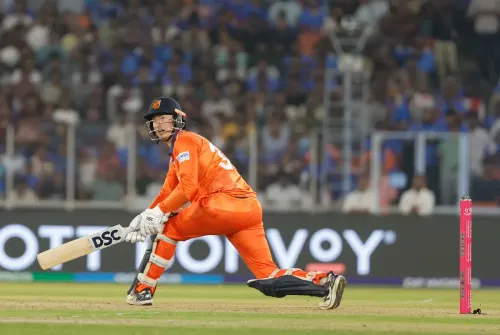
The 14-team tournament remains set for South Africa , Zimbabwe , and Namibia , but the revised format limits emerging nations' access to full World Cup campaigns.
WCA CEO Tom Moffat said players were not meaningfully consulted before the format change was announced.
The WCA outlined objections across four pillars: transparency , consultation , global growth , and player impact .
Moffat linked the dispute to a broader governance concern, citing the WCA's Global Game Structure Report on the need for greater ICC accountability.
The World Cricketers' Association (WCA) on Friday, 18 July 2025 raised serious objections to the International Cricket Council's (ICC) decision to overhaul the format of the 2027 Men's ODI World Cup, warning that the unilateral revision undermines transparency, stakeholder consultation, and cricket's stated ambition of global growth. The WCA made its position public on the sidelines of its Annual Conference in Edinburgh.
What Changed in the 2027 World Cup Format
The ICC has retained the 14-team structure for the tournament, which will be hosted across South Africa, Zimbabwe, and Namibia. However, the competition's architecture has been significantly restructured. Instead of the originally announced two-groups-of-seven format, the event will now run across three stages: a preliminary Super Series for the three lowest-ranked qualifying teams, followed by a group stage, a Super 7 round, and knockout matches.
The WCA argues this fundamentally dilutes the promise made to emerging cricketing nations, who had aligned their investment strategies, qualification pathways, and resource planning around the earlier format.
What the WCA Said
WCA Chief Executive Officer Tom Moffat said the body's concern goes beyond procedural objection. 'The ICC is entitled to determine the structure of its global events. However, when commitments are made to the game, qualification pathways are established and countries and players invest years pursuing those opportunities, significant changes deserve genuine consultation, transparency and a clear explanation,' Moffat said in an official statement.
He further stressed the personal stakes involved for players from smaller cricketing nations. 'For many players, qualifying for an ODI World Cup can be the pinnacle of a career. Players make significant professional and personal commitments in pursuit of that opportunity. To spend years working towards a clearly understood pathway, only to see that materially change within a cycle, has real consequences,' he added.
Four Pillars of Objection
The WCA formally outlined its concerns across four areas: transparency and certainty, meaningful consultation, global growth, and impact on players and nations. On consultation, the association stated that players — through their chosen representatives — were not meaningfully engaged before the announcement was made. On global growth, it argued that restricting the lowest-ranked qualifiers from a guaranteed full-fledged campaign against established Test-playing nations contradicts cricket's expansion goals.
'It is difficult to reconcile the game's stated ambition of growing cricket globally with decisions that reduce meaningful opportunities at pinnacle events for some of the countries that stood to benefit most from genuine expansion,' Moffat said.
The Broader Structural Concern
Moffat was emphatic that the WCA's objection is not limited to one tournament's scheduling. He linked the controversy to a wider governance deficit in how cricket's major strategic decisions are made. 'This isn't simply about the format of one tournament. It's about ensuring game-wide confidence in how the game makes major strategic decisions,' he said.
He cited the WCA's Global Game Structure Report — prepared following extensive consultation across the sport — as evidence of broad recognition that cricket has significant opportunities ahead through greater global alignment, but only if transparency and collaboration are prioritised. The WCA concluded by urging the ICC and its member boards to embrace modern leadership principles and engage meaningfully with all stakeholders, including players.
What Happens Next
The ICC has not yet responded publicly to the WCA's statement. The 2027 Men's ODI World Cup remains scheduled for South Africa, Zimbabwe, and Namibia, with qualification cycles already under way. The WCA's intervention is likely to intensify scrutiny of ICC governance ahead of future structural decisions. How the ICC chooses to respond — or whether it revisits the format — will be closely watched by emerging cricket nations with the most at stake.
Point of View
After smaller boards had already committed budgets and players had oriented careers around a specific pathway. If the ICC cannot demonstrate that it consulted stakeholders before announcements of this scale, it risks reinforcing a perception that global cricket is still run for the benefit of its largest boards, not the game's long-term growth.
NationPress
16 Oct 2026
Frequently Asked Questions
What changes did the ICC make to the 2027 ODI World Cup format?
The ICC replaced the original two-groups-of-seven format with a three-stage structure for the 2027 Men's ODI World Cup. The three lowest-ranked qualifying teams will now play a preliminary Super Series before the main group stage, followed by a Super 7 round and knockouts. The 14-team field and the host nations — South Africa, Zimbabwe, and Namibia — remain unchanged.
Why is the World Cricketers' Association objecting to the format change?
The WCA argues the change was made without meaningful consultation with players or their representatives, and that it dilutes the opportunity originally promised to emerging cricket nations. Countries and players had planned years of investment and qualification efforts around the earlier format, and the mid-cycle revision has real professional and financial consequences for those affected.
Who is Tom Moffat and what did he say?
Tom Moffat is the Chief Executive Officer of the World Cricketers' Association. He stated that while the ICC has the authority to set event formats, significant changes that affect players' careers and countries' planning 'deserve genuine consultation, transparency and a clear explanation.' He also said the issue reflects a broader governance problem in how cricket makes major strategic decisions.
How does the new format affect emerging cricket nations?
Under the revised format, the three lowest-ranked qualifying teams enter a preliminary Super Series rather than competing directly in the main group stage. The WCA says this means qualification no longer guarantees a full World Cup campaign against established Test-playing nations, reducing the sporting, developmental, and commercial benefits for emerging cricket markets.
What is the WCA's Global Game Structure Report?
The WCA's Global Game Structure Report is a document prepared following extensive consultation across the cricketing world, highlighting opportunities for the sport through greater global alignment, transparency, and stakeholder collaboration. WCA CEO Tom Moffat cited the report in his statement to underline that the concerns raised are not new and reflect broad recognition within the game.