Does India Have 15 Crore Nomadic Communities? Minister Virendra Kumar in Lok Sabha
Synopsis
Discover the significant revelation from Union Minister Virendra Kumar regarding India's diverse nomadic communities. With nearly 15 crore individuals affected, the government's initiatives aim to uplift these marginalized groups through education, health, and livelihood support.
Key Takeaways
15 crore people belong to nomadic communities in India.
Government initiatives like SEED aim to uplift these communities.
Documentation issues hinder access to welfare benefits.
Collaboration between government and local communities is essential.
States need to improve the issuance of caste certificates.
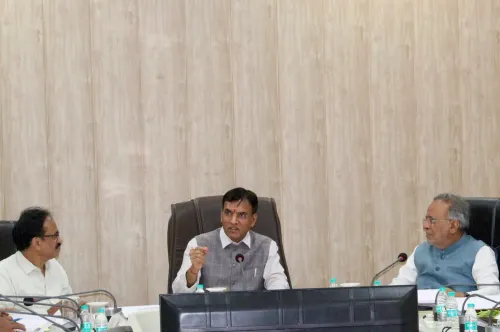
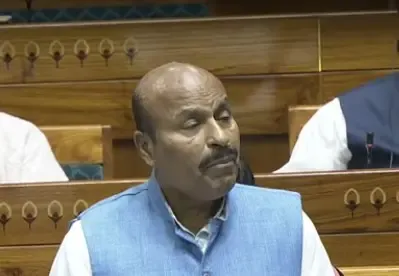
New Delhi, Dec 9 (NationPress) Union Minister for Social Justice and Empowerment, Virendra Kumar, revealed in the Lok Sabha on Tuesday that approximately 15 crore individuals in India are part of de-notified, nomadic, and semi-nomadic communities.
These groups, which encompass loh-gadia (ironsmith), snake charmers, and banjaras, frequently lead transient lifestyles without stable employment.
The minister stressed that the government has established a dedicated board to aid in their integration into mainstream development.
During the Question Hour, he addressed a query from Advocate Chandrashekhar Azad of the Azad Samaj Party (Kanshi Ram), representing Nagina in Uttar Pradesh. Azad highlighted that states like Punjab, Haryana, and Uttar Pradesh have a significant concentration of these communities, many of whom are classified under Scheduled Castes and Scheduled Tribes, yet still struggle to access welfare benefits.
Lok Sabha Speaker Om Birla also participated in the discussion, suggesting that Members of Parliament should coordinate camps with local communities to directly engage with nomadic tribes, focusing on education and ensuring government schemes effectively reach them. He mentioned his ongoing efforts in his constituency.
Highlighting the government’s initiatives, the minister stated that the Scheme for Economic Empowerment of DNTs (SEED), launched by the Ministry of Social Justice & Empowerment, is the primary program aimed at uplifting these communities.
This scheme emphasizes education through free coaching, health insurance via Ayushman cards, livelihood support through self-help groups, and housing benefits connected to the Pradhan Mantri Awas Yojana.
The Development and Welfare Board for DNTs (DWBDNC), established on February 21, 2019, oversees these initiatives.
He further mentioned that students from these communities are being linked to the National Overseas Scholarship scheme to broaden their opportunities.
The minister pointed out that only Madhya Pradesh has provided residential benefits to 3,047 families from these communities, and other state governments are encouraged to offer similar support. However, challenges remain, especially concerning the issuance of caste and birth certificates.
Kumar acknowledged that the lack of certification hinders many from accessing benefits. Currently, only seven states—Maharashtra, Madhya Pradesh, Haryana, Uttar Pradesh, Tamil Nadu, Gujarat, and Rajasthan—issue caste certificates to DNT communities, while states like Andhra Pradesh have yet to do so.
Bhausaheb Rajaram Wakchaure of Shiv Sena(UBT), representing Shirdi in Maharashtra, expressed concerns about this gap, emphasizing that without proper documentation and government certificates, these marginalized groups remain excluded.
The minister assured the House that the Centre has urged all states to start issuing certificates to ensure that nomadic and de-notified tribes are not left behind in the nation’s development.
In response to a question from Kanimozhi Karunanidhi, DMK Thoothukuddi (Tamil Nadu), the minister stated that a committee has been formed to extend benefits to the identified 1,262 communities and an additional 268 not classified as Scheduled Caste or Scheduled Tribe. The government is committed to ensuring these benefits reach the intended recipients.
Point of View
It's essential to recognize the challenges faced by nomadic communities in India. The government's commitment to integration and support through various schemes reflects an understanding of their unique needs. However, the lack of documentation remains a significant barrier. It's crucial for all stakeholders to collaborate and ensure these marginalized groups are adequately supported in their journey towards development.
NationPress
28 Sept 2026
Frequently Asked Questions
What is the current population of nomadic communities in India?
The Union Minister for Social Justice and Empowerment stated that approximately 15 crore people belong to de-notified, nomadic, and semi-nomadic communities in India.
What initiatives has the government taken for these communities?
The government has launched the Scheme for Economic Empowerment of DNTs (SEED), which focuses on education, health insurance, livelihood support, and housing benefits.
Why do nomadic communities face challenges in accessing benefits?
Many nomadic individuals lack proper documentation, such as caste and birth certificates, which prevents them from availing themselves of government benefits.
Which states provide caste certificates to nomadic communities?
Currently, seven states—Maharashtra, Madhya Pradesh, Haryana, Uttar Pradesh, Tamil Nadu, Gujarat, and Rajasthan—issue caste certificates to DNT communities.
How can the government improve support for nomadic tribes?
The government is urged to facilitate the issuance of certificates and enhance collaboration with local communities to ensure that benefits reach the nomadic tribes effectively.