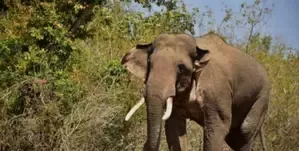
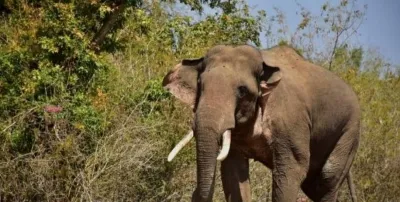
Hassan elephant attack: 2nd death in 3 days sparks protest, villagers block highway
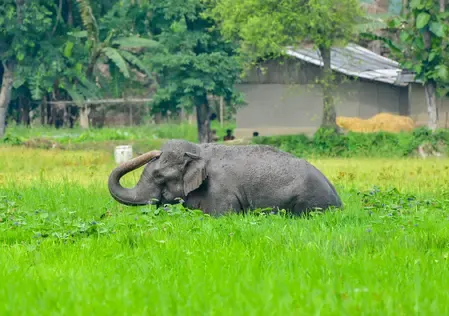
Synopsis
A second elephant attack death in just three days has pushed Hassan district to the brink. Villagers are holding the body of 55-year-old Hafeez-Ur-Rehman, blocking a national highway, and refusing post-mortem until the Forest Minister arrives — exposing how hollow last weekend's official assurances proved to be within 24 hours.
Key Takeaways
Hafeez-Ur-Rehman (55) was killed by a wild elephant at Nagenahalli village , Belur taluk , Hassan district on 16 November 2026 — the second such death in three days .
Villagers and farmers' organisations stopped the ambulance, blocked the national highway , and refused to allow a post-mortem until the Forest Minister visits and announces a permanent solution.
The previous victim, Jayamma , was killed on Saturday ; official assurances issued on Sunday failed to prevent Monday's attack.
Farmer leader Swamy Gowda alleged this is the 89th death in the taluk linked to elephant attacks, and demanded amendments to the Wildlife (Protection) Act, 1972 .
Around 50 to 60 elephants are reportedly roaming the region, affecting nearly 40 to 50 villages ; protesters demand relocation to the Bhadra forest region .
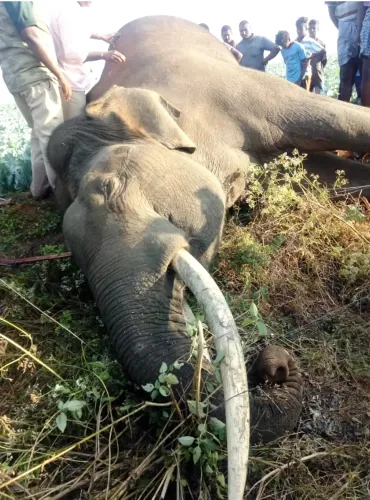
A 55-year-old man was killed in a wild elephant attack at Nagenahalli village in Belur taluk, Hassan district, Karnataka, on Monday, 16 November 2026, marking the second fatal elephant attack in the region within three days. The deceased, identified as Hafeez-Ur-Rehman, was reportedly on his way to work at a coffee estate when a wild elephant attacked and killed him on the spot. The incident falls under the limits of Arehalli police station.
Protest erupts, body withheld from post-mortem
Thousands of villagers and farmers' organisations descended on the taluk hospital and staged protests in Belur town and Nagenahalli village, expressing fury at the Forest Department and district administration for failing to prevent repeated deaths. Protesters stopped the ambulance carrying Hafeez-Ur-Rehman's body, preventing it from being taken to the mortuary. They demanded that the body be first taken to the site of the attack before any post-mortem is conducted.
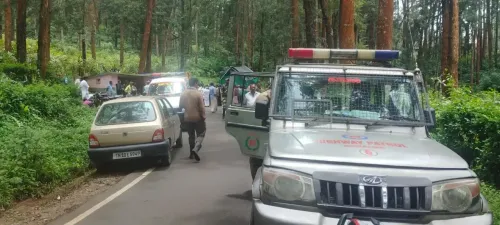
Demonstrators declared they would neither permit the post-mortem nor allow the final rites to be performed until the Forest Minister and senior officials personally visit the area and announce a credible, permanent solution. Police personnel struggled to manage the large crowd as protesters blocked a national highway and several village roads.
Second death follows broken assurances
The anger is amplified because Monday's killing came within 24 hours of the authorities announcing fresh measures to address the elephant menace. Last Saturday, a woman named Jayamma was killed in a separate wild elephant attack. Her body was held by protesters until Sunday noon as residents staged a similar agitation demanding a permanent resolution to the escalating human-elephant conflict.
Following that protest, the district administration and the Forest Department announced that wild elephants straying into residential areas would be driven back into forests. The Chief Conservator of Forests issued a formal order to this effect, temporarily defusing tensions — only for Monday's fatal attack to reignite public fury.
Key Demands and What Protesters Are Saying
Farmer leader Swamy Gowda alleged that this was the 89th death in the taluk linked to elephant attacks and accused the authorities of failing to take responsibility. 'This is the 89th death in the taluk, and nobody is ready to take responsibility. The Forest Department, which should take responsibility, does not even visit the spots where these attacks occur,' he said. Gowda demanded amendments to the Wildlife (Protection) Act, 1972, arguing that human lives must be given priority over wildlife protection provisions, and alleged negligence by elected representatives and officials at both the state and the Centre.
A local coffee estate owner described conditions in nearly 40 to 50 villages as resembling a 'Covid-like emergency,' with residents afraid to step outside. He claimed around 50 to 60 elephants were roaming the region and entering farms and residential areas even during daylight hours. Protesters have specifically demanded that elephants be relocated to the Bhadra forest region and that a permanent prevention mechanism be established.
Scale of the Human-Elephant Conflict
The Hassan district incidents are not isolated. The coffee-growing belt across Karnataka's Western Ghats fringe has long faced human-elephant conflict, but the frequency of fatal attacks in Belur taluk has sharply intensified pressure on state authorities. The fact that two deaths occurred on consecutive days — one on Saturday and another on Monday — and that official assurances failed to prevent the second fatality has exposed the limits of reactive measures like forest drives and corridor orders.
With the Forest Minister yet to visit the area and protesters maintaining their blockade, the situation in Hassan district remains volatile. The state government faces mounting pressure to move beyond interim orders and announce a durable, enforceable strategy to separate human settlements from elephant habitats.
Point of View
With no durable separation of human settlements from elephant habitats. The fact that official assurances issued on Sunday were overtaken by a fresh fatality on Monday is not coincidence — it reflects a pattern of crisis management substituting for policy. With a reported 89 deaths in Belur taluk alone, the human cost is no longer deniable. The demand for Wildlife (Protection) Act amendments deserves serious legislative engagement rather than dismissal as anti-conservation sentiment; the two goals are not irreconcilable, but they require political will that has so far been absent.
NationPress
17 Nov 2026
Frequently Asked Questions
What happened in Hassan district on 16 November 2026?
A 55-year-old man, Hafeez-Ur-Rehman, was killed by a wild elephant at Nagenahalli village in Belur taluk, Hassan district, on 16 November 2026 — the second fatal elephant attack in the region within three days. Thousands of villagers staged protests and blocked a national highway, refusing to allow his body to be taken for post-mortem.
Who was killed in the previous elephant attack in Hassan?
A woman named Jayamma was killed in a wild elephant attack last Saturday, just two days before the latest fatality. Her body was also held by protesters until Sunday noon, when the district administration and Forest Department announced fresh measures — assurances that failed to prevent Monday's attack.
What are the protesters demanding?
Protesters are demanding that the Forest Minister and senior officials personally visit the area and announce a permanent solution to the human-elephant conflict. They are also calling for elephants in the region to be relocated to the Bhadra forest and for amendments to the Wildlife (Protection) Act, 1972 to prioritise human lives.
How serious is the elephant menace in Belur taluk?
Farmer leader Swamy Gowda alleged that Monday's death was the 89th fatality linked to elephant attacks in the taluk. Around 50 to 60 elephants are reportedly roaming the region, entering farms and residential areas even during daytime, and affecting approximately 40 to 50 villages.
What action did the Forest Department take before this latest death?
Following protests over Jayamma's death on Saturday, the Chief Conservator of Forests issued an order on Sunday directing that wild elephants in residential areas be driven back into forests. However, Monday's fatal attack occurred within 24 hours of that announcement, undermining confidence in the measure.