Adani Green Energy BESS hits 6.63 GWh at Khavda, over 50% of India's storage capacity
Synopsis
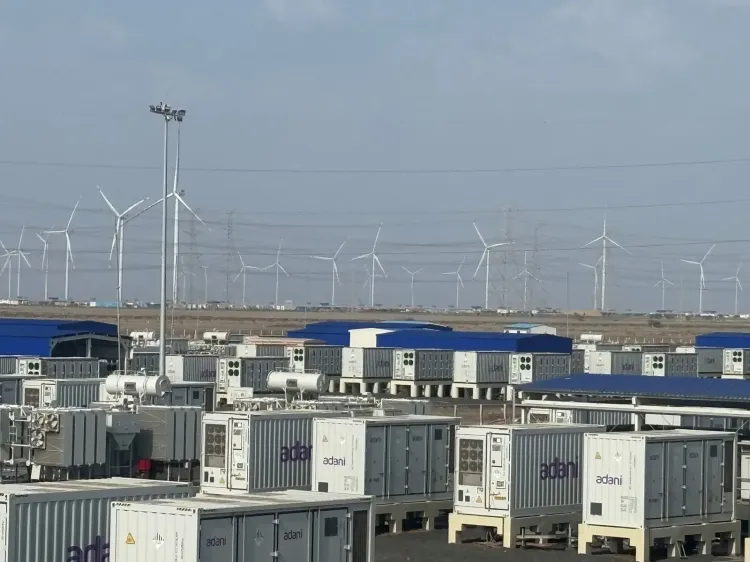
Adani Green Energy has quietly built the world's largest battery storage installation at a single site — and it now holds over half of India's entire grid-scale BESS capacity. The 6.63 GWh Khavda facility, scaled up in just 14 months, is the most concrete proof yet that India's clean energy transition is moving from ambition to infrastructure.
Key Takeaways
Adani Green Energy expanded its BESS capacity at Khavda, Gujarat to 6.63 GWh as of 1 October 2026 , up from 3.55 GWh in June 2026.
AGEL now holds more than 50 per cent of India's total operational BESS capacity of approximately 12.6 GWh .
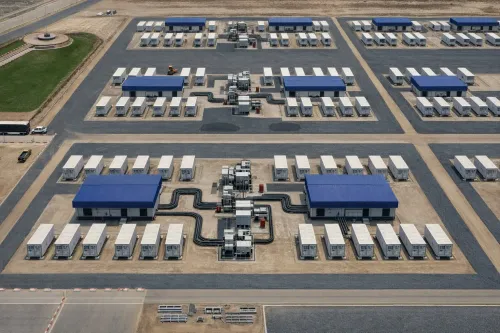
The Khavda site is now the world's largest operational battery energy storage installation at a single location.
The facility can power roughly two million homes daily and meets nearly twice the Delhi Metro 's estimated daily electricity need.
AGEL targets adding over 10 GWh of BESS in FY 2026-27 and 50 GWh over the next five years.
Adani Green Energy Ltd (AGEL) on Thursday, 1 October 2026, announced that it has scaled its operational Battery Energy Storage System (BESS) capacity at Khavda, Gujarat, to 6.63 gigawatt-hours (GWh) — up from 3.55 GWh in June 2026 — in a ramp-up completed over just 14 months. The expansion cements India's largest renewable energy company as the dominant force in the country's grid-scale storage landscape, now accounting for more than 50 per cent of India's total operational BESS capacity of approximately 12.6 GWh.
Scale of the Installation
The 6.63 GWh installation at Khavda is now recognised as the world's largest operational battery energy storage system at a single location. To contextualise the scale: the facility can store sufficient clean energy to power roughly two million homes per day, and support peak electricity demand in cities such as Nagpur, Patna, or Visakhapatnam for several hours. The stored energy is also said to be nearly twice the estimated daily electricity requirement of the Delhi Metro, and equivalent to the combined battery capacity of more than 1,50,000 mid-sized electric vehicles.
What the Technology Does
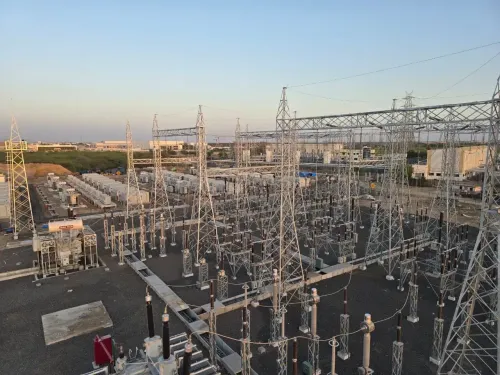
The BESS relies on lithium-ion battery technology integrated with an Energy Management System (EMS) and automated telemetry to manage charging and discharging cycles, optimise performance, and deliver grid services. According to the company, battery storage of this scale can improve grid stability, manage peak demand, reduce energy curtailment, and enable renewable power to be dispatched precisely when the grid requires it — addressing one of the core vulnerabilities of solar and wind generation.
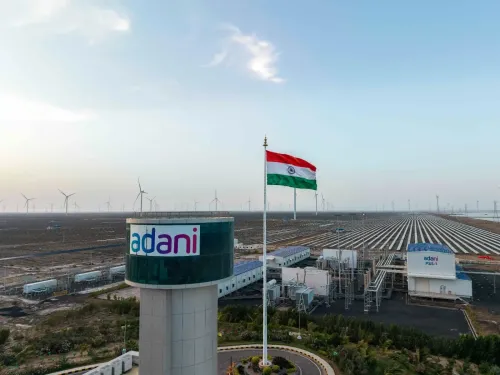
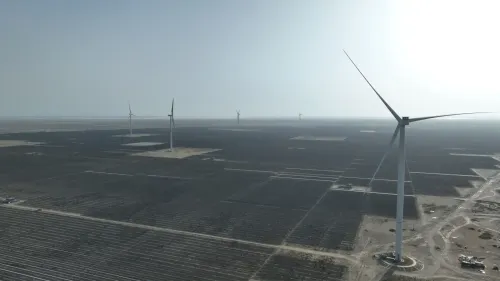
The system is integrated with AGEL's broader renewable energy development at Khavda, where the company is building a 30 GW renewable energy plant across 538 square kilometres of otherwise barren land — one of the world's most ambitious clean energy projects at a single site.
What AGEL's Leadership Said
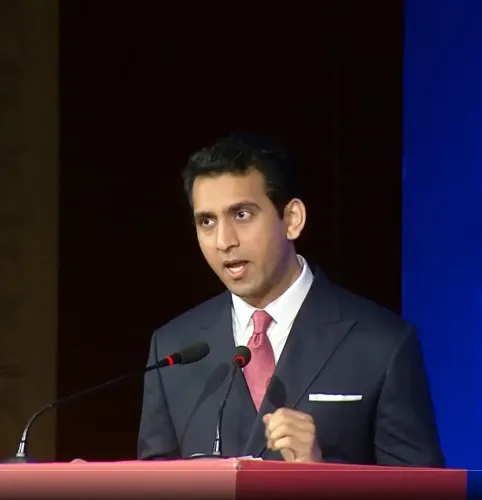
Sagar Adani, Executive Director of Adani Green Energy, said: 'Reaching 6.63 GWh of operational battery storage in just 14 months is a significant milestone for AGEL and India's clean energy transition. At this scale, storage can make renewable power firmer, more reliable and dispatchable when the grid needs it.' He added: 'As India's power demand grows, we will continue to scale energy storage solutions, both battery and pumped storage, to support a more resilient, lower-carbon grid.'
Expansion Roadmap and Targets
AGEL said it is on track to add over 10 GWh of BESS capacity in FY 2026-27 alone, and has set a target of reaching 50 GWh of total storage capacity within the next five years. This trajectory would place the company among the largest grid-scale storage operators globally and supports India's broader ambition of integrating higher shares of variable renewable energy into its national grid. This comes amid rising electricity demand across Indian cities and a policy push to reduce dependence on coal-based peaking power.
Point of View
Which raises both opportunity and systemic concentration questions. The 14-month scale-up is genuinely fast by global standards, but the 50 GWh target over five years will test supply chains, land clearances, and grid integration at a pace India has not managed consistently in past renewable build-outs. The real measure of this investment is not installed capacity but dispatchability — whether stored energy actually reduces curtailment and coal reliance during evening peak hours. That data, when it comes, will tell India whether this is a genuine grid transformation or a capacity headline.
NationPress
1 Oct 2026
Frequently Asked Questions
What is the BESS capacity Adani Green Energy has reached at Khavda?
Adani Green Energy has reached an operational Battery Energy Storage System (BESS) capacity of 6.63 GWh at its Khavda site in Gujarat as of 1 October 2026, up from 3.55 GWh in June 2026. The expansion was completed in approximately 14 months.
How does Adani Green's BESS compare to India's total storage capacity?
AGEL's 6.63 GWh at Khavda represents more than 50 per cent of India's total operational BESS capacity of approximately 12.6 GWh, making it the single largest contributor to the country's grid-scale battery storage.
Why is the Khavda battery storage facility significant globally?
The Khavda installation is described as the world's largest operational battery energy storage system at a single location. It can store enough clean energy to power around two million homes per day and support peak demand in major cities for several hours.
What is Adani Green Energy's future storage target?
AGEL has stated it is on track to add over 10 GWh of BESS capacity in FY 2026-27 and is targeting a total of 50 GWh of storage capacity over the next five years, covering both battery and pumped storage solutions.
What technology powers the Khavda BESS?
The Khavda facility uses lithium-ion battery technology integrated with an Energy Management System (EMS) and automated telemetry to manage charging and discharging, optimise performance, and provide grid support services such as peak demand management and curtailment reduction.