Adityanath tells Rahul Gandhi: Masuriya Deen Pasi spent 9 years in jail for freedom
Synopsis
While unveiling the statue of forgotten freedom fighter Masuriya Deen Pasi in Prayagraj, Yogi Adityanath turned a commemoration into a political counter-punch — telling Rahul Gandhi that Pasi, not just Nehru, spent nine years in jail for independence. The BJP's deliberate elevation of Dalit and OBC heroes is less about history and more about 2027.
Key Takeaways
CM Yogi Adityanath unveiled a statue of freedom fighter Masuriya Deen Pasi in Prayagraj on 15 October 2026 .
Adityanath told Rahul Gandhi that Pasi spent nine years in jail (1932–1944) for India's freedom — not just Jawaharlal Nehru .
Masuriya Deen Pasi , born 2 October 1911 , was a Constituent Assembly member and four-time MP (1952–1972) who helped repeal the British Criminal Tribes Act of 1871 .
The Prayagraj intersection where the statue stands is to be named after Pasi; a major institution in the city will also bear his name.
The UP government is restoring Maharaja Bijli Pasi's fort in Lucknow and establishing a PAC battalion named after warrior Uda Devi .
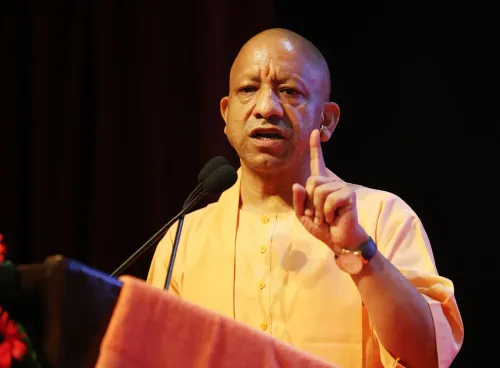
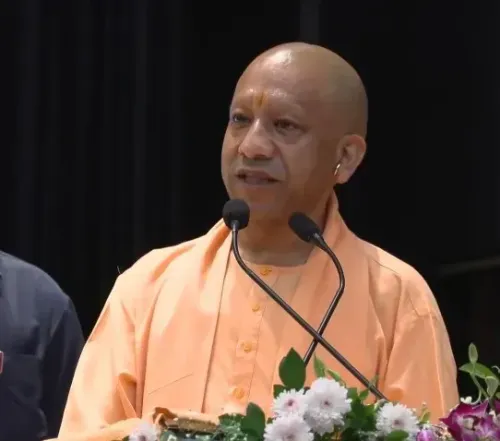
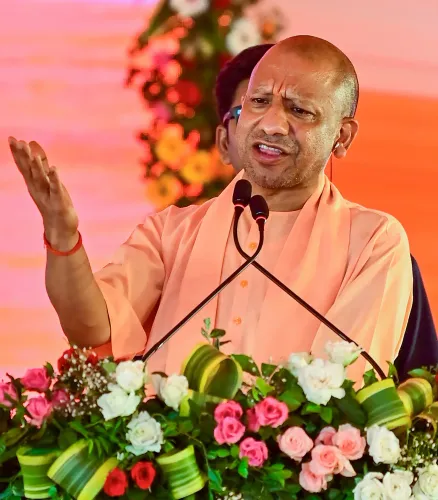
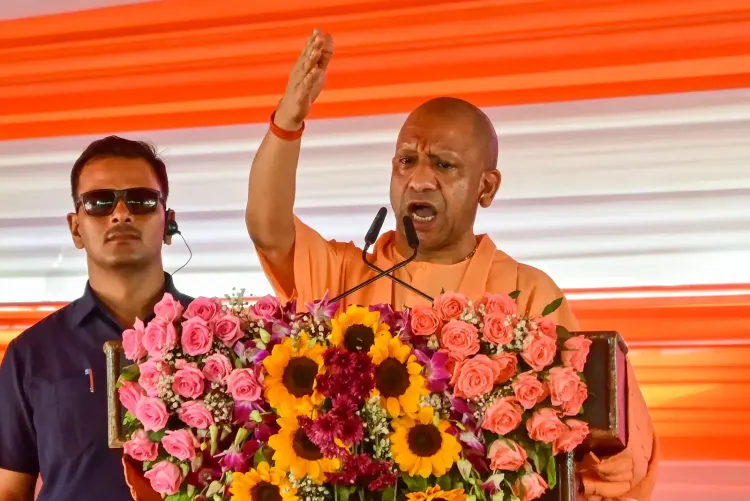
Uttar Pradesh Chief Minister Yogi Adityanath on Thursday, 15 October 2026, took a sharp political jab at Lok Sabha Leader of Opposition Rahul Gandhi during the unveiling of a statue of freedom fighter Mahashaya Masuriya Deen Pasi in Prayagraj, asserting that Nehru was not the only leader who went to prison for India's independence. The remark was widely seen as a pointed counter to the Congress narrative around former Prime Minister Jawaharlal Nehru's sacrifice during the freedom struggle.
The Remark and Its Context
Speaking at the statue unveiling, Chief Minister Adityanath said: 'Rahul Gandhi should take note that it was not just Nehru who went to prison for the country's freedom; Masuriya Deen Pasi also served time in jail. Out of his 66–67 years of life, he spent nine years (between 1932 and 1944) behind bars for the cause of independence. Even after his release, he continued his efforts to raise public awareness.'
The dig is part of a sustained Bharatiya Janata Party (BJP) political effort to challenge the Congress's claim to being the sole custodian of India's freedom movement legacy — particularly its identification with the Nehru-Gandhi family's sacrifices.
Who Was Masuriya Deen Pasi
Mahashaya Masuriya Deen Pasi, born on 2 October 1911, was a freedom fighter, a member of the Constituent Assembly, and a former Member of Parliament. He played a critical role in the abolition of the British-era 'Criminal Tribes Act' of 1871 — a colonial law that stigmatised entire communities, including the Pasi community, branding them as hereditary criminals.
Notably, in the 1952 general elections, two Members of Parliament were elected from a single constituency — Pandit Nehru and Masuriya Deen Pasi were elected together. Pasi went on to be elected to Parliament four times between 1952 and 1972 and was a member of the Uttar Pradesh Legislative Assembly in 1946. Chief Minister Adityanath credited him, alongside Dr B.R. Ambedkar, with working to repeal the Criminal Tribes Act and rehabilitate the Pasi, Sonkar, and other marginalised communities into the national mainstream.
Announcements at the Event
Chief Minister Adityanath requested Prayagraj Mayor Umesh Chandra Ganesh Kesarwani to move a proposal naming the intersection where Pasi's statue stands after the freedom fighter. He further announced that a prominent institution in Prayagraj will also be named after Pasi, with a grand statue to be installed there as well.
Adityanath also highlighted broader state initiatives honouring the Pasi community's heritage, including the ongoing restoration of the fort of Maharaja Bijli Pasi in Lucknow — a 12th-century ruler credited with constructing 12 forts around Lucknow as a strategic defence against foreign invaders. He added that the Uttar Pradesh government is establishing a Provincial Armed Constabulary (PAC) battalion in Lucknow named after the warrior Uda Devi, with a grand equestrian statue of her being installed there.
The Political Subtext
The event was as much a political statement as a commemorative occasion. By spotlighting Dalit and marginalised-community freedom fighters, the BJP government is strategically positioning itself as the true champion of communities historically overlooked in mainstream independence narratives. Adityanath said: 'Honour is not the exclusive preserve of any single family; those who championed the cause of the Dalits and the marginalised, and who dedicated their lives to the nation and society, deserve to be honoured.'
This comes amid an ongoing political contest between the BJP and the Congress over the ownership of India's freedom movement legacy, with both parties frequently invoking the contributions of their respective icons. The Uttar Pradesh government's emphasis on Dalit and OBC heroes — from Uda Devi to Masuriya Deen Pasi — reflects a broader electoral calculus ahead of future state and national polls.
What Comes Next
The formal proposal to rename the Prayagraj intersection is expected to follow through the municipal corporation. Plans for naming a prominent Prayagraj institution after Pasi and installing a larger statue there are expected to be formalised by the state government in the coming weeks.
Point of View
And is designed to appeal to communities the party has been courting since 2014. What mainstream coverage often underplays is how effectively this strategy combines caste outreach with anti-Congress messaging in a single event. With the Uttar Pradesh elections on the horizon, each such unveiling doubles as a reminder to marginalised communities that the BJP, not the Nehru-Gandhi family, is their political home.
NationPress
15 Oct 2026
Frequently Asked Questions
Who was Masuriya Deen Pasi?
Masuriya Deen Pasi was an Indian freedom fighter born on 2 October 1911, who spent nine years in jail between 1932 and 1944 during the independence movement. He was a member of the Constituent Assembly, a four-time Member of Parliament (1952–1972), and played a key role in abolishing the British-era Criminal Tribes Act of 1871 that had stigmatised the Pasi and other communities.
What did CM Yogi Adityanath say about Rahul Gandhi at the Prayagraj event?
Adityanath said Rahul Gandhi should note that Nehru was not the only leader to go to prison for India's freedom — Masuriya Deen Pasi also spent nine years behind bars for the independence cause. The remark was a pointed political counter to the Congress's narrative around the Nehru-Gandhi family's sacrifices.
What announcements did Adityanath make at the statue unveiling?
Adityanath announced that the Prayagraj intersection where the statue stands will be named after Masuriya Deen Pasi, and that a prominent institution in the city will also bear his name with a grand statue installed there. He also noted that the UP government is restoring Maharaja Bijli Pasi's fort in Lucknow and establishing a PAC battalion named after warrior Uda Devi.
What was the Criminal Tribes Act and how is it connected to Masuriya Deen Pasi?
The Criminal Tribes Act was a British colonial law enacted in 1871 that branded entire communities — including the Pasi community — as hereditary criminals. Masuriya Deen Pasi, alongside Dr B.R. Ambedkar, fought to have the law repealed and worked to rehabilitate marginalised communities into the national mainstream.
Why is the BJP spotlighting Dalit and OBC freedom fighters?
The BJP has made a sustained political effort to highlight contributions of Dalit, OBC, and marginalised community heroes to India's independence struggle, challenging the Congress's identification with the Nehru-Gandhi legacy. Events like the Pasi statue unveiling serve a dual purpose: honouring neglected historical figures and signalling to these communities that the BJP is their political champion.