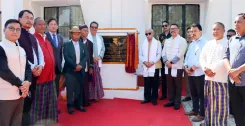
Arunachal Governor chairs Myanmar border security review, pushes border fencing and anti-drug drive
Synopsis
Arunachal Pradesh Governor Lt Gen K.T. Parnaik chaired his second border security review at Namsai, pressing for faster Myanmar border fencing, a 'Whole of the State' anti-drug approach, and institutionalised coordination among the Army, Assam Rifles, State Police, and civil administration — a signal that the Centre views the volatile eastern frontier as an urgent security priority.
Key Takeaways
Governor Lt Gen K.T.
Parnaik (Retd) chaired a security review meeting at Namsai on 15 November 2026 , focused on the Myanmar border.
He called for expedited border fencing , backed by existing Union Ministry of Home Affairs directions.
Districts of Tirap , Changlang , and Longding were identified as priority security zones.
A 'Whole of the State' coordination model — mirroring the Centre's 'Whole of the Nation' approach — was proposed to tackle cross-border narcotics trafficking.
Senior officials from the Army , Assam Rifles , Border Roads Organisation , and district administration attended the second such meeting at Namsai.
Regular inter-agency coordination meetings were advised to ensure timely threat assessment and information-sharing.
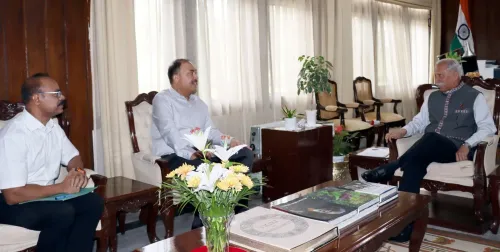
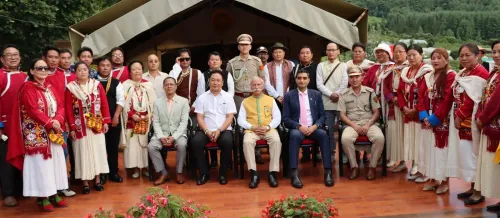
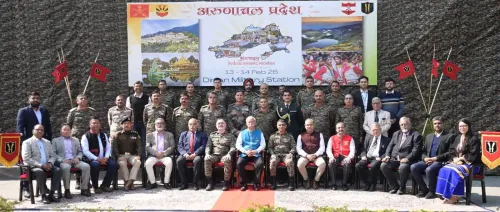
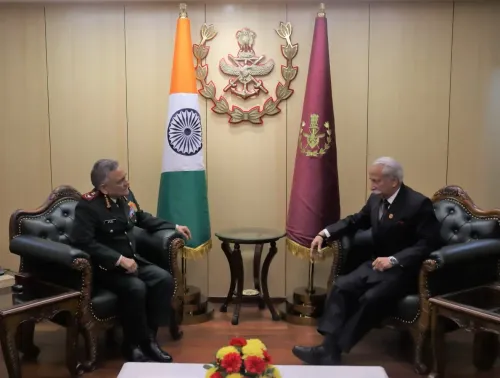
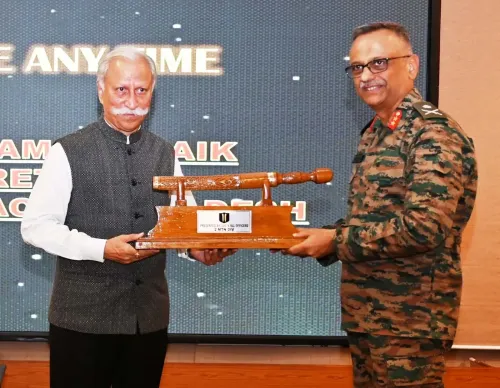
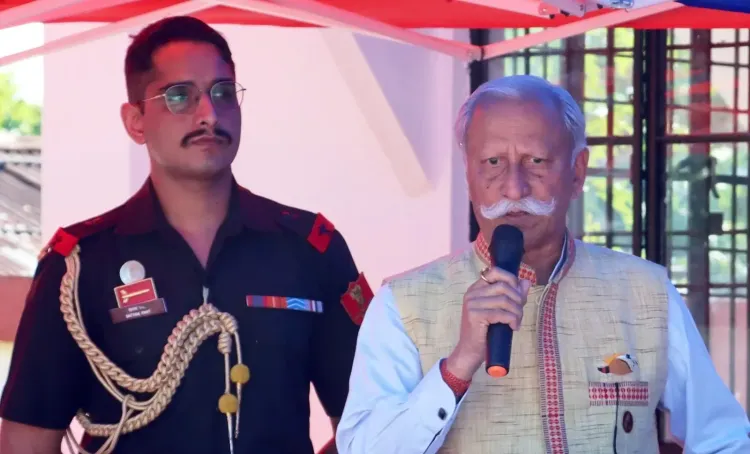
Arunachal Pradesh Governor Lieutenant General K.T. Parnaik (Retd) on Sunday, 15 November 2026, convened a high-level security review meeting at Namsai, calling for heightened vigilance and seamless coordination among the Army, Assam Rifles, State Police, intelligence agencies, and civil administration to address pressing security challenges along the international border with Myanmar. The meeting — the second such gathering chaired by Governor Parnaik at Namsai — focused on strengthening border management, expediting border fencing, and intensifying the campaign against cross-border drug trafficking in eastern Arunachal Pradesh.
Key Concerns Raised at the Review
Governor Parnaik underscored that a comprehensive security review of Tirap, Changlang, and Longding districts was essential to safeguard peace, stability, and public confidence in what he described as a 'strategically important region.' He expressed concern over delays in border fencing and the continuing threat of cross-border narcotics trafficking, stressing the need for expeditious ground-level action.
Highlighting the importance of border infrastructure, the Governor noted that the decision to undertake border fencing had been arrived at after careful consideration and that the Union Ministry of Home Affairs had already issued the necessary directions. He called for a coordinated 'Whole of the State' approach — modelled on the Centre's 'Whole of the Nation' framework — to effectively counter multi-dimensional security threats in the region.
Multi-Agency Representation at Namsai
The meeting was attended by senior officials across the security and administrative spectrum. Major General H.S. Mavi, Inspector General of Assam Rifles (North), and Brigadier Adarsh Kumar Singh, Deputy Inspector General of Assam Rifles, represented the paramilitary establishment. S.K. Verma, Chief Engineer of Border Roads Organisation's Project Udayak, and Apur Bitin, Inspector General of Police (Law and Order), also participated in the discussions.
District-level ground realities were presented by Deputy Commissioners Lobsang Tsering (Namsai), R.D. Thungon (Changlang), and Badonlum Tawsik (Tirap), along with ADC Pebika Lego (Longding). The officials apprised the Governor of progress on border fencing, implementation challenges, and ongoing anti-drug initiatives. Superintendents of Police Kirli Padu (Changlang), Sange Thinley (Namsai), and Thuptan Jambey (Longding) briefed the Governor on security concerns and measures to strengthen the anti-drug campaign.
Coordination Mechanism Recommended
Governor Parnaik advised that regular coordination meetings be institutionalised among security agencies, district administration, and state police to assess the evolving security situation, identify emerging threats, ensure timely information-sharing, and formulate coordinated responses. This comes amid broader national concerns over porous borders in India's northeast, particularly in the wake of instability in Myanmar following the military coup there, which has fuelled both refugee movement and illicit drug flows into Indian territory.
What Comes Next
The push to expedite border fencing — backed by Ministry of Home Affairs directives — signals that the Centre views the Myanmar frontier as a priority security corridor. With district administrators and law enforcement agencies now formally looped in, the pressure is on for measurable progress on the ground in the months ahead. All eyes will be on whether the 'Whole of the State' coordination model translates into faster fencing timelines and a verifiable reduction in narcotics movement in Tirap, Changlang, and Longding.
Point of View
Entities that have historically operated in silos in Arunachal's remote eastern districts. The narcotics angle is equally important; Tirap, Changlang, and Longding sit at the edge of the Golden Triangle supply chain, and delays in fencing directly translate into open corridors for drug movement. Whether this meeting results in a fixed fencing deadline or remains advisory will determine its real significance.
NationPress
15 Nov 2026
Frequently Asked Questions
Why did the Arunachal Pradesh Governor chair a security review at Namsai?
Governor Lt Gen K.T. Parnaik chaired the meeting to push for faster border fencing along the Myanmar frontier and to strengthen coordination among the Army, Assam Rifles, State Police, and civil administration in eastern Arunachal Pradesh. It was the second such review meeting he has personally convened at Namsai to address security challenges in Tirap, Changlang, and Longding districts.
What is the 'Whole of the State' approach the Governor recommended?
It is a coordinated multi-agency model — modelled on the Centre's 'Whole of the Nation' framework — where the Army, Assam Rifles, State Police, intelligence agencies, and civil administration work in a unified, information-sharing structure rather than in departmental silos. Governor Parnaik recommended institutionalising regular coordination meetings under this approach to address border security and drug trafficking collectively.
What is the status of Myanmar border fencing in Arunachal Pradesh?
The Union Ministry of Home Affairs has already issued directions for border fencing along the Arunachal Pradesh-Myanmar border, but Governor Parnaik expressed concern over delays in ground-level implementation. He stressed the need for expeditious action and convened the Namsai meeting specifically to accelerate the project.
Which districts in Arunachal Pradesh are most affected by Myanmar border security challenges?
Tirap, Changlang, and Longding are the three districts identified as priority security zones. These districts share the international border with Myanmar and face challenges including cross-border narcotics trafficking and overall border management. Namsai district officials were also represented at the review meeting.
Who attended the Namsai border security review meeting?
The meeting included Major General H.S. Mavi (Inspector General, Assam Rifles North), Brigadier Adarsh Kumar Singh (Deputy Inspector General, Assam Rifles), S.K. Verma (Chief Engineer, BRO Project Udayak), Apur Bitin (Inspector General of Police, Law and Order), Deputy Commissioners of Namsai, Changlang, and Tirap, ADC of Longding, and Superintendents of Police from Changlang, Namsai, and Longding.