Assam's ₹400 crore Mission Senehjori to make Muga silk a global brand
Synopsis
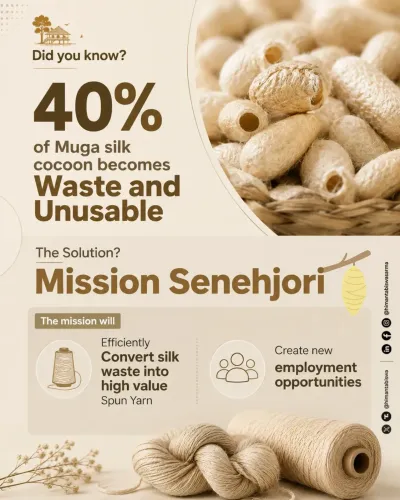
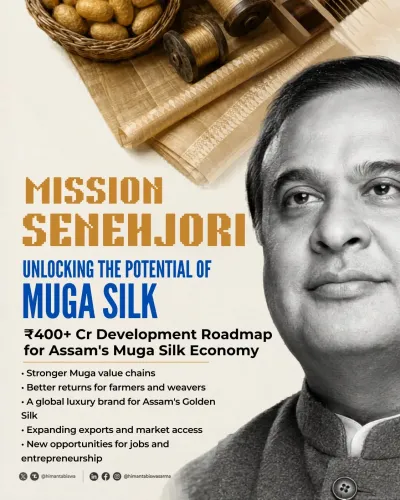
Assam is placing a ₹400 crore bet on its most iconic export. Mission Senehjori — announced in the Assam Budget 2026-27 — targets 2.6 lakh silk rearers, weavers and entrepreneurs, and pairs producer organisation reforms with two anchor infrastructure projects to finally give Golden Muga Silk the global market presence its natural rarity commands.
Key Takeaways
Chief Minister Himanta Biswa Sarma announced Mission Senehjori , a ₹400 crore sericulture initiative, in the Assam Budget 2026-27 on 10 July .
An estimated 2.6 lakh beneficiaries — rearers, reelers, weavers and entrepreneurs — will receive support under the mission.
The government will strengthen 1,180 Farmer Interest Groups and establish or reinforce 30 Farmer Producer Organisations by 2028 .
A Muga Silk Tourism Park will be developed at Dhakuakhana and a Muga Spun Mill at Dhemaji .
The mission runs over three years , aiming to make Assam the global hub of Golden Muga Silk .
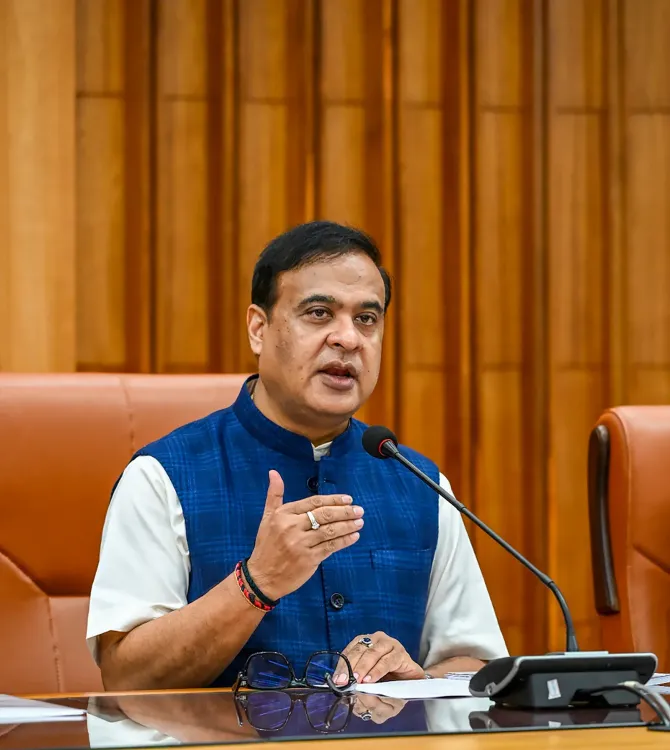
Assam Chief Minister Himanta Biswa Sarma on Friday, 10 July announced a ₹400 crore initiative, Mission Senehjori, to transform Assam into the global hub of Golden Muga Silk and strengthen the state's sericulture sector over the next three years. The mission was unveiled as a flagship scheme in the Assam Budget 2026-27, with an estimated 2.6 lakh beneficiaries — including silk rearers, reelers, weavers and entrepreneurs — set to receive direct support.
What Mission Senehjori Covers
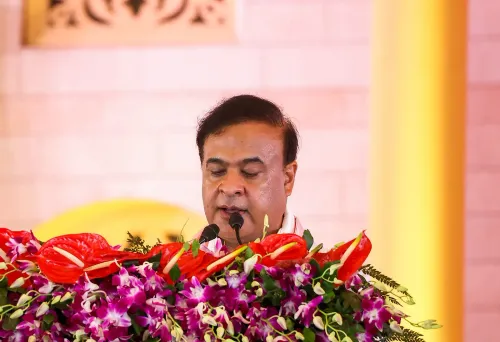
The mission is designed to modernise and expand the entire Muga silk value chain, from cultivation to finished product. Chief Minister Sarma, speaking to reporters in Guwahati after the budget presentation, said: 'A comprehensive ₹400 crore plan to strengthen our sericulture sector, especially Muga Silk through Mission Senehjori, will be taken up to boost its global value and support weavers.'
As part of the initiative, the state government will strengthen 1,180 Farmer Interest Groups (FIGs) and establish or reinforce 30 Farmer Producer Organisations (FPOs) by 2028, aimed at improving production, marketing and value addition across the Muga silk ecosystem.
Key Infrastructure Planned
The budget proposals include two significant infrastructure projects. A Muga Silk Tourism Park will be developed at Dhakuakhana, showcasing Assam's unique silk heritage and linking the traditional industry to tourism. Separately, a Muga Spun Mill will be established at Dhemaji to improve processing capacity and generate additional employment in the region.
Why Muga Silk Matters to Assam
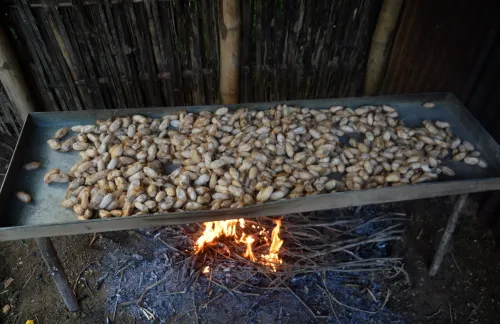
Muga silk, produced exclusively in Assam, is globally recognised for its natural golden sheen and exceptional durability — qualities that set it apart from other silk varieties. Despite its premium global standing, the industry has historically struggled with limited processing infrastructure and inadequate market linkages. This is the state government's most concentrated financial commitment to the sector in recent memory.
Notably, Mission Senehjori sits within a broader push in the Assam Budget 2026-27 to promote traditional industries while creating sustainable rural livelihoods. The government believes that stronger producer organisations, upgraded infrastructure and increased investment will sharpen the competitiveness of Assam's silk industry in both domestic and international markets.
What Comes Next
Implementation is planned over three years, with the FPO network targeted for completion by 2028. The Dhemaji Spun Mill and Dhakuakhana Tourism Park are expected to serve as anchor projects, drawing investment and visibility to the sector. How effectively the government converts budgetary allocation into measurable livelihood gains for the 2.6 lakh stakeholders will be the true test of the mission's ambition.
Point of View
But the sector's recurring challenge has never been funding alone — it has been the gap between raw production and market-ready output. The inclusion of FPOs and a Spun Mill suggests the government has absorbed that lesson, yet the 2.6 lakh beneficiary figure needs a credible disbursement mechanism to avoid becoming another headline number. Muga silk holds a GI tag and commands premium global pricing; the real opportunity is positioning it in luxury export markets, which requires branding investment and trade facilitation that a budget announcement alone cannot guarantee.
NationPress
9 Oct 2026
Frequently Asked Questions
What is Mission Senehjori in Assam?
Mission Senehjori is a ₹400 crore state government initiative announced in the Assam Budget 2026-27 to modernise and expand the Muga silk value chain. It aims to support 2.6 lakh beneficiaries including silk rearers, reelers, weavers and entrepreneurs over three years.
Who will benefit from Mission Senehjori?
An estimated 2.6 lakh people engaged in the Muga silk industry — including silk rearers, reelers, weavers and entrepreneurs — are expected to receive assistance under the mission. The scheme also targets 1,180 Farmer Interest Groups and 30 Farmer Producer Organisations.
What infrastructure will be built under the Muga silk scheme?
The Assam government plans to develop a Muga Silk Tourism Park at Dhakuakhana to promote silk heritage tourism, and establish a Muga Spun Mill at Dhemaji to improve processing capacity and generate employment.
Why is Muga silk significant?
Muga silk is produced exclusively in Assam and is globally recognised for its natural golden sheen and durability. It holds a Geographical Indication (GI) tag and commands premium pricing in domestic and international markets.
When will Mission Senehjori be completed?
The mission is planned for implementation over three years. The Farmer Producer Organisation network is specifically targeted for completion by 2028, with the Dhemaji Spun Mill and Dhakuakhana Tourism Park serving as key anchor projects.