CM Himanta highlights Muga sericulture transforming Assam livelihoods

Synopsis
Assam Chief Minister Himanta Biswa Sarma has spotlighted the state's Muga sericulture sector, describing it as a livelihood-transforming force for rural families. Backed by a GI tag since 2007 and central funding under Silk Samagra, Muga silk represents a women-led, low-input rural economy with strong cultural and commercial significance for Assam.
Key Takeaways
CM Himanta Biswa Sarma highlighted Muga sericulture on June 8, 2026 , calling it a driver of new rural livelihoods in Assam .
Muga silk received a Geographical Indication tag in 2007 , protecting its unique golden-yellow identity in domestic and export markets.
The Silk Samagra scheme (from 2017 ) provides central funding for Muga, Eri, and mulberry sericulture infrastructure across the Northeast.
The Central Silk Board under the Ministry of Textiles coordinates technical and seed-distribution support for Muga rearers in the state.
Muga sericulture is predominantly a women-led, low-input activity suited to Assam's agro-climatic zones, supporting rural households in the Brahmaputra valley .
Upcoming annual sericulture production data and possible new handloom policy clusters will be key indicators of the sector's progress.
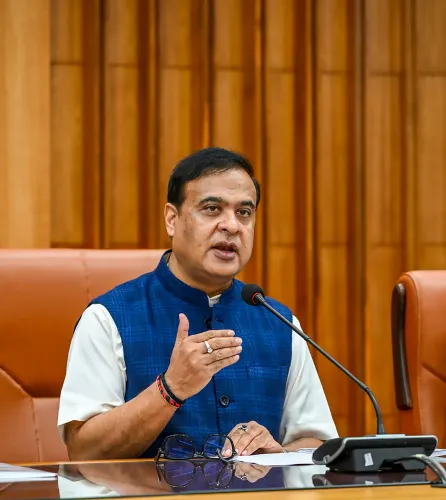
Assam Chief Minister Himanta Biswa Sarma on Monday, June 8, 2026, drew attention to the state's Muga sericulture sector, describing it as a force transforming rural livelihoods across Assam. Sharing a video on X, he framed the journey of Muga rearers — from nurturing trees over years to earning better incomes today — as emblematic of the state's handloom revival.
Context
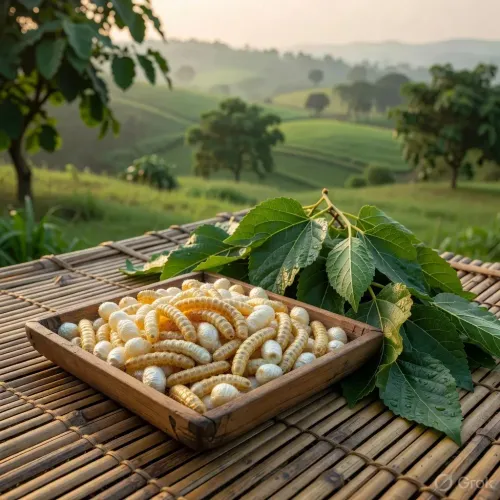
Muga silk, unique to Assam, is produced by the semi-wild Antheraea assamensis silkworm reared on Som and Sualu trees. Its naturally golden-yellow lustre makes it one of the most distinctive and commercially valuable textiles in India. CM Sarma described the sector as 'weaving new opportunities,' positioning Muga not merely as a cultural heritage product but as an active engine of rural income generation.
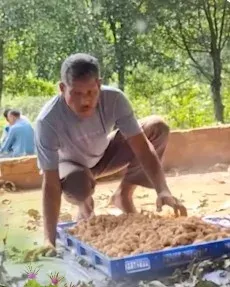
The Chief Minister's post accompanies a video documenting the lived experience of Muga rearers — families who invest years cultivating host trees before a single harvest cycle can begin, underscoring the patience and long-term commitment the craft demands.
Policy Backdrop
Assam Muga silk received a Geographical Indication (GI) tag in 2007, granting it legal protection and a distinct market identity that distinguishes it from other silk varieties. This certification has been central to efforts linking artisan producers with organised domestic and export markets.
The Silk Samagra scheme, operational since 2017, extended central funding for Muga, Eri, and mulberry sericulture infrastructure across the Northeast. The Central Silk Board, a statutory body under the Ministry of Textiles, has coordinated technical support, seed distribution, and capacity-building for Muga rearers in the state. After 2015, Assam integrated its handloom and sericulture programmes into broader rural livelihood missions, widening the reach of support to rural households.
Stakeholders and Impact
Muga sericulture is widely recognised as a women-led, low-input livelihood activity suited to Assam's agro-climatic conditions. Rural households — particularly in the Brahmaputra valley districts — depend on the sector for supplementary and, in many cases, primary income. The long gestation period of host-tree cultivation means that policy continuity and sustained institutional support are critical for rearers.
Handloom weavers who work downstream from the rearing stage also stand to benefit from a more robust and consistent Muga yarn supply. Linking GI-tagged Muga products to organised marketing channels mirrors similar strategies deployed in other Northeast Indian states seeking to convert cultural textile practices into measurable rural income streams.
What's Next
Attention will now turn to Assam's annual sericulture production and export data, which will offer a quantitative measure of the sector's trajectory. Observers will also watch for possible new cluster developments under any forthcoming revision to the state's handloom policy.
The Chief Minister's public emphasis on Muga sericulture signals continued political prioritisation of the sector, which could translate into fresh budgetary allocations or expanded scheme coverage in the months ahead. For the thousands of rural families whose livelihoods depend on the golden thread, sustained policy follow-through will be the decisive factor.
Point of View
The messaging is designed to humanise policy impact and build grassroots resonance. The post also reinforces Assam's positioning as a custodian of premium GI-tagged textiles at a time when the Centre is pushing for expanded handloom export competitiveness. Whether the spotlight translates into fresh budgetary commitments or remains symbolic will determine its long-term credibility with the sector's stakeholders.
NationPress
22 Oct 2026
Frequently Asked Questions
What is Muga silk and why is it special to Assam?
Muga silk is a golden-yellow silk produced exclusively in Assam from the semi-wild Antheraea assamensis silkworm, reared on Som and Sualu trees. It received a Geographical Indication tag in 2007, making it one of India's most legally protected and commercially distinct textile products.
What is the Silk Samagra scheme?
Silk Samagra is a central government scheme operational since 2017 that provides funding for sericulture infrastructure — including Muga, Eri, and mulberry silk — across the Northeast. It is coordinated by the Central Silk Board under the Ministry of Textiles.
How does Muga sericulture support rural livelihoods in Assam?
Muga sericulture is a low-input, women-led activity suited to Assam's agro-climatic zones. Rural households, particularly in the Brahmaputra valley, depend on it for supplementary or primary income, though the long gestation period of host-tree cultivation requires sustained policy support.
What did CM Himanta Biswa Sarma say about Assam's handloom sector?
On June 8, 2026, CM Himanta Biswa Sarma stated that 'Assam's handloom sector is weaving new opportunities,' sharing a video that documents how Muga sericulture is transforming lives by enabling rural families to earn better livelihoods after years of nurturing host trees.
What is the GI tag for Assam Muga silk?
Assam Muga silk was granted Geographical Indication status in 2007, providing legal protection against imitation and helping brand the product distinctively in domestic and international markets based on its unique origin and golden-yellow characteristics.