Bengal posts 3 senior IPS officers to Anti-Corruption Branch

Synopsis
West Bengal's new government has moved three senior IPS officers and 16 other police personnel into a restructured Anti-Corruption Branch, with CM Suvendu Adhikari warning that corrupt officials will be jailed. The reshuffle signals the administration's intent to reopen politically sensitive cases — including alleged Amphan relief fund irregularities — that surfaced under the previous TMC government.
Key Takeaways
West Bengal government transferred IGP Murli Dhar , DIG Akash Magharia , and Senior SP Kamanasish Sen from the Intelligence Branch to the Anti-Corruption Branch on 3 August .
The DGP separately deputed 16 police personnel to the ACB for a period of two months .
All personnel were directed to report by 10 am Tuesday .
Chief Minister Suvendu Adhikari warned that government officials who accept bribes will be jailed .
The ACB is expected to investigate alleged irregularities in Amphan Cyclone relief funds and Sebaashray health camp projects from the previous TMC administration.
The West Bengal government on Monday, 3 August transferred three senior Indian Police Service (IPS) officers from the Intelligence Branch (IB) to the Anti-Corruption Branch (ACB) of West Bengal Police with immediate effect, according to a government official. The move follows a public warning by Chief Minister Suvendu Adhikari that officials found taking bribes would face jail.
Officers Posted to the ACB
The three officers transferred are Inspector General of Police (IB) Murli Dhar, Deputy Inspector General (IB) Akash Magharia, and Senior Superintendent (IB) Kamanasish Sen. An order issued by the Home and Hill Affairs Department's Police Service Cell stated that the officers are posted to the Directorate of Anti-Corruption Branch, West Bengal on deputation basis until further orders.
In a parallel directive, the Director General of Police (DGP) issued a separate communication deputing 16 police personnel — including one deputy superintendent of police, inspectors, sub-inspectors, and constables drawn from various units — to the ACB for a period of two months. All personnel have been directed to report to the Anti-Corruption Branch by 10 am on Tuesday.
Why the ACB Is Being Strengthened
The Anti-Corruption Branch investigates allegations of misconduct against state government employees and officials. The restructuring comes amid a broader push by the newly elected government to signal a clean break from alleged institutional corruption under the previous administration.
Several corruption allegations surfaced during the previous All India Trinamool Congress (TMC) government era, reportedly including alleged irregularities in the distribution of Amphan Cyclone relief funds and the Sebaashray health camp projects. Officials were reportedly implicated in these cases, though formal charges in each instance remain subject to ongoing investigation.
What Chief Minister Adhikari Said
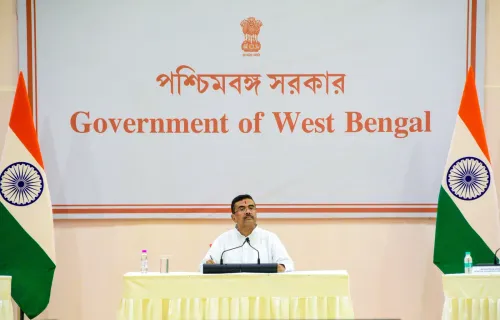
Chief Minister Suvendu Adhikari had recently stated that the ACB was being actively restructured and issued a firm warning: government officials who accepted money would be imprisoned. He subsequently chaired a meeting on the matter, after which Monday's postings were formalised.
It is believed, according to officials, that the reconstituted ACB will accelerate investigations into existing allegations and that the names of accused officials may be made public as probes advance.
What Happens Next
The reinforced ACB is expected to take up pending cases with renewed urgency. Initiatives are reportedly underway to structurally overhaul the branch so that the current government is not hampered by entrenched official corruption. How quickly the investigations yield results — and whether high-profile names are named — will be closely watched in the coming weeks.
Point of View
Not a routine transfer. The choice of experienced IB hands suggests the government wants investigators who know how to follow paper trails and protect sources, not just process complaints. The real test will be whether the ACB moves against politically connected officials or limits itself to lower-rung targets. With Amphan relief and Sebaashray irregularities reportedly in the frame, the coming months will reveal whether this restructuring is a genuine accountability drive or a tool of political consolidation.
NationPress
18 Sept 2026
Frequently Asked Questions
Which IPS officers have been posted to West Bengal's Anti-Corruption Branch?
The three officers are IGP (IB) Murli Dhar, DIG (IB) Akash Magharia, and Senior Superintendent (IB) Kamanasish Sen, all transferred from the Intelligence Branch to the Anti-Corruption Branch on 3 August with immediate effect.
Why is West Bengal restructuring the Anti-Corruption Branch?
Chief Minister Suvendu Adhikari has stated that the ACB is being overhauled to ensure the new government is not undermined by official corruption. The restructuring is also expected to accelerate investigations into alleged irregularities from the previous administration, including Amphan Cyclone relief fund distribution and Sebaashray health camp projects.
How many police personnel have been deputed to the ACB in total?
A total of 19 personnel have been deputed — three senior IPS officers by the Home Department and 16 additional police personnel, including a deputy superintendent of police, inspectors, sub-inspectors, and constables, by the DGP for a two-month period.
What cases is the Anti-Corruption Branch expected to investigate?
The ACB is believed to be looking at alleged irregularities in the distribution of Amphan Cyclone relief funds and the Sebaashray health camp projects, both of which reportedly surfaced during the previous TMC government era. Officials were reportedly implicated, though formal charges remain subject to investigation.
When did the new ACB personnel have to report for duty?
All 16 additionally deputed police personnel were directed to report to the Anti-Corruption Branch by 10 am on Tuesday, 4 August.