What Happened on the Third Day of Bihar Assembly During the Guv's Address Debate?
Synopsis
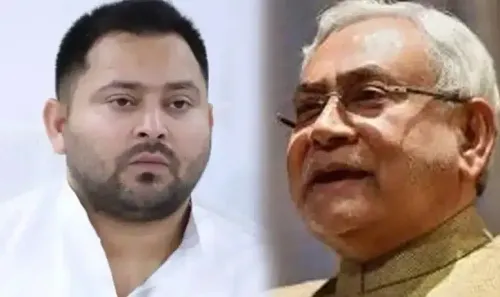
The Bihar Assembly's budget session stirred significant political tension on its third day, focusing on the Governor's address. Opposition leader Tejashwi Yadav criticized the government for its unchanging narrative and failures, while Chief Minister Nitish Kumar defended his administration's growth since 2005. The session highlighted deep political divides and ongoing debates about governance in Bihar.
Key Takeaways
Intense political exchanges marked the third day of the Bihar Assembly.
Tejashwi Yadav criticized the government for its lack of accountability .
Nitish Kumar defended his administration's development achievements .
The debate underscored a significant political divide in Bihar.
Opposition members actively voiced their concerns amid disruptions .
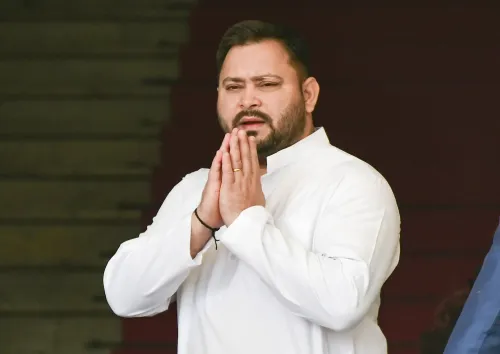
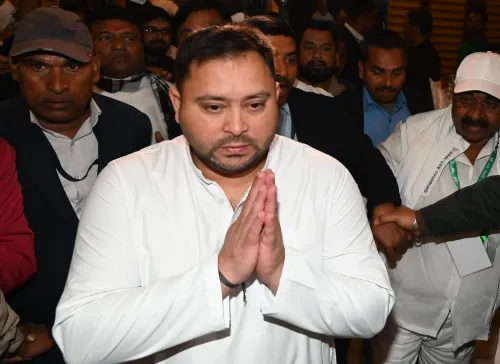
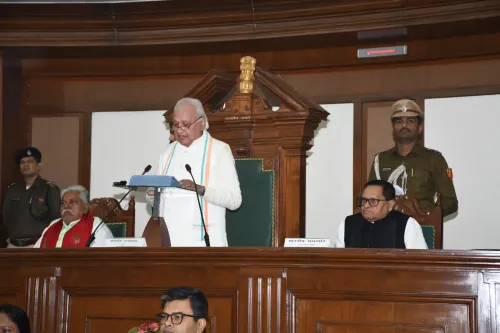
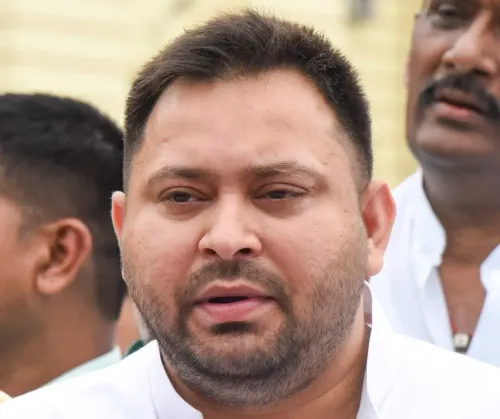
Patna, Feb 5 (NationPress) The third day of the Bihar Legislative Assembly’s budget session was marked by intense political exchanges as discussions unfolded regarding the Governor’s address. Tejashwi Yadav, the Leader of the Opposition, launched a fierce critique against the Nitish Kumar-led government, accusing it of neglect, misrepresentation, and compromising democratic values.
During the debate, Tejashwi noted that despite the change of several Governors over the past 11 years, the content of the Governor’s address has remained largely unchanged. “The same rhetoric has been recycled for over a decade. With only minor updates, the entire speech remains identical,” he claimed, suggesting that the address is more about bureaucratic language than actual realities.
He emphasized that the Bihar government embodies two characteristics - deceptive praise and total negligence.
Tejashwi pointed out that the genuine state of Bihar is well understood, not just by the citizens but also by members of the ruling coalition. He reflected on the recent elections, stating that in Bihar, the people lost while the system triumphed, accusing the ruling parties of transforming democracy into a plutocracy and a mechanized system.
While presenting crime statistics in the assembly, he questioned the current state of law and order, asking, “Where is the rule of law?”
He further accused BJP members of turning democracy into a gun-based system.
Tejashwi expressed that despite being in the minority, the opposition will continue to voice issues assertively and reiterated that cooperation would be given if the government genuinely commits to Bihar’s progress.
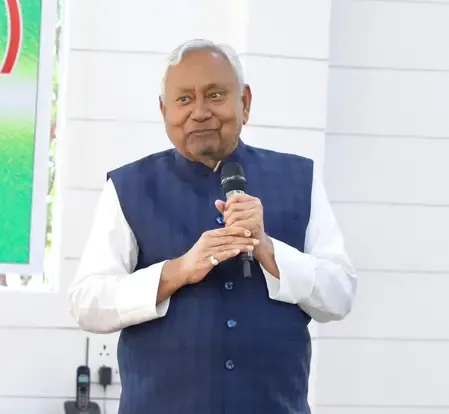
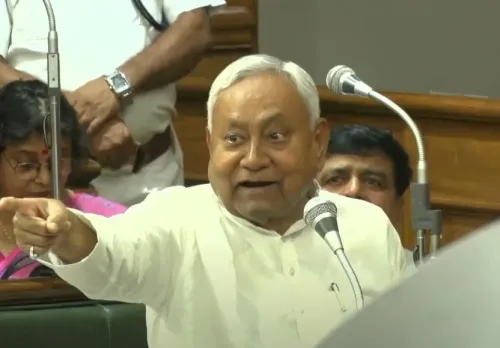
After the debate, Chief Minister Nitish Kumar responded to the motion of thanks on the Governor’s address, countering the opposition’s points by recalling the Lalu-Rabri era.
The Chief Minister stated that the NDA first formed a government in Bihar on November 24, 2005, which marked the beginning of law and order and development.
“Do you remember what Bihar was like before 2005?” Nitish Kumar queried amidst opposition protests. “People were afraid to go outside after dark. Was there any development then? Could anyone move freely in the evenings?” he inquired.
Kumar alleged that during previous administrations, Bihar faced widespread social turmoil, regular Hindu-Muslim conflicts, poor educational systems, inadequate healthcare amenities, and severely deteriorated roads.
“Very few children attended school, hospitals were scarce, and roads were in terrible shape,” he stated.
Claiming substantial improvements since then, Nitish Kumar asserted that development initiatives are currently underway across the state and that governance has considerably improved compared to the past.
The debate was characterized by multiple interruptions and loud slogans from opposition members, showcasing the profound political divide as the budget session progresses.
Point of View
The ongoing discussions in the Bihar Assembly reveal significant political polarization. As the opposition voices its concerns regarding governance and accountability, the ruling party emphasizes its achievements over the years. This dynamic reflects broader trends in Indian politics, where debates over development and democracy continue to shape public discourse.
NationPress
30 Sept 2026
Frequently Asked Questions
What were the main points raised by Tejashwi Yadav?
Tejashwi Yadav criticized the Nitish Kumar government for neglect, false claims, and highlighted that the Governor's address has remained largely unchanged over 11 years.
What is the significance of the Governor's address?
The Governor's address serves as a platform for the government to outline its achievements and plans, but it has faced criticism for being disconnected from ground realities.
What does Nitish Kumar say about past governance?
Nitish Kumar claims that prior to 2005, Bihar was plagued by fear and lack of development, contrasting it with the improvements made since his government took office.
How did the opposition respond during the session?
The opposition members engaged in frequent interruptions and sloganeering, indicating a strong dissent against the ruling government.
What are the implications of this political exchange?
These exchanges highlight the ongoing political divide in Bihar and raise questions about governance and accountability in the state.