BJP's Rajendra Rathore Critiques Gehlot's Leadership and Dynastic Politics
Synopsis
In a bold address, BJP leader Rajendra Rathore criticizes former Chief Minister Ashok Gehlot for his disconnect with reality and his promotion of dynastic politics, asserting that public support for his son Vaibhav has dwindled.
Key Takeaways
Rathore's Critique: He criticized Gehlot’s leadership and promotion of his son.
Public Rejection: Vaibhav Gehlot faced rejection in elections, according to Rathore.
Economic Growth: Rajasthan's GDP is projected to rise significantly by 2026–27.
Employment Initiatives: The government is actively creating jobs with a transparent hiring process.
COVID-19 Management: Rathore highlighted past failures in handling the pandemic.
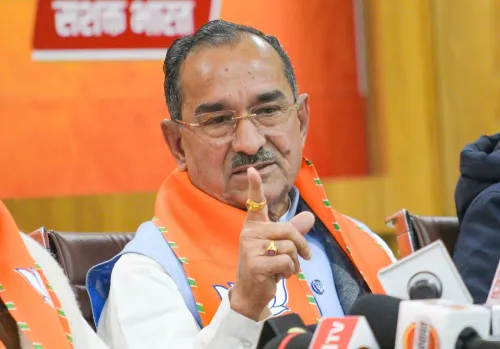
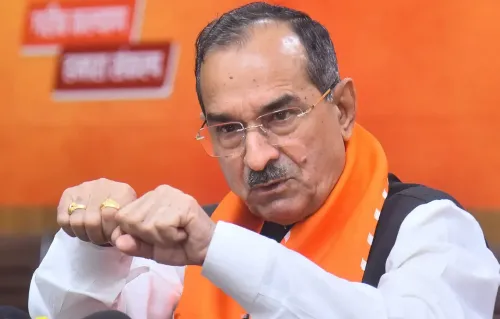
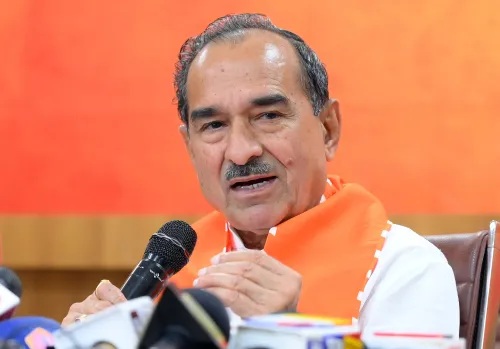
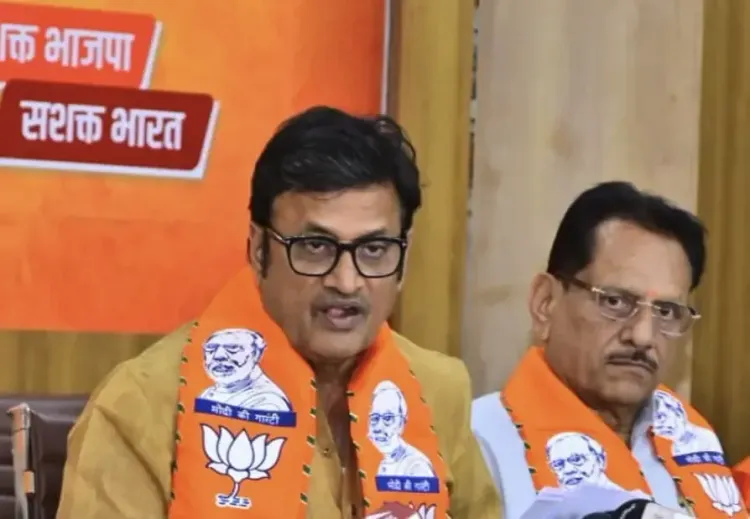
Jaipur, March 28 (NationPress) Senior leader of the Bharatiya Janata Party and ex-Leader of Opposition, Rajendra Rathore, launched a fierce critique of former Chief Minister Ashok Gehlot on Saturday. He accused Gehlot of being out of touch with reality and attempting to mislead the populace.
Rathore pointed out that Gehlot’s comments regarding Intezaar Shastra are vastly disconnected from Haqeeqat Shastra (ground truth), suggesting these statements serve as a facade to obscure his previous shortcomings.
He also targeted Gehlot for engaging in dynastic politics, claiming that the former Chief Minister, under the influence of “putra‑moh” (favoritism towards his son), neglected numerous capable leaders in favor of promoting Vaibhav Gehlot.
Despite attempts to rally support from Jodhpur and Jalore, Rathore asserted that Vaibhav was ultimately rejected by voters.
Furthermore, Rathore referenced the Rajasthan Cricket Association elections, asserting that senior leader Rameshwar Dudi was overlooked in a bid to advance Gehlot’s son politically.
“It is quite ironic for Gehlot to now caution others against nepotism,” he remarked.
Rathore criticized the former Congress administration for its mismanagement and corruption during the COVID-19 crisis, particularly concerning the acquisition of medicines, medical supplies, and Remdesivir injections.
He noted that of the 4,148 pledges made during Gehlot’s leadership, 2,208 have not been fulfilled.
Addressing the IPD Tower project controversy, Rathore claimed the previous government initiated projects without proper planning, lacking necessary parking and expert consultations.
He mentioned that the current administration has addressed these concerns, with construction now at the 23rd floor and expected to be completed by January 2027.
On the topic of employment, Rathore stated that the Bhajanlal Sharma administration is committed to transparent hiring practices, having already created 92,000 jobs with ongoing recruitment for 1.53 lakh positions, guided by the principles of “no favoritism, no corruption.”
He highlighted the repercussions of the ongoing conflict in West Asia involving Iran, the United States, and Israel, emphasizing its impact on the global oil supply.
With India importing nearly 80% of its oil from this region, Rathore stated that price variations are inevitable.
Despite crude oil prices exceeding $122 per barrel, he pointed out that the Centre has reduced excise duty by Rs 10, incurring an annual cost of approximately Rs 1.75 lakh crore.
Rathore affirmed that the Rajasthan government is taking measures to ensure a steady supply of fuel and gas, including the launch of a 24×7 helpline, service to over 1.84 crore domestic consumers, plans to add 5 lakh new PNG connections, and a crackdown on black marketing, hoarding, and illegal refilling.
He added that FIRs have been filed, and inspections are being conducted at various locations to ensure adherence to regulations.
Referring to a recent all-party meeting called by Chief Minister Bhajanlal Sharma, Rathore stated the government is proactively working to guarantee the availability of fuel, gas, and fertilizers, urging cooperation from all political factions.
He accused the Congress party of internal contradictions, stating that while they demand meetings, their leaders persist in political posturing.
On economic matters, Rathore noted that Rajasthan’s Gross State Domestic Product is anticipated to reach Rs 21.52 lakh crore by 2026–27, reflecting a 41.93% increase compared to the previous government.
He also mentioned that per capita income has grown from Rs 1.67 lakh to Rs 2.02 lakh, capital expenditure has doubled, and the current government has initiated 19 significant policies.
Concluding his statements, Rathore emphasized that now is not the time for political squabbling, but rather a moment for unity in the interest of the state and the nation.
He asserted that public engagement in Congress initiatives is waning due to a lack of pertinent issues, and affirmed that the Bhajanlal administration remains dedicated to development and public welfare.
Point of View
Emphasizing the tension between the BJP and Congress regarding governance and public trust.
NationPress
5 Oct 2026
Frequently Asked Questions
What accusations did Rajendra Rathore make against Ashok Gehlot?
Rathore accused Gehlot of being disconnected from reality, promoting dynastic politics, and mismanaging the COVID-19 response.
What is the political significance of Rathore's statements?
Rathore's statements reflect the BJP's stance against Congress's leadership, potentially impacting public perception ahead of future elections.
How has the public responded to Vaibhav Gehlot?
Rathore claimed that Vaibhav Gehlot was rejected by the public during elections in Jodhpur and Jalore.
What measures has the current government taken regarding employment?
The Bhajanlal Sharma government has provided 92,000 jobs and is currently recruiting for 1.53 lakh more positions.
What is the projected economic growth for Rajasthan?
Rajasthan's Gross State Domestic Product is expected to reach Rs 21.52 lakh crore by 2026–27, marking a significant increase.