BJP, GJM and NCPI members clash in Islampur over Panchayat Samiti board
Synopsis
What should have been a routine Panchayat Samiti board formation in Islampur turned violent when BJP-backed GJM members and NCPI workers clashed with sticks and bamboos. All 38 members of the body were once Trinamool Congress members — now split across two rival factions — and their political realignment has paralysed local governance, with the board still unformed and five reportedly arrested.
Key Takeaways
Violence broke out in Islampur, North Dinajpur on 3 November 2026 during the Panchayat Samiti board formation process.
All 38 members of the body were formerly with the Trinamool Congress (TMC) ; 20 joined the Gorkha Janmukti Morcha and 18 the NCPI .
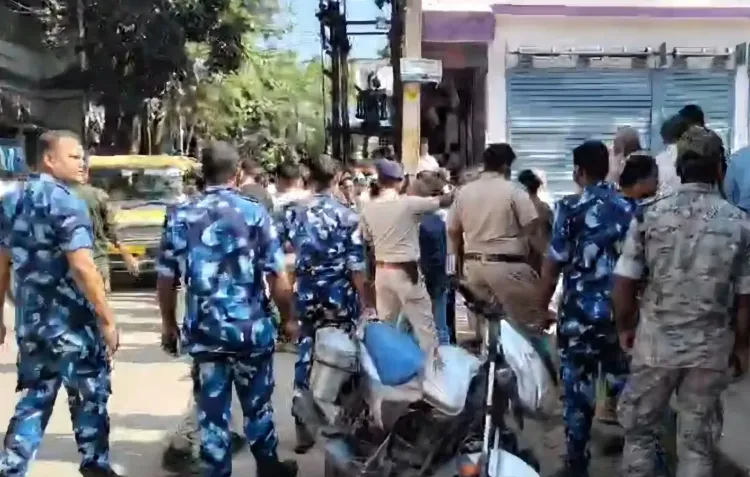
Workers attacked each other with sticks and bamboos; police and Rapid Action Force (RAF) were deployed and reportedly resorted to a cane charge.
Five people who had joined the GJM were allegedly arrested.
BJP leader Chitrajit Roy alleged police inaction; SP Rakesh Singh denied a cane charge and said 'appropriate steps' were taken.
The board formation remains unresolved, deepening a governance deadlock in the Panchayat Samiti.
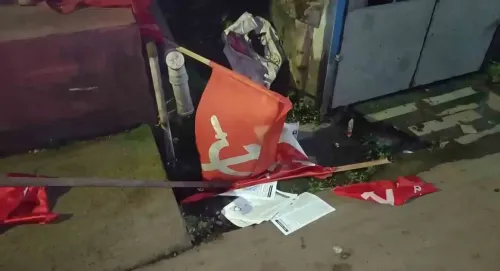
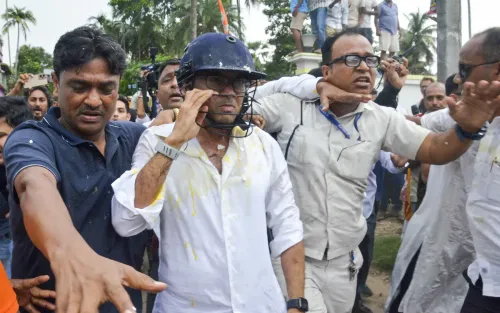
Violence erupted in Islampur, North Dinajpur district of West Bengal, on Tuesday, 3 November 2026, as workers of the Bharatiya Janata Party (BJP), Gorkha Janmukti Morcha (GJM), and the newly-formed Nationalist Citizens Party of India (NCPI) clashed over the formation of the Panchayat Samiti board. Large contingents of police and the Rapid Action Force (RAF) were deployed at the scene, and authorities ultimately resorted to a cane charge to disperse the agitated crowd.
Background: A Panchayat in Political Flux
The Islampur Panchayat Samiti comprises 38 members, all of whom were previously affiliated with the All India Trinamool Congress (TMC). Following a change of government in the state, political realignments destabilised the body. As many as 20 former TMC members crossed over to the Gorkha Janmukti Morcha during a joining ceremony held in Siliguri on Monday, 2 November. The remaining 18 members had already defected to the NCPI. The board formation, originally scheduled for Tuesday, thus became a flashpoint between the two rival blocs.
How the Violence Unfolded
According to local sources, tensions had been simmering since Monday night. On Tuesday, GJM members led by BJP leaders Chitrajit Roy and Sanjeev Bhawal attempted to enter the Panchayat Samiti office to participate in the board formation process. Allegedly, followers of NCPI leader Shyamal Das moved to block their entry. The standoff quickly deteriorated into open clashes, with workers from both sides reportedly attacking each other with sticks and bamboos. Within minutes, the situation spiralled out of control, prompting a heavy police and RAF response.
Arrests and Allegations
It is alleged that five people who had joined the Gorkha Janmukti Morcha were arrested in connection with the violence. Chitrajit Roy, the BJP's defeated candidate from the Islampur Assembly constituency in the recent state polls, publicly questioned the police's conduct. He alleged that law enforcement failed to act appropriately when Panchayat Samiti members were prevented from participating in the board formation.
Police Response and Official Statement
Authorities pushed back on Roy's characterisation of events. Islampur Superintendent of Police Rakesh Singh denied that a cane charge had taken place, saying, 'The police took appropriate steps to disperse the agitated people.' The contradiction between Roy's account and Singh's statement has deepened political controversy around the incident. This comes amid broader tensions across North Bengal as newly-formed political outfits compete with established parties for influence at the grassroots level.
What Happens Next
The Panchayat Samiti board formation remains unresolved as of Tuesday evening. With the membership split between GJM-aligned and NCPI-aligned factions — and five individuals reportedly under arrest — the path to forming a functional board appears contested. Political observers note that Islampur's turmoil reflects a wider pattern of post-election flux in West Bengal's local bodies, where large-scale defections from the ruling party have created competing power centres with no clear majority.
Point of View
And then immediately fractures into rival factions, the institution becomes a prize rather than a representative body. The competing claims over board formation reveal a deeper dysfunction: local governance is being held hostage to factional score-settling. The contradiction between BJP's Roy alleging police bias and SP Singh denying a cane charge also points to a credibility vacuum that will be difficult to fill without independent accountability mechanisms.
NationPress
3 Nov 2026
Frequently Asked Questions
Why did violence break out in Islampur over the Panchayat Samiti?
Violence broke out because rival political factions — BJP-backed Gorkha Janmukti Morcha members and NCPI workers — clashed over participation in the Panchayat Samiti board formation process on 3 November 2026. Both sides had competing claims over membership, stemming from large-scale defections from the Trinamool Congress.
Who are the parties involved in the Islampur Panchayat clash?
The clash involved workers of the Bharatiya Janata Party (BJP), the Gorkha Janmukti Morcha (GJM), and the Nationalist Citizens Party of India (NCPI). All 38 Panchayat Samiti members were previously with the Trinamool Congress before defecting to these two rival groupings.
What triggered the split among the 38 Panchayat Samiti members?
Following a change of government in West Bengal, political realignments swept through local bodies including Islampur. Twenty members joined the GJM at a ceremony in Siliguri on 2 November, while the remaining 18 had already joined the NCPI, creating two rival blocs with no clear majority.
Were any arrests made in connection with the Islampur violence?
It is alleged that five people who had joined the Gorkha Janmukti Morcha were arrested. The exact charges and their current status had not been officially confirmed as of Tuesday evening.
What did the police say about the cane charge in Islampur?
Islampur Superintendent of Police Rakesh Singh denied that a cane charge took place, stating that 'the police took appropriate steps to disperse the agitated people.' This directly contradicts the account of BJP leader Chitrajit Roy, who alleged the police failed to protect members from being blocked.