BJP's Jal Manthan 2025: Water ministers meet for 25-year water security plan
Synopsis
The BJP's 'Jal Manthan' is not just a ministerial huddle — it is a signal that the party is reframing water governance as a long-horizon, 25-to-50-year strategic priority, tying it directly to the 'Viksit Bharat 2047' narrative. With groundwater stress rising across India, how well BJP-ruled states translate this coordination exercise into on-ground delivery will be the real test.
Key Takeaways
BJP launched its two-day 'Jal Manthan' programme in New Delhi on 3 September , bringing together Water Resources Ministers from BJP-governed states.
BJP national president Nitin Nabin hosted the opening meeting at his residence, calling it 'highly meaningful' in a post on X.
Planning is now being conducted with a 25 to 50-year perspective, according to Nabin, replacing older five-year planning cycles.
Union Jal Shakti Minister C.R.
Santosh , and Vinay Sahasrabuddhe attended the first-day session.
A larger meeting covering irrigation, groundwater conservation, and water security is scheduled for Thursday at the BJP central office .
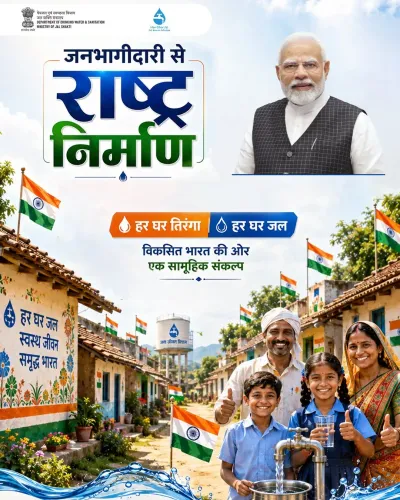
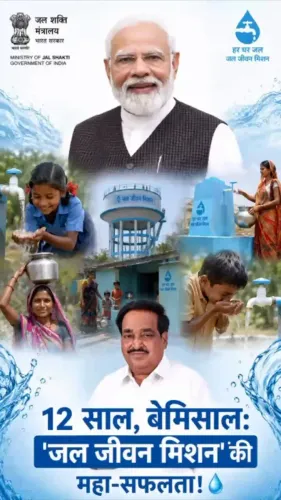
The programme is framed around the 'Har Ghar Jal' initiative and the broader 'Viksit Bharat 2047' goal.
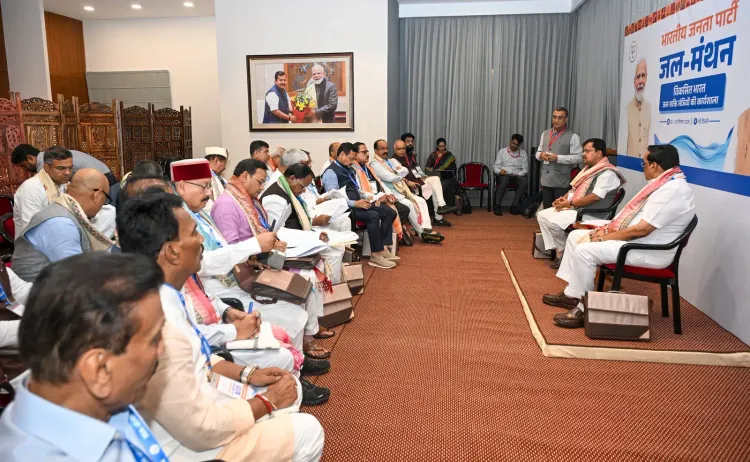
The Bharatiya Janata Party (BJP) on Wednesday, 3 September launched its two-day 'Jal Manthan' programme in New Delhi, convening Water Resources Ministers from BJP-governed states to deliberate on inter-state coordination, water management, and the sharing of best practices toward long-term national water security.
How the Programme Began
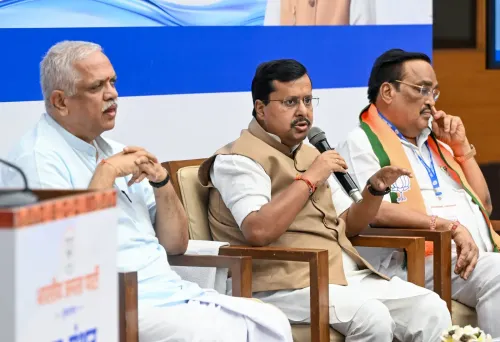
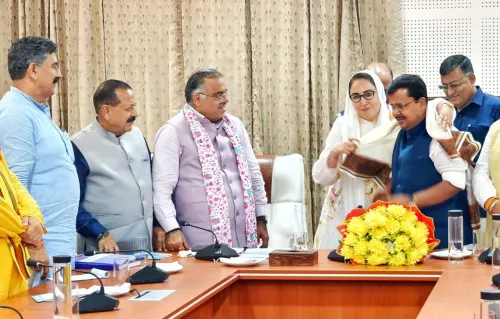
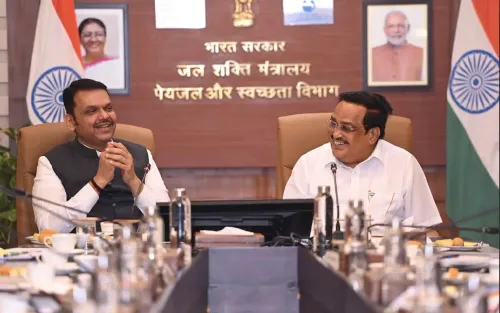
The first day opened with a special meeting at the residence of BJP national president Nitin Nabin, followed by a dinner hosted by him. The gathering centred on reinforcing coordination between the Centre and state governments on water-related challenges. Union Jal Shakti Minister C.R. Patil, BJP national organisation general secretary B.L. Santosh, and national vice-president Vinay Sahasrabuddhe were also present at the meeting.
What Nabin Said on Long-Term Planning
In a post on X, Nabin described the gathering as a 'highly meaningful' meeting aimed at promoting inter-state coordination and the exchange of best practices under the Jal Manthan framework. He highlighted Prime Minister Narendra Modi's leadership, noting that the country had undertaken the historic task of extending tap water access to crores of families through the 'Har Ghar Jal' initiative.
Nabin said that the short-horizon, five-year planning approach that characterised governance before the formation of the NITI Aayog was now obsolete. According to him, planning is now being undertaken with a long-term perspective spanning 25 to 50 years, in line with the Prime Minister's vision — an approach he argued would be critical to building a more resilient and sustainable water management architecture.
Viksit Bharat 2047 and Three-Way Coordination
Nabin further emphasised that realising the 'Viksit Bharat 2047' goal would demand three-way coordination among the government, elected representatives, and party workers. He said such coordination would strengthen planning, implementation, and monitoring, ultimately ensuring that citizens receive the maximum benefit from government schemes.
What Thursday's Larger Session Will Cover
A broader meeting of Water Resources Ministers from all BJP-ruled states is scheduled for Thursday at the BJP central office, under Nabin's chairmanship. Discussions are expected to span irrigation, water management, groundwater conservation, water security, and the efficient utilisation of water resources. States are expected to present successful models and share on-ground experiences. This comes amid growing national concern over groundwater depletion and erratic monsoon patterns that have strained water supply across several BJP-governed states in recent years.
Point of View
The gap between coordination meetings and actual delivery on the ground remains wide; the 'Har Ghar Jal' scheme, while impressive in household connection numbers, has faced scrutiny over water quality and supply continuity. The real question is whether this 25-to-50-year planning rhetoric will be backed by binding inter-state water-sharing frameworks — something Indian federalism has historically struggled to produce. Without enforceable mechanisms, Jal Manthan risks being a well-organised conversation rather than a structural shift.
NationPress
18 Oct 2026
Frequently Asked Questions
What is BJP's Jal Manthan programme?
Jal Manthan is a two-day BJP initiative launched on 3 September in New Delhi, bringing together Water Resources Ministers from BJP-ruled states to discuss inter-state coordination, water management, and best practices. It is framed around a long-term, 25-to-50-year water security vision aligned with the 'Viksit Bharat 2047' goal.
Who attended the Jal Manthan meeting?
BJP national president Nitin Nabin hosted the opening session at his residence. Union Jal Shakti Minister C.R. Patil, BJP national organisation general secretary B.L. Santosh, and national vice-president Vinay Sahasrabuddhe also attended the first-day meeting.
What topics will Thursday's Jal Manthan session cover?
The larger session on Thursday at the BJP central office will cover irrigation, water management, groundwater conservation, water security, and the efficient utilisation of water resources. States are expected to present successful models and share on-ground experiences.
How does Jal Manthan connect to the Har Ghar Jal scheme?
BJP national president Nabin cited the 'Har Ghar Jal' initiative — which aims to provide tap water to crores of Indian families — as a flagship example of the Centre's water outreach. Jal Manthan is intended to build on this by improving coordination between the Centre and states for sustained, long-term water security.
What is the significance of the 25-to-50-year planning horizon mentioned at Jal Manthan?
According to Nabin, the BJP government has moved beyond the older five-year planning cycles to adopt a 25-to-50-year perspective on water management, in line with Prime Minister Modi's vision. This long-term approach is positioned as essential for building a resilient national water infrastructure ahead of the 'Viksit Bharat 2047' target.