BLF & BRG Claim Major Attacks on Pakistani Forces in Balochistan
Synopsis
The BLF and BRG have claimed a string of deadly attacks on Pakistani forces across Balochistan between April 12-22, 2025, including convoy ambushes, checkpoint assaults, and highway blockades. The escalation signals a dangerous new phase in Pakistan's long-running Baloch insurgency, with major implications for regional stability and CPEC security.
Key Takeaways
BLF claimed a convoy ambush in Kolwah, Awaran on April 22 using rocket launchers and LMGs, killing six Pakistani personnel and damaging military vehicles.
BLF fighters attacked a Frontier Corps checkpoint outside Basima Police Station with a hand grenade on April 22 , causing casualties and vehicle damage.
BRG seized a police post in Sibi's Lamji area , capturing weapons and vehicles, and blocked the Quetta-Karachi highway for vehicle searches.
BLF attacked a military camp in Kohadu, Jhao on April 12 in a coordinated sniper-and-rocket assault, causing severe damage and casualties.
On April 14 , BLF blocked Nourozabad Road in Kharan's Sarawan area for several hours and warned transporters against supporting Pakistani forces.
The attacks represent a significant escalation in Baloch militant activity , coinciding with heightened India-Pakistan tensions following the Pahalgam attack of April 22, 2025 .
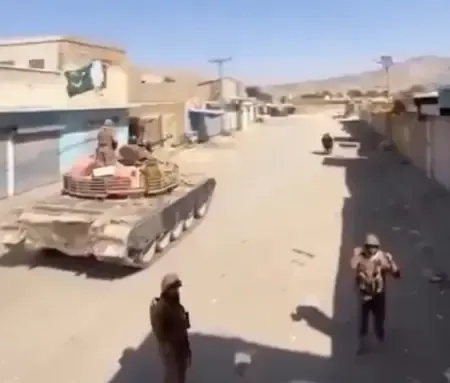
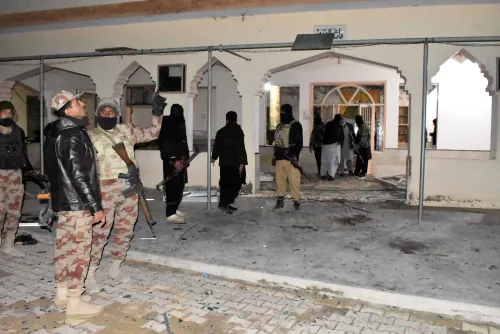
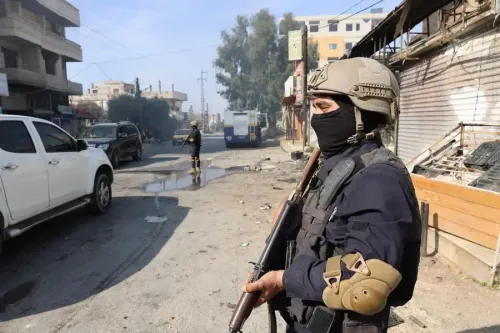
Quetta, April 24: The Balochistan Liberation Front (BLF) and the Baloch Republican Guards (BRG) have claimed responsibility for a series of coordinated attacks targeting Pakistani security forces and military installations across Awaran, Jhao, Basima, and Sibi districts of Balochistan province, according to local media reports on Friday, April 24, 2025. The attacks, carried out between April 12 and April 22, mark a significant escalation in militant activity in one of Pakistan's most restive provinces.
BLF Attacks on Military Convoy and Checkpoints
BLF spokesperson Major Gwahram Baloch stated that the group's fighters ambushed a Pakistani military convoy in the Kolwah area of Awaran on April 22, while the convoy was in transit between camps. The fighters reportedly encircled the convoy in the Geshkour area and launched what the spokesperson described as a heavy attack deploying rocket launchers, Light Machine Guns (LMGs), and sniper rifles.
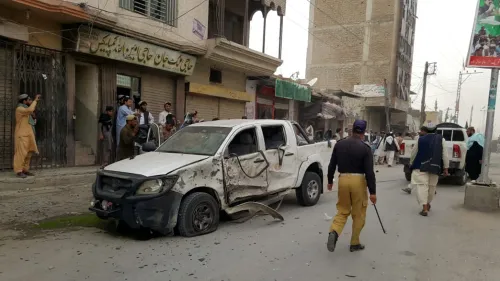
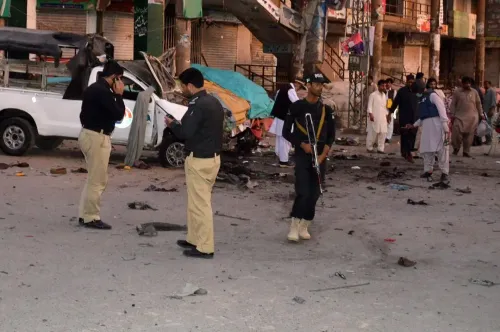
The BLF claimed that six personnel were killed and several others injured, with military vehicles described as badly damaged in the assault. On the same day, BLF fighters also targeted a Frontier Corps snap-checking point outside Basima Police Station using a hand grenade, which reportedly landed inside a vehicle, causing casualties and significant damage.
Earlier, on April 19, the group claimed responsibility for targeting a military checkpoint in the Gajro Singeen area of Jhao, resulting in further personnel casualties. The BLF had also previously claimed an attack on a military camp in Kohadu area of Jhao on April 12, which began with a sniper assault on a guard before escalating into a coordinated strike using rocket launchers and automatic weapons. The spokesperson stated that the camp sustained severe damage and several military personnel were killed or injured.
BRG Seizes Police Post in Sibi, Blocks Quetta-Karachi Highway
BRG spokesperson Dostain Baloch announced in a separate statement that BRG fighters seized control of a police post in the Lamji area of Sibi, capturing weapons, vehicles, and other equipment. Detained personnel were issued warnings before being released, the spokesperson said.
The BRG also claimed to have established a blockade on the Quetta-Karachi highway, conducting vehicle searches before Pakistani security forces advanced on the position. The spokesperson said that a prolonged exchange of fire ensued between fighters and security personnel, resulting in further casualties on both sides.
BLF Blocks Kharan Highway, Issues Warning to Transporters
In a separate operation on April 14, the BLF claimed its fighters blocked Nourozabad Road in the Sarawan area of Kharan, maintaining control of the highway for several hours while conducting vehicle searches. The group issued a stark warning to transporters, stating that those providing logistical or personnel support to Pakistani forces would be directly targeted.
This highway blockade strategy is increasingly being used by Baloch militant groups to disrupt supply lines and assert territorial presence. The Quetta-Karachi highway is a critical economic artery linking Balochistan to the rest of Pakistan, and repeated disruptions carry significant economic implications.
Escalating Insurgency: Broader Context and Strategic Implications
This wave of attacks represents a notable uptick in militant operations across Balochistan, a province that has witnessed decades of separatist insurgency rooted in grievances over resource exploitation, political marginalization, and alleged enforced disappearances. The BLF and BRG are among the most active armed factions operating in the region, alongside the Balochistan Liberation Army (BLA).
These attacks come amid heightened tensions between India and Pakistan following the Pahalgam terror attack of April 22, 2025, which has already strained regional security dynamics. Critics argue that Islamabad's military focus on its eastern border may be creating operational windows for Baloch militant groups to intensify activities in the west.
The Pakistani government and military have not yet officially responded to these specific claims. Islamabad has historically dismissed BLF and BRG statements as exaggerated, though independent verification remains difficult due to restricted media access in the region.
The pattern of attacks spanning convoy ambushes, checkpoint assaults, highway blockades, and police post seizures suggests a multi-pronged tactical strategy aimed at stretching Pakistani security forces thin across a vast and difficult terrain. With Pakistan already grappling with economic instability and political turbulence, the intensification of the Baloch insurgency adds yet another pressure point for the state.
As these incidents continue to mount in frequency and scale, international observers and human rights organizations are likely to increase scrutiny of the security situation in Balochistan, with broader implications for CPEC (China-Pakistan Economic Corridor) projects that traverse the province. Further escalation in the coming weeks cannot be ruled out.
Point of View
Baloch armed groups appear to be exploiting the distraction with calculated precision. The simultaneous targeting of highways, convoys, and police posts points to growing operational sophistication. What Islamabad cannot afford to ignore is that the Baloch insurgency is no longer a peripheral problem but a structural crisis threatening the viability of CPEC and Pakistan's western territorial integrity.
NationPress
30 Sept 2026
Frequently Asked Questions
What attacks did the BLF and BRG claim in Balochistan in April 2025?
The BLF and BRG claimed multiple attacks on Pakistani forces between April 12-22, 2025, including a convoy ambush in Awaran, checkpoint attacks in Jhao and Basima, a police post seizure in Sibi, and highway blockades in Kharan. The BLF claimed at least six Pakistani personnel were killed in the Awaran convoy attack alone.
Who are the Balochistan Liberation Front and Baloch Republican Guards?
The BLF and BRG are Baloch separatist militant groups operating in Pakistan's Balochistan province. They are part of a broader insurgency rooted in grievances over political marginalization, resource exploitation, and alleged human rights abuses by Pakistani security forces.
Why is the Balochistan insurgency significant for Pakistan?
Balochistan is Pakistan's largest province by area and home to critical infrastructure under the China-Pakistan Economic Corridor. Persistent insurgent attacks threaten CPEC projects, destabilize the region, and strain Pakistan's military resources, especially during periods of external pressure.
Did Pakistan's military respond to the BLF and BRG attack claims?
As of the latest reports, Pakistani military authorities have not officially responded to the specific attack claims made by BLF and BRG in April 2025. Pakistan has historically denied or downplayed such claims, citing restricted media access to conflict zones.
Why is blocking the Quetta-Karachi highway strategically significant?
The Quetta-Karachi highway is a vital economic artery connecting Balochistan to Pakistan's financial hub Karachi. Blocking it disrupts trade, military logistics, and civilian movement, making it a high-value strategic target for Baloch militant groups seeking to assert territorial control.