Drug cartels exploit private players, DIY videos to dodge India's crackdown
Synopsis
India's drug crackdown is pushing major cartels underground — but they are not retreating. Instead, they are quietly building a decentralised army of private home manufacturers, spreading DIY synthesis videos on encrypted channels and disguising controlled chemicals as industrial goods. The NCB's Ahmedabad bust is a window into a worrying new playbook.
Key Takeaways
Security agencies have flagged a surge in private, home-based drug manufacturers as major cartels adapt to India's intensified crackdown.
DIY drug-making videos , promoted by operators abroad, are circulating on encrypted chat groups after being removed from public platforms.
The government notified 2-bromo-4-methylpropiophenone as a controlled substance in March 2026 to restrict mephedrone production; evasion tactics appeared online almost immediately after.
Controlled chemicals are reportedly being disguised as pharmaceutical intermediaries, fertilisers, paint thinners , and dye chemicals using falsified customs paperwork and manipulated HS Codes .
The NCB dismantled a clandestine mephedrone lab in Ahmedabad's Sarkhej area; accused Mudassar Ahmed Khan sourced materials through Mandsaur , local suppliers, and e-commerce platforms.
Officials say the decentralised model insulates top cartels from direct legal exposure while diverting agency resources.
Security agencies across India have flagged a disturbing new trend in narcotics trafficking: as the crackdown on major drug cartels intensifies, top networks are quietly pivoting to private, decentralised operators and do-it-yourself (DIY) drug-making videos to sustain supply chains and divert enforcement attention. The shift, flagged by multiple central and state intelligence officials, marks a significant tactical evolution in India's drug war.
How the New Model Works
According to officials, while major cartels operating from Pakistan, Myanmar, and India's southern coast have come under severe pressure, they are now indirectly enabling a parallel ecosystem of small, home-based drug manufacturers. 'The private market that manufactures drugs at homes or rented places may not directly benefit the top cartels financially. However, it creates the much-needed diversion for these narcotics cartels, allowing them to re-strategise and subsequently re-enter the market,' an official said.
This model insulates the cartels from direct legal exposure while keeping enforcement agencies occupied — effectively buying the larger networks time to rebuild disrupted supply chains.
DIY Drug Videos Spreading on Encrypted Channels
An Intelligence Bureau official told reporters that the volume of DIY drug-making videos circulating online has grown considerably. 'These videos are promoted by players operating abroad and demonstrate ways of preparing synthetic drugs at home. They also provide information on procurement tactics and methods to keep operations inexpensive, while generating substantial profits once the substances enter the market,' the official said.
Notably, when platforms take down such content following legal requests, operators have adapted by pushing videos onto encrypted chat groups and private channels — making takedowns progressively harder. The speed of migration is itself a signal of organised coordination behind what appears to be grassroots activity.
Controlled Chemical Reclassification and Evasion Tactics
The government notified 2-bromo-4-methylpropiophenone as a controlled substance in March 2026 to curtail the production of mephedrone. Within days of that notification, officials say, videos demonstrating alternative synthesis routes appeared online. The controlled chemical is now reportedly being disguised as legal industrial goods — including pharmaceutical intermediaries, fertilisers, paint thinners, and dye chemicals — using falsified customs paperwork and manipulated Harmonised System (HS) Codes.
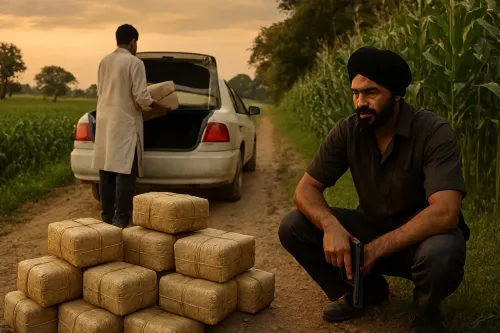
To evade inter-state detection, large batches are no longer moved in single consignments. Operators are breaking stockpiles into smaller parcels and routing them through private couriers before delivery to end manufacturers, according to officials.
NCB Busts Ahmedabad Lab Linked to Private Operator
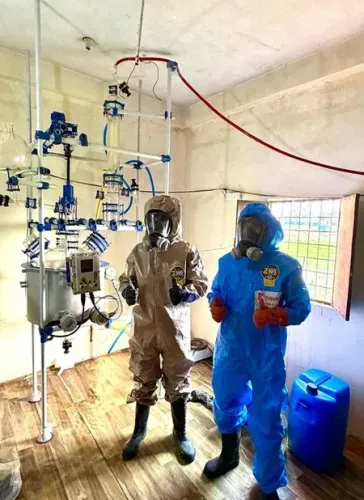
A recent operation by the Narcotics Control Bureau (NCB) illustrates the new pattern. Investigators dismantled a clandestine mephedrone manufacturing laboratory in the Sarkhej area of Ahmedabad. The accused, Mudassar Ahmed Khan, was living on the premises with his family and ran a café that doubled as a delivery point for contraband. He had sourced raw materials through suppliers in Mandsaur and Ahmedabad, as well as via online e-commerce platforms.
Investigators found no direct financial link to major cartels in this case. However, officials say a deeper analysis of such busts consistently suggests indirect facilitation — in operational guidance, evasion tactics, and chemical sourcing intelligence — by larger networks.
What Agencies Are Watching Next
Officials say the decentralisation strategy is deliberate and difficult to dismantle because it generates no traceable financial flow back to the main cartel hierarchy. The agencies are now focused on mapping the digital infrastructure behind the DIY video networks and tracing the chemical supply chains that sustain private manufacturers. This comes amid ongoing inter-agency coordination between the NCB, Intelligence Bureau, customs, and state police across high-risk corridors. As enforcement tightens at the top, the base of the narcotics pyramid appears to be widening — a challenge that will require both legislative and digital-enforcement responses.
Point of View
Two domains where India's legislative and enforcement frameworks are still catching up. Regulating HS Code misclassification and compelling encrypted platforms to cooperate on takedowns will determine whether this crackdown achieves lasting disruption or merely reshapes the problem.
NationPress
17 Nov 2026
Frequently Asked Questions
Why are drug cartels turning to private players in India?
Cartels are using small, home-based operators to create a diversion for enforcement agencies, buying themselves time to rebuild disrupted supply chains without direct financial or legal exposure. According to officials, while these private networks may not benefit cartels monetarily, they keep agencies occupied and allow larger networks to regroup.
What are DIY drug videos and how are they being spread?
DIY drug-making videos are online tutorials, reportedly promoted by operators abroad, that explain how to synthesise synthetic drugs at home using inexpensive procurement methods. After public platforms remove them following legal requests, they are redistributed on encrypted chat groups and private channels, making sustained takedowns very difficult.
What is 2-bromo-4-methylpropiophenone and why was it banned?
2-bromo-4-methylpropiophenone is a chemical precursor used in the manufacture of mephedrone, a synthetic drug. The Indian government notified it as a controlled substance in March 2026 to restrict mephedrone production; officials say evasion videos showing alternative methods appeared online almost immediately after the notification.
What did the NCB find in the Ahmedabad drug lab bust?
The Narcotics Control Bureau dismantled a clandestine mephedrone manufacturing laboratory in Ahmedabad's Sarkhej area. The accused, Mudassar Ahmed Khan, lived on the premises with his family, operated a café as a delivery front, and sourced raw materials through suppliers in Mandsaur and Ahmedabad as well as online e-commerce platforms.
How are cartels disguising controlled drug chemicals to evade detection?
Controlled chemicals are reportedly being mislabelled as legal industrial goods — including pharmaceutical intermediaries, fertilisers, paint thinners, and dye chemicals — using falsified customs paperwork and manipulated Harmonised System (HS) Codes. Large batches are also being broken into smaller parcels and routed through private couriers to avoid inter-state detection.