Nepal floods: China's silence on warnings worsened disaster, says ex-army officer
Synopsis
A retired Indian army general has directly accused China of worsening Nepal's deadliest recent flood disaster by withholding early warnings — and claims Beijing's own engineers had flagged the risk of large-scale construction in these fragile Himalayan zones. With 469 dead, 977 missing, and Nepal's government staying silent, the geopolitical fault lines of this tragedy are as stark as the human cost.
Key Takeaways
Sehgal (Retd.) said China's failure to issue early warnings 'significantly' worsened the Nepal floods.
The death toll in Nepal's Bhotekoshi region has reached 469 , with 977 people still out of contact, per NDRRMA .
517 of the 977 missing are foreign nationals, including approximately 90 Americans and nearly 100 Chinese nationals .
Sehgal claimed China's own engineers had warned against large-scale construction in the ecologically fragile zone — warnings reportedly ignored.
Chitwan district recorded the highest toll at 178 deaths , followed by Nawalparasi East with 110 .
Jaishankar received 21 Tamil Nadu pilgrims evacuated from Kathmandu at the Delhi airport on Friday.
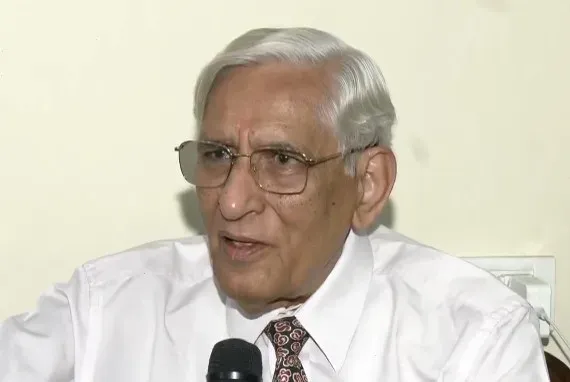
Defence expert Major General P.K. Sehgal (Retd.) said on Friday, 28 August that China's failure to issue timely and transparent early warnings 'could have significantly mitigated the devastation' caused by the catastrophic flash floods in Nepal's Bhotekoshi region. His remarks came as the official death toll climbed to 469, with 977 people still out of contact, according to the National Disaster Risk Reduction and Management Authority (NDRRMA).
What the Defence Expert Said
'There is absolutely no doubt that China could have significantly mitigated the damage caused due to the catastrophe in Nepal, had it issued timely and transparent early warnings — which it failed to provide,' Maj Gen Sehgal said.
He further noted that Nepali citizens on social media are openly holding China responsible, citing large-scale Chinese construction activity that has, in their view, severely disturbed the already fragile local ecology. Notably, Sehgal claimed that China's own engineers had cautioned against large-scale dam construction, river diversion projects, tunnelling, and new road-cutting in these ecologically sensitive zones — warnings that were reportedly disregarded by Chinese decision-makers.
'As far as Nepal's government is concerned, it has maintained a hushed silence as the nation gets large-scale equipment and money from China,' he added.
Scale of the Destruction
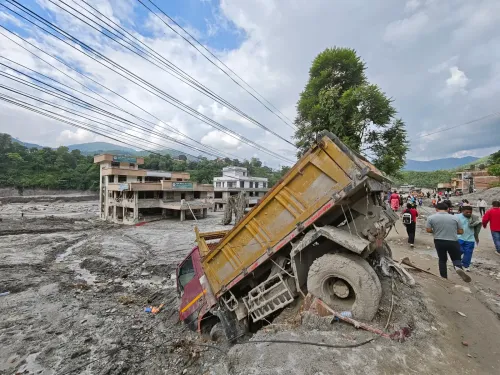
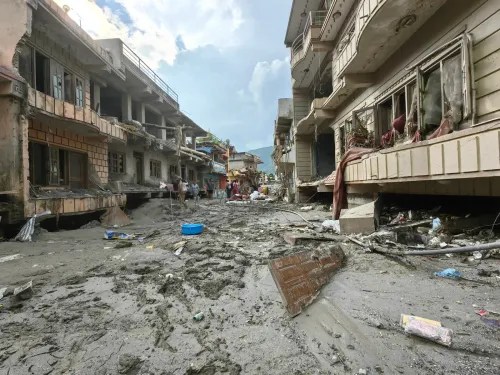
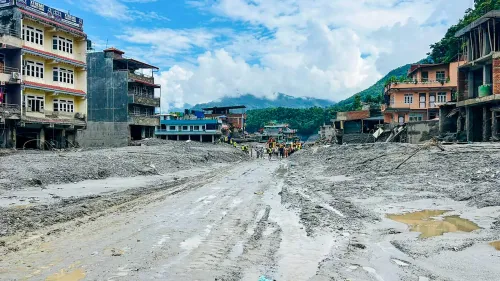
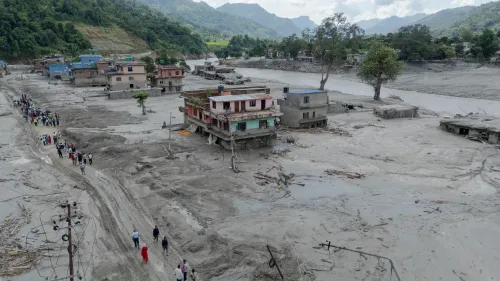
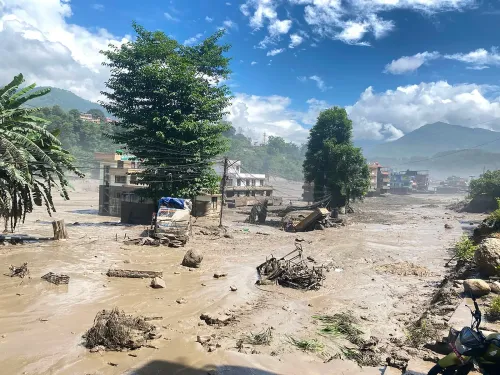
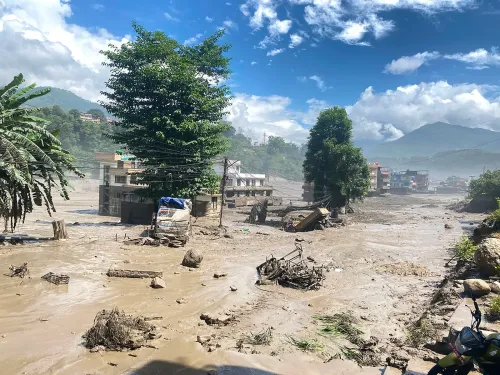
The floods, believed to have been triggered by an avalanche on a transboundary river between Nepal and China upstream of the Bhote Koshi River, swept away human settlements, roads, hydropower projects, and transmission infrastructure along the downstream riverbanks.
According to the NDRRMA, 469 bodies have been recovered across multiple districts. Chitwan district recorded the highest toll with 178 bodies, followed by Nawalparasi East with 110. Other districts with significant casualties include Gorkha (44), Nuwakot (37), Tanahun (28), Nawalparasi West (27), Dhading (23), and Rasuwa (12).
Foreign Nationals Among the Missing
Of the 977 people still out of contact, 517 are foreign nationals. The United States stated that approximately 90 Americans may have been affected, while China confirmed that nearly 100 Chinese nationals remain missing on the Nepali side following Wednesday's mudslide. The international dimension of the disaster has added diplomatic weight to an already fraught situation.
India Responds
External Affairs Minister S. Jaishankar on Friday personally received 21 pilgrims from Tamil Nadu at the Delhi airport after they were rescued from the flood-hit areas and evacuated from Kathmandu. India's swift consular response contrasts with the diplomatic silence that Sehgal and others have attributed to Kathmandu's China-dependent posture.
With hundreds still unaccounted for and the monsoon season far from over, pressure on both Nepal's government and China to improve cross-border disaster communication protocols is likely to intensify in the coming days.
Point of View
But early-warning data is a sovereign asset that China has historically been reluctant to share in real time. Nepal's silence on Chinese culpability is not surprising — Kathmandu is deeply financially entwined with Beijing — but it leaves its own citizens without accountability. The broader issue is that South Asian disaster protocols have no binding mechanism to compel upstream nations to share hydrological data, and China has never signed one. Until that gap is addressed, every monsoon season carries the same risk.
NationPress
12 Oct 2026
Frequently Asked Questions
What caused the devastating floods in Nepal's Bhotekoshi region?
The floods are believed to have been triggered by an avalanche on a transboundary river between Nepal and China, upstream of the Bhote Koshi River. The resulting surge swept away settlements, roads, hydropower projects, and transmission infrastructure downstream.
Why is China being blamed for the Nepal flood disaster?
Defence expert Major General P.K. Sehgal (Retd.) alleged that China failed to issue timely early warnings that could have reduced casualties. He also cited large-scale Chinese construction activity — including dams and road-cutting — that reportedly disturbed the fragile local ecology, and claimed China's own engineers had warned against such projects.
What is the current death toll and missing persons count from the Nepal floods?
According to the NDRRMA, 469 bodies have been recovered across multiple districts as of Friday, 28 August. A further 977 people remain out of contact, of whom 517 are foreign nationals.
Which foreign nationals are among those missing in the Nepal floods?
Of the 977 people still unaccounted for, 517 are foreign nationals. The United States said approximately 90 Americans may have been affected, while China confirmed nearly 100 Chinese nationals remain missing on the Nepali side.
How has India responded to the Nepal flood crisis?
External Affairs Minister S. Jaishankar personally received 21 pilgrims from Tamil Nadu at the Delhi airport on Friday after they were rescued from flood-hit areas and evacuated from Kathmandu, signalling active Indian consular engagement in the crisis.