Congress in Kerala: From Nehru's 'dead horse' to IUML coalition pressure in 2026
Synopsis
Posters threatening the Gandhis in their own stronghold of Wayanad — and the Congress leadership's subsequent capitulation on the Kerala CM choice — have exposed a striking contradiction: the party Jawaharlal Nehru once derided for keeping a 'tail of the Muslim League' in Malabar is now seen as governing Kerala at that very tail's direction.
Key Takeaways
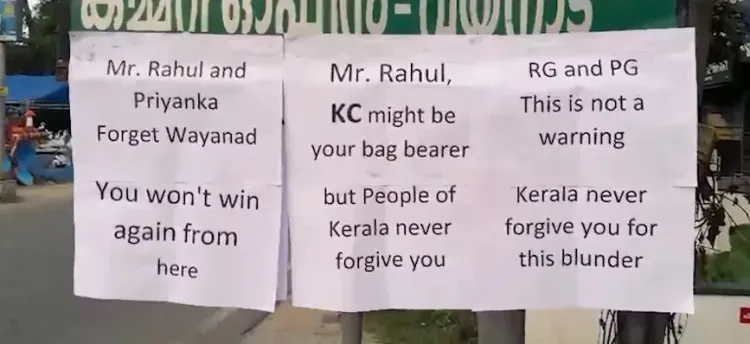
'Kerala will never forgive you' posters appeared in Wayanad targeting Rahul Gandhi and Priyanka Gandhi Vadra over the Congress party's indecision on the Kerala Chief Minister.
Congress eventually backed V.D.
Satheesan , widely seen as the IUML 's preferred candidate, after the posters surfaced.
The IUML won 22 seats in the 2026 Kerala Assembly elections , giving it significant leverage within the United Democratic Front (UDF) coalition.
In the 2026 Assembly elections , 18 of 19 Congress winners in Assam and both Congress MLAs in West Bengal are Muslims, reflecting a broader identity-consolidation trend.
Priyanka Gandhi Vadra won Wayanad in November 2024 by 4,10,931 votes ; Rahul Gandhi had won it by 4,31,770 votes in 2019 .
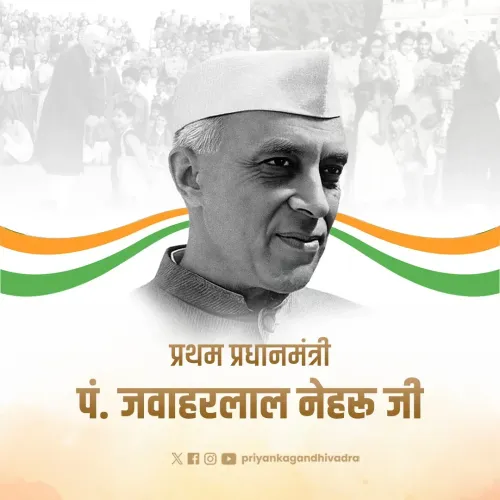
In 1957 , Jawaharlal Nehru called the Muslim League a 'dead horse' in a speech in Kozhikode — a remark that now sits awkwardly against Congress's current coalition arithmetic.
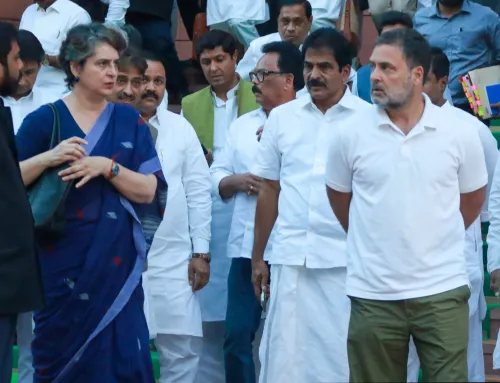
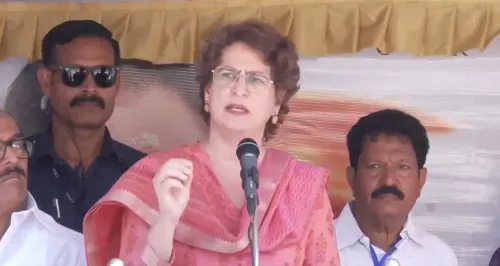
The posters that appeared in Wayanad in May 2026 were not routine political barbs. Carrying messages such as 'Kerala will never forgive you' and 'This is not a warning,' they targeted Rahul Gandhi and Priyanka Gandhi Vadra over the Congress high command's prolonged indecision on who should lead the state — K.C. Venugopal or V.D. Satheesan — as Kerala's Chief Minister. The episode has reignited a long-running debate about the Congress party's dependence on identity-based political alignments and its evolving relationship with the Indian Union Muslim League (IUML).
Why Wayanad Matters to the Gandhis
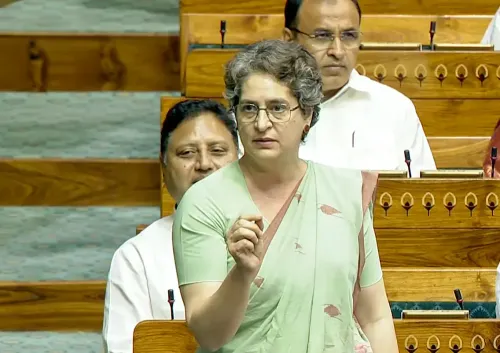
Wayanad is far from an ordinary constituency for the Gandhi family. Priyanka Gandhi Vadra secured her first Lok Sabha victory here in the November 2024 bypoll, winning by a margin of 4,10,931 votes — surpassing the 3,64,422-vote margin by which Rahul Gandhi had won the same seat in the 2024 Lok Sabha elections. In 2019, Rahul Gandhi's margin had stood at 4,31,770 votes. Vadra secured nearly 65 per cent of votes polled; BJP candidate Navya Haridas received just over 11 per cent.
The constituency's demographic composition — roughly 21.5 per cent Christians, 28.8 per cent Muslims, and nearly 49 per cent Hindus — has historically translated into strong minority-community backing for the Congress. That the posters surfaced here, rather than in a more adversarial terrain, underscored the sharpness of the message.
The 2026 Kerala Election and IUML's Growing Influence
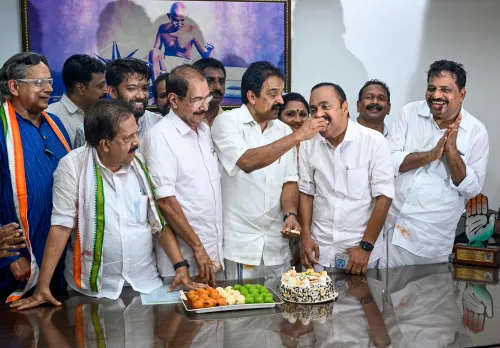
The 2026 Kerala Assembly elections returned the United Democratic Front (UDF) to power, with Congress winning 63 seats — the largest bloc within the alliance. However, coalition arithmetic placed the IUML, which registered one of its strongest-ever performances with 22 seats, in a position of considerable leverage over Congress's internal decisions, including the choice of Chief Minister.
Notably, national attention during the simultaneous 2026 Assembly elections across four states and one union territory was disproportionately focused on West Bengal, leaving developments in Kerala, Assam, and Tamil Nadu with less scrutiny. In Assam, 18 of the 19 Congress candidates who won are Muslims. In West Bengal, both newly elected Congress MLAs are Muslims. Critics argue these patterns reflect a deepening identity-driven consolidation within the party's electoral coalition.
The Poster Pressure and the Chief Minister Decision
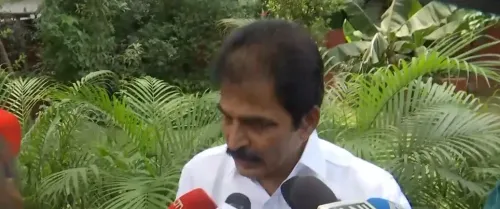
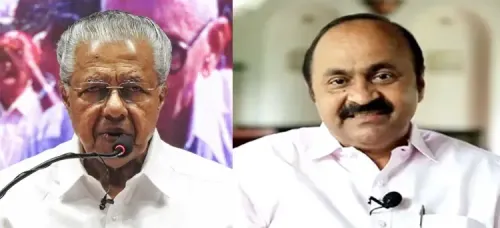
The Wayanad posters carried unusually direct language. One read: 'Mr Rahul and Priyanka, forget Wayanad. You won't win again from here.' Another declared: 'Mr Rahul, KC might be your bag bearer, but the people of Kerala will never forgive you.' Shortly after the posters surfaced, the Congress leadership moved toward a decision — eventually backing V.D. Satheesan, widely believed to be the preferred candidate of the IUML leadership.
The Bharatiya Janata Party (BJP) was quick to characterise the outcome as a decision taken under pressure, though the party holds limited stakes in Kerala. Congress has maintained that the decision reflected grassroots feedback, but the perception of coalition-driven compulsion has proved difficult to dispel entirely. Assam All India United Democratic Front (AIUDF) chief Badruddin Ajmal has even remarked that Congress is turning into a 'Muslim League' — a charge the party rejects.
Nehru's 'Dead Horse' and the Historical Contradiction
The episode has revived a striking historical contrast. Nearly seven decades ago, Jawaharlal Nehru — Rahul Gandhi's great-grandfather and India's first Prime Minister — publicly criticised the IUML as a communal organisation. In an election speech in Kozhikode in 1957, Nehru described the Muslim League as a 'dead horse' and remarked that while the League had gone to Pakistan after Partition, 'a little bit of its tail' had remained behind in Malabar.
The IUML was established in 1948, after the original All-India Muslim League ceased to exist in independent India following Partition. Some of its early leaders reportedly had roots in the pre-Partition organisation. Over the decades, the IUML has opposed measures including the criminalisation of instant triple talaq, the Citizenship Amendment Act (CAA), and the Waqf Amendment Act. It was also among organisations that had opposed the Supreme Court verdict in the Shah Bano case, which granted maintenance rights to a divorced Muslim woman — a verdict that the Rajiv Gandhi government subsequently overturned through legislation, in an episode that remains a touchstone in India's appeasement debate.
A Wider Pattern in Coalition Politics
What Congress describes as the natural compulsions of coalition governance, critics frame as a structural dependence on identity-based vote blocs. The party has long positioned itself as secular and contrasted itself with the BJP on communal grounds. Yet its alliances with the IUML in Kerala and with other community-aligned groupings in other states invite questions about the consistency of that positioning.
In a democracy, minority communities have every right to political representation and to articulate their concerns through electoral participation. But the consolidation of community-based blocs in state assemblies, analysts note, can gradually shape parliamentary politics in ways that deepen identity-driven competition rather than broad-based governance. What Nehru once called communal, several within the Congress today defend as secular coalition pragmatism — and in the sharp language of those Wayanad posters, the Gandhi siblings received a pointed reminder of the political costs that can follow.
Point of View
The Congress may find it increasingly difficult to hold together a national coalition that spans communities with competing political demands.
NationPress
2 Oct 2026
Frequently Asked Questions
What were the Wayanad posters targeting Rahul Gandhi and Priyanka Gandhi Vadra about?
The posters, which appeared in Wayanad in May 2026, criticised the Congress high command's prolonged indecision over who should become Kerala's Chief Minister — K.C. Venugopal or V.D. Satheesan. Messages included 'Kerala will never forgive you' and warnings that the Gandhis would not win Wayanad again.
Why is Wayanad significant for the Gandhi family?
Wayanad is the constituency where Priyanka Gandhi Vadra won her first Lok Sabha seat in November 2024 by 4,10,931 votes, and where Rahul Gandhi won twice — by 4,31,770 votes in 2019 and 3,64,422 votes in 2024. It has been considered a politically safe seat for the family, backed strongly by minority communities.
What role did the IUML play in the Kerala Chief Minister decision?
The Indian Union Muslim League, which won 22 seats in the 2026 Kerala Assembly elections, is the second-largest partner in the UDF coalition. V.D. Satheesan, who Congress eventually backed for Chief Minister, was widely reported to be the IUML leadership's preferred candidate, giving the party significant influence over the outcome.
What did Jawaharlal Nehru say about the Muslim League?
During an election speech in Kozhikode in 1957, Nehru described the Muslim League as a 'dead horse' and remarked that while the League had gone to Pakistan after Partition, 'a little bit of its tail' had remained behind in Malabar. The remark is now frequently cited in contrast to Congress's current alliance with the IUML.
Is the Congress party's reliance on Muslim political blocs a new development?
It is not new, but it appears to be deepening. In the 2026 Assembly elections, 18 of 19 Congress winners in Assam and both Congress MLAs in West Bengal are Muslim, while the IUML's 22-seat performance in Kerala gives it coalition leverage. Critics, including AIUDF chief Badruddin Ajmal, have argued Congress is increasingly resembling a 'Muslim League' — a charge the party rejects.