COP31 electrification package: $156bn grid push, 150+ nations commit to clean energy
Synopsis
At COP31 in Antalya, a sweeping electrification package landed with real numbers: $156 billion in annual grid and renewables investment, 21,000 km of new grid built in 2025, 13 zero-emission freight corridors spanning six continents, and Britain anchoring a new £400 million climate finance mechanism. Over 150 nations and 260 businesses are involved — but organisers themselves acknowledge the pace still falls short of Paris Agreement requirements.
Key Takeaways
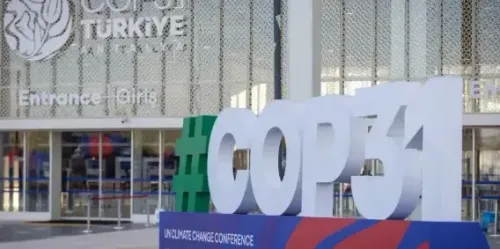
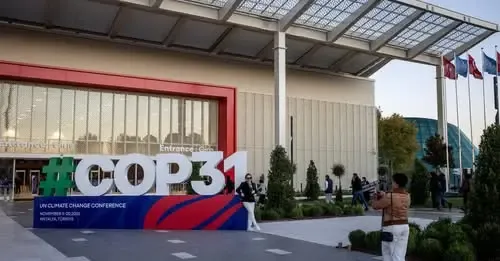
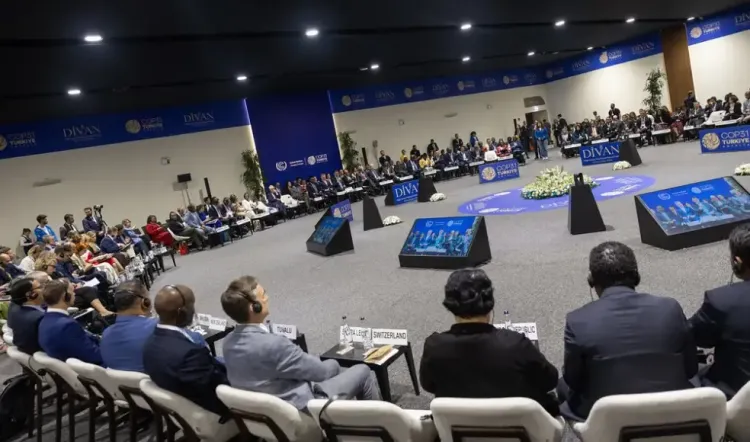
The COP31 Electrification Delivery Package was presented on 19 November 2026 in Antalya, Turkey , to nearly 200 nations .
UNEZA members committed at least $156 billion annually across grids, renewables, and storage — 35% higher than in 2024 .
More than 21,000 km of new grid was built in 2025 , up 50% year-on-year.
13 zero-emission freight corridors covering over 29,000 km are in development across six continents.
EV sales in ZEV Declaration countries reached 2.1 million in the first half of 2026 .
Britain committed £400 million as the first major donor to the new AMPLIFi climate finance mechanism, targeting up to £5 billion in mobilised funding.
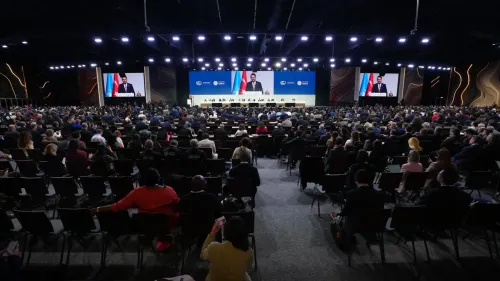
The COP31 Global Climate Action Agenda Electrification Delivery Package was formally presented to nearly 200 nations on Thursday, 19 November 2026 in Antalya, Turkey, consolidating billions in clean energy investment, grid expansion, broader electricity access, and accelerating progress on electrifying transport and industry. The package marks a formal first for a UN Climate Summit in placing real-economy action at the centre of proceedings.
Scale of Commitment
The package brings together new actions and updates involving over 150 countries plus the European Union, 37 cities, and more than 260 businesses across six continents. The participating countries span small island states to the world's largest economies, and those involved — collectively representing over two-thirds of global GDP — are acting either individually or collectively to accelerate the shift to clean and electrified energy.
Through the C40 Cities Yearly Offer of Action and the Global Covenant of Mayors, 37 cities joined the initiative, either reporting electrification progress in 2026 or announcing planned actions for 2027. More than 260 businesses with a combined annual revenue exceeding $4 trillion announced or profiled actions at COP31, individually or as part of a coalition.
Grid Expansion and Investment Plans
Members of the Utilities for Net Zero Alliance (UNEZA) announced combined annual investment plans of at least $156 billion across grids, renewables, and storage — 5% higher than the previous year and 35% higher than in 2024. The alliance reported that its members built more than 21,000 km of new grid in 2025, up 50% from 2024 — enough to stretch more than halfway around the planet.
New infrastructure support mechanisms were also unveiled. Turkey and the International Renewable Energy Agency (IRENA) jointly launched D-GRIDs, a programme to support distribution-grid planning, investment, digitalisation, and resilience in developing countries. The Green Grids Initiative's Grids Technical Assistance Solutions Hub will connect governments and utilities with more than 20 specialist organisations to address grid challenges.
Transport and Zero-Emission Corridors
On the transport front, 13 zero-emission freight corridors are in development across six continents, covering more than 29,000 km of roads — roughly three-quarters of the way around the Earth. Electric vehicle sales in countries that have signed the ZEV Declaration reached 2.1 million in the first half of 2026, while six cities committed to deploying approximately 2,200 new electric buses in 2027.
Climate Finance and Corporate Pledges
AMPLIFi, the new financing mechanism of the Climate Investment Funds (CIF), announced it is now operational with its first set of projects and an inaugural large donor contribution from Britain of £400 million, aiming to mobilise up to £5 billion in clean power, grids, storage, and electrification in emerging markets and developing economies.
The Asian Infrastructure Investment Bank (AIB) announced at COP31 that it is doubling its 2030 green and transition lending target from 30 billion euro to 60 billion euro, building on the 28 billion euro already deployed since 2019. Octopus Energy launched an Asia Electrification Fund targeting $600 million for solar, wind, storage, and EV charging projects, already backed by $50 million from Japanese investors. BBVA disclosed that it has channelled nearly 60 billion euro in sustainable business activity linked to electrification between January 2025 and September 2026.
Momentum, but Gaps Remain
Organisers were candid that the package does not deliver everything needed to electrify at the pace required to meet the goals of the Paris Agreement, describing it instead as 'a clear sign of momentum, progress and potential to go further.' The package is set to be formally presented at the High-Level Closing of the Action Agenda at COP31, in support of the COP31 Presidency's electrification priority. All actions collated are voluntary, and the gap between announced commitments and verified delivery remains a central challenge for future summits.
Point of View
The core accountability deficit remains unsolved: who measures whether these pledges are kept, and what happens when they are not?
NationPress
19 Nov 2026
Frequently Asked Questions
What is the COP31 Electrification Delivery Package?
It is a formal compilation of clean energy commitments presented at the COP31 UN Climate Summit in Antalya, Turkey on 19 November 2026, involving over 150 countries, the EU, 37 cities, and more than 260 businesses. The package covers grid investment, electricity access, zero-emission transport, and climate finance, and was presented to nearly 200 nations at the summit.
How much investment has been pledged for clean energy grids at COP31?
Members of the Utilities for Net Zero Alliance (UNEZA) announced combined annual investment plans of at least $156 billion across grids, renewables, and storage — 5% higher than the previous year and 35% higher than 2024. The alliance also reported building more than 21,000 km of new grid in 2025, a 50% increase from 2024.
What is the AMPLIFi climate finance mechanism announced at COP31?
AMPLIFi is the Climate Investment Funds' new financing mechanism, now operational with its first projects. Britain made the first large donor contribution of £400 million, with the mechanism aiming to mobilise up to £5 billion for clean power, grids, storage, and electrification in emerging and developing economies.
How is electric vehicle adoption progressing according to COP31 data?
EV sales in countries that have signed the ZEV Declaration reached 2.1 million in the first half of 2026 alone. Six cities also committed to deploying around 2,200 new electric buses in 2027, while 13 zero-emission freight corridors spanning more than 29,000 km are in development across six continents.
Does the COP31 electrification package meet Paris Agreement targets?
No — organisers explicitly stated the package does not deliver everything needed to electrify at the pace required to achieve Paris Agreement goals, though they described it as 'a clear sign of momentum, progress and potential to go further.' All actions in the package are voluntary.