Copycat extortion networks flagged by Indian intelligence agencies
Synopsis
Indian intelligence agencies have identified a new threat layer: copycat criminals invoking the names of feared gangsters like Bishnoi and Brar to run extortion rackets with zero organisational links. Meanwhile, Canada has opened 138 immigration probes after finding Indian students on study permits were coerced into extortion networks — a cross-border security crisis that is harder to crack than the original gangs.
Key Takeaways
Indian intelligence agencies have flagged the rise of copycat extortion networks exploiting the reputations of gangsters Lawrence Bishnoi and Goldy Brar .
The Union Home Ministry had previously directed the NIA to probe the gangster-terror nexus; major players have been arrested, but copycat actors have since emerged.
Larger gang networks are linked to Khalistan terror groups and reportedly facilitated by ISI through narcotics and arms supply.
Canadian authorities opened 138 immigration investigations after Indian nationals on study permits were found coerced into extortion rackets.
37 removal orders were issued and 18 individuals removed from Canada; 15 Indian-origin men were identified as part of the extortion network.
Investigators say copycat actors are harder to track due to their lack of organisational structure and minimal data trails.
Indian intelligence agencies have flagged a sharp rise in copycat extortion networks operating across India and Canada, with smaller criminal actors exploiting the feared reputations of established gangs — particularly those of Lawrence Bishnoi and Goldy Brar — to extort money without any actual organisational link to those networks. The development has emerged as a fresh security challenge even as the National Investigation Agency (NIA), acting on a directive from the Union Home Ministry, has already moved against major players in the gangster-terror nexus.
How Copycat Networks Operate
According to security officials, these smaller actors are not affiliated with the larger gang structures but invoke their names during extortion attempts to manufacture fear and compliance. The tactic works because gangsters such as Brar have, in recent months, publicly claimed responsibility for shootings and extortion on social media — a deliberate strategy, officials say, to project an image of operating above the law.
This open admission of crime, according to an Intelligence Bureau official, has created a ready-made template for opportunistic criminals. 'They are trying to tell people that they are well above the law and they can commit a crime and even speak about it openly,' the official said. Smaller gangs have exploited this atmosphere of fear for quick financial gain, with no ideological or organisational connection to the parent networks.
The Khalistan-ISI Link in the Larger Network
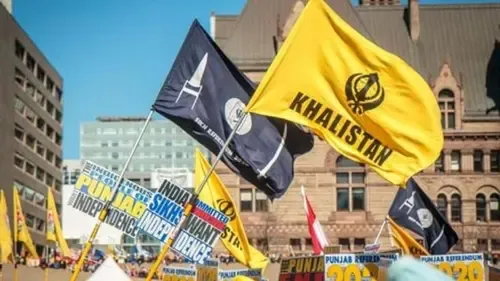
While copycat actors operate independently, the larger gang networks — including those of Bishnoi and Brar — maintain documented links with Khalistan terror groups and, according to officials, with Pakistan's Inter-Services Intelligence (ISI). The NIA has flagged on multiple occasions that these networks have been tasked with carrying out targeted attacks in Punjab under the banner of the Khalistan movement.
In return, according to officials, the ISI facilitates narcotics and arms supply to these gangs, who then provide services to build momentum for the Khalistan cause. The Canada-based gang operations have been directing ground-level activity in Punjab and remain under joint surveillance by Indian and Canadian agencies.
Indian Students Targeted in Canada
A particularly alarming dimension of the Canada-based extortion ecosystem involves Indian nationals on study permits. Investigations have found that some of these students have been coerced into participating in targeted acts of violence against South Asian diaspora communities across Canada.
Canadian authorities confirmed this development and disclosed that 138 immigration investigations have been launched nationwide following the discovery of student involvement. During these operations, authorities issued 37 removal orders, of which 18 individuals have already been removed from the country. Authorities also released details of 15 Indian-origin men identified as part of a deep-rooted extortion racket operating in Canada.
Why Copycat Actors Are Hard to Crack
Security officials acknowledge that investigating copycat networks is significantly harder than pursuing established gang hierarchies. Larger networks have traceable structures — financial flows, chain-of-command links, and communication patterns — that investigators can map over time.
Copycat actors, by contrast, operate without any discernible structure, leave minimal data trails, and frequently cause investigations to stall before a breakthrough is achieved, an official noted. This structural opacity makes them a persistent, low-visibility threat that is difficult to pre-empt. As agencies recalibrate their approach, the challenge will be developing new investigative frameworks suited to structureless, opportunistic criminal behaviour.
Point of View
Inadvertently, become a franchise model — one where the brand of fear does the heavy lifting even without any actual affiliation. Agencies have built investigative muscle around hierarchical networks, but structureless copycats expose a gap that existing frameworks are not designed to fill. The Canada dimension adds another layer of complexity: coercing students on study permits is a low-cost, high-leverage tactic that exploits immigration vulnerability rather than criminal infrastructure. If 138 immigration probes have already been opened, the actual scale of the problem is likely larger. The real policy question is whether India and Canada can build a joint investigative architecture fast enough to stay ahead of an adversary that has no fixed shape.
NationPress
25 Sept 2026
Frequently Asked Questions
What are copycat extortion networks flagged by Indian intelligence?
These are small criminal groups that invoke the names of established gangsters like Lawrence Bishnoi and Goldy Brar during extortion attempts, without any actual organisational link to those networks. They exploit the fear generated by the bigger gangs' social media admissions of crime to extort money for quick financial gain.
What is the connection between the larger gang networks and the Khalistan movement?
According to Indian security officials and the NIA, larger gang networks operating from Canada — including those linked to Bishnoi and Brar — have been tasked with carrying out targeted attacks in Punjab in the name of the Khalistan movement. The ISI reportedly facilitates narcotics and arms supply to these gangs in exchange for their services.
How are Indian students in Canada connected to these extortion networks?
Investigations found that some Indian nationals on study permits in Canada were coerced into participating in targeted acts of violence against South Asian diaspora communities. Canadian authorities confirmed the development and opened 138 immigration investigations, issuing 37 removal orders and removing 18 individuals.
Why are copycat actors harder to investigate than established gangs?
Unlike larger gang networks, which have traceable hierarchies and communication patterns, copycat actors operate without any fixed structure and leave minimal data trails. According to officials, this frequently causes investigations to stall, making pre-emptive action significantly more difficult.
What action has the NIA taken against the gangster-terror nexus?
The NIA was directed by the Union Home Ministry to conduct a thorough probe into the gangster-terror nexus. It has since arrested major players within these networks. However, the emergence of unaffiliated copycat actors represents a new challenge that existing investigative frameworks were not designed to address.