Dang district Gujarat: 95% twin-pit toilet adoption sets national sanitation model
Synopsis
A tribal district in Gujarat's forested hinterland has quietly built what the Union Ministry of Jal Shakti is now calling a national template: 95% of Dang's households have adopted twin-pit toilets, achieving at village scale what urban sewerage projects struggle to deliver at far greater cost.
Key Takeaways
Dang district, Gujarat has achieved 95 per cent household adoption of twin-pit toilets — 51,613 of 58,966 households.
The district spans 3 talukas and 310 villages with a population of approximately 2.96 lakh , predominantly tribal.
The government provides ₹12,000 per household under the Swachh Bharat Mission (Gramin) for twin-pit toilet construction.
Dang's model was highlighted at a Union Ministry of Jal Shakti virtual review meeting chaired by Minister C.R.
Twin-pit toilets decompose waste into nutrient-rich organic manure, requiring no sewerage infrastructure and less water than conventional flush systems.
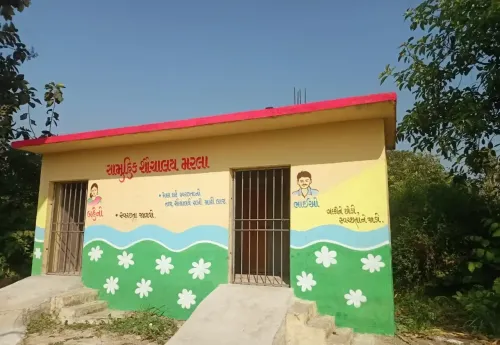
Gujarat's Dang district, one of India's most densely tribal regions, has achieved near-universal adoption of twin-pit toilets, with 51,613 of its 58,966 households — nearly 95 per cent — now using the technology. The milestone has positioned Dang as a national reference point for faecal sludge management under the Swachh Bharat Mission (Gramin).
Scale of Achievement
Dang, characterised by dense forests, rolling hills and dispersed settlements across three talukas and 310 villages, has an estimated population of 2.96 lakh. Vipul Pardeshi, Coordinator of the Dang District Rural Development Agency (DRDA), described the adoption figures as a significant milestone in rural sanitation. 'Out of a total of 58,966 households, 51,613 have already adopted twin-pit toilets, accounting for nearly 95 per cent of all toilets in the district. This is a significant achievement in the field of faecal sludge management. All of this has been made possible through public participation. The government provides assistance of ₹12,000 to every household for constructing a twin-pit toilet,' he said.
National Recognition and Ministry Review
Dang's progress was spotlighted during a virtual review meeting convened by the Union Ministry of Jal Shakti in January to evaluate faecal sludge management models across states and Union Territories. The meeting was chaired by Union Jal Shakti Minister C.R. Patil, who examined sanitation initiatives with the potential for wider replication. Dang was presented as a standout example of large-scale twin-pit adoption in remote tribal regions. Patil said: 'Such sanitation models not only contribute to the vision of a cleaner India but also create employment opportunities through sustainable waste management.'
How Twin-Pit Toilets Work
Unlike conventional sewer-connected systems, twin-pit toilets treat waste at the household level. Human waste flows into one pit, where it decomposes naturally. Once the first pit fills, the flow is redirected to a second pit, allowing the contents of the first to break down fully into safe, nutrient-rich organic manure usable as fertiliser. The technology requires less water than conventional flush systems and eliminates the need for costly sewerage infrastructure — making it particularly suited to remote rural terrain.
Swachh Bharat Mission Context
The Swachh Bharat Mission (Gramin), launched by Prime Minister Narendra Modi in 2014, initially targeted the elimination of open defecation in rural India. The programme has since broadened its focus to encompass sanitation infrastructure, public health, women's safety and behavioural change. Under the scheme, the government provides financial assistance of ₹12,000 per household for individual toilet construction, with twin-pit systems promoted as the preferred sustainable solution.
Why Dang Matters as a Model
The achievement is notable not only for its scale but for its context. Tribal districts with scattered settlements and difficult terrain have historically lagged on sanitation indicators, making community-driven adoption harder to achieve. Dang's success suggests that low-cost decentralised technology, backed by consistent government incentives and community participation, can overcome infrastructural barriers that stymie conventional approaches. Officials say the district's experience is being studied for potential replication across similarly remote tribal areas nationwide.
Point of View
Low-cost technology can outperform infrastructure-heavy approaches in the hardest-to-reach regions. The ₹12,000 household incentive is modest, yet the uptake rate rivals urban sewerage coverage in wealthier districts. What mainstream coverage misses is the replication question: if community participation drove adoption here, the policy lever is not money alone but sustained local engagement — something that does not scale automatically. The Ministry of Jal Shakti's interest is welcome, but converting a district-level case study into a reproducible national playbook will require documenting the social and administrative conditions, not just the toilet design.
NationPress
19 Sept 2026
Frequently Asked Questions
What is the twin-pit toilet model adopted in Dang district, Gujarat?
A twin-pit toilet directs human waste into one underground pit where it decomposes naturally; when that pit fills, waste is diverted to a second pit, allowing the first to break down into safe organic manure usable as fertiliser. The system requires no sewerage infrastructure and less water than conventional flush toilets, making it cost-effective for remote rural areas.
How many households in Dang district have adopted twin-pit toilets?
As of the latest official figures, 51,613 of Dang's 58,966 households have adopted twin-pit toilets, representing nearly 95 per cent of all household toilets in the district.
What government assistance is available for building a twin-pit toilet?
Under the Swachh Bharat Mission (Gramin), the government provides financial assistance of ₹12,000 per household for the construction of an individual twin-pit toilet. This incentive has been a key driver of adoption in Dang district.
Why has Dang district been called a national sanitation model?
Dang was highlighted at a Union Ministry of Jal Shakti review meeting in January as a standout example of large-scale twin-pit toilet adoption in a remote tribal region. Its near-95% household coverage in difficult terrain has drawn national attention as a replicable model for faecal sludge management.
What is the Swachh Bharat Mission (Gramin) and when was it launched?
The Swachh Bharat Mission (Gramin) was launched by Prime Minister Narendra Modi in 2014 with the primary goal of eliminating open defecation in rural India. It has since expanded to cover sanitation infrastructure, public health, women's safety and behavioural change, with twin-pit toilets promoted as the preferred rural solution.