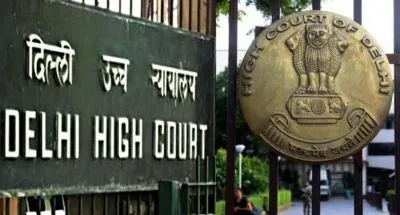
Delhi HC defers PIL on Jantar Mantar protest surveillance to July 27
Synopsis
The Delhi High Court is weighing a question with far-reaching implications: can the state deploy AI-enabled facial recognition and plainclothes videography at public protests without a statutory framework? The Centre says yes — it's routine law and order. Former JNUSU president Aishe Ghosh says it's a chilling instrument of intimidation. The answer, due 27 July, could reshape the boundaries of dissent and digital surveillance in India.
Key Takeaways
The Delhi High Court deferred to 27 July a PIL challenging police surveillance of student protesters at Jantar Mantar .
The Centre , through Solicitor General Tushar Mehta , defended videography of protests as a routine law-and-order measure backed by Supreme Court-mandated standing orders.
Petitioner's counsel Nandita Rao alleged deployment of AI-enabled facial recognition and recording of female students aged 16–20 years by plainclothes police.
The PIL was filed by former JNUSU president Aishe Ghosh , who argues surveillance has become an instrument of intimidation against student protesters.
A Division Bench of Chief Justice Devendra Kumar Upadhyaya and Justice Tejas Karia noted similar petitions are already pending before the court.
Separately, the court has directed preservation of CCTV footage from the CJP 'Sansad Chalo' march of 20 July , with that matter listed for September .
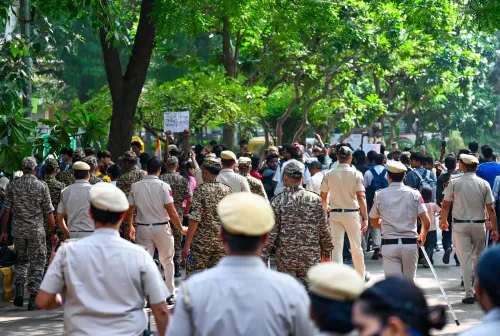
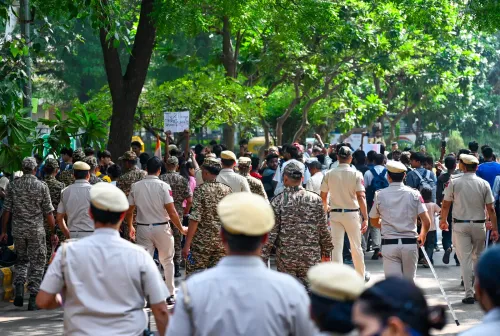
The Delhi High Court on Friday, 24 July deferred to 27 July the hearing on a Public Interest Litigation (PIL) challenging continuous police surveillance of student protesters at Jantar Mantar, after the Centre defended videography of public demonstrations as a routine law-and-order measure. The government argued that protesters at a public venue carry no reasonable expectation of privacy.
Centre's Position Before the Court
Solicitor General Tushar Mehta, appearing for the Centre, raised a preliminary objection and submitted that videography of public protests is an accepted mechanism for maintaining law and order, carried out in accordance with standing orders issued pursuant to Supreme Court directions. He argued that protest organisers themselves undertake to comply with these standing orders.
Mehta contended that while privacy is a fundamental right, it is not absolute and can be reasonably restricted where a legitimate state interest exists. He submitted that videography enables authorities to identify individuals responsible for any untoward incident. The Solicitor General further noted that protesters themselves voluntarily record videos, conduct interviews, and circulate content on social media — making a claim of privacy in such a setting, he argued, untenable. 'There can be no expectation of privacy in a public protest unless there is intrusion into a person's private life,' Mehta submitted.
Petitioner's Arguments on Privacy and Surveillance
Senior advocate Nandita Rao, appearing for the petitioner, relied on the Supreme Court's landmark K.S. Puttaswamy judgment to argue that the right to privacy extends to persons participating in demonstrations held in public places. She submitted that any restriction on the right to privacy must satisfy the constitutional tests of legality, legitimate state purpose, and proportionality.
Rao alleged that plainclothes police personnel were recording protesters, including female students aged between 16 and 20 years, and referred to media reports claiming that AI-enabled live facial recognition technology was being deployed at the protest site. She warned that reliance on facial recognition could potentially expose innocent individuals to criminal prosecution.
Rao further argued that government surveillance stands on an entirely different footing from recordings made by private individuals or journalists, and that police surveillance without statutory safeguards could have a chilling effect on democratic dissent. She urged the court to direct authorities to place on record the procedure governing such surveillance, including safeguards for data storage and use.
Court's Observations
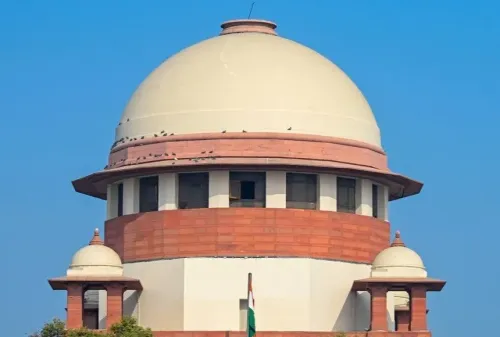
A Division Bench of Chief Justice Devendra Kumar Upadhyaya and Justice Tejas Karia observed that the legal position on the right to privacy was well settled and noted that similar petitions on the issue were already pending before the High Court. The bench suggested the petitioner could seek impleadment in those proceedings. Rao, however, maintained that the present petition was distinct, having been filed prior to the police action on 20 July, and specifically challenged continuous surveillance rather than the subsequent police action itself.
About the PIL and Broader Context
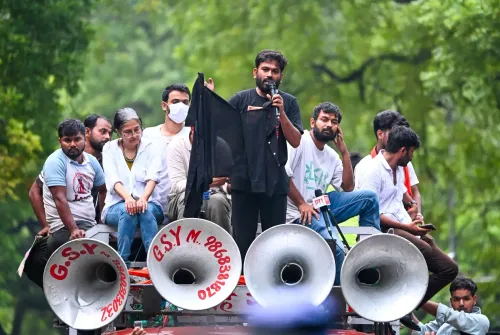
The PIL was filed by former Jawaharlal Nehru University Students' Union (JNUSU) president Aishe Ghosh, alleging that peaceful protesters at Jantar Mantar have been subjected to continuous photography, videography, and surveillance by police, extending even to routine activities at the designated protest site. The petition contends that such monitoring has become an instrument of intimidation and seeks a legal framework governing surveillance, including data protection safeguards and regulation of facial recognition technology.
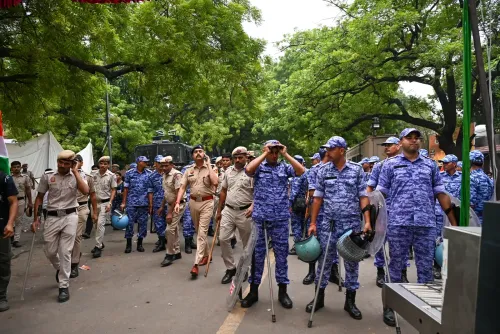
This comes amid a separate batch of PILs before the Delhi High Court alleging excessive use of force during the CJP-led 'Sansad Chalo' march over the NEET paper leak on 20 July. In that matter, the court had directed preservation of CCTV footage and other records, with the next hearing listed for September. The matter is next scheduled for hearing on 27 July.
Point of View
Operated without a statutory framework or data-retention safeguards, is constitutionally proportionate. The K.S. Puttaswamy judgment's proportionality test was designed precisely for this gap. India still lacks a comprehensive surveillance law, and courts have so far addressed the question piecemeal. If the Delhi High Court rules narrowly on the facts of this PIL, the structural problem — state surveillance of dissent operating in a legal vacuum — will simply migrate to the next protest site.
NationPress
22 Oct 2026
Frequently Asked Questions
What is the PIL before the Delhi High Court about Jantar Mantar protests?
The PIL, filed by former JNUSU president Aishe Ghosh, challenges continuous police photography, videography, and alleged AI-enabled facial recognition surveillance of student protesters at Jantar Mantar in New Delhi. It seeks a legal framework with statutory safeguards for data storage and use of facial recognition technology.
What is the Centre's argument on videography of protests?
Solicitor General Tushar Mehta argued that videography of public protests is a routine, accepted law-and-order measure carried out under standing orders issued pursuant to Supreme Court directions. He submitted that there can be no reasonable expectation of privacy at a public demonstration, particularly when protesters themselves record and share content on social media.
What did the petitioner argue about facial recognition at protests?
Senior advocate Nandita Rao, for the petitioner, cited media reports alleging AI-enabled live facial recognition was deployed at the protest site and warned it could expose innocent individuals to criminal prosecution. She argued that government surveillance without statutory safeguards creates a chilling effect on democratic dissent.
When will the Delhi High Court next hear this case?
The Delhi High Court has listed the PIL for further hearing on 27 July. The Division Bench of Chief Justice Devendra Kumar Upadhyaya and Justice Tejas Karia heard extensive arguments from both sides before deferring the matter.
How does this case connect to the NEET protest and the 'Sansad Chalo' march?
Separately, the Delhi High Court is also hearing a batch of PILs alleging excessive police force during the CJP-led 'Sansad Chalo' march on 20 July over the NEET paper leak. In that case, the court has directed preservation of CCTV footage and other records, with the next hearing scheduled for September.