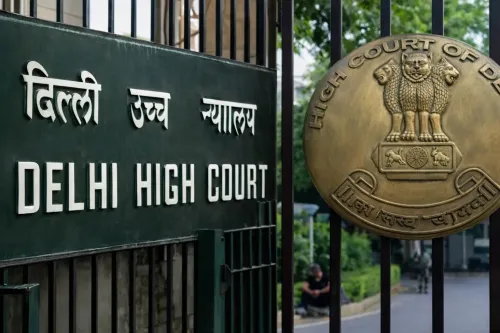
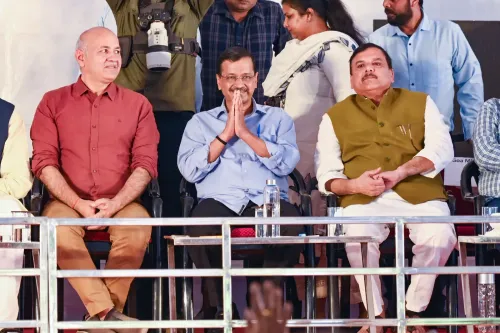
Delhi HC warns Kejriwal, Sisodia: 'You are taking us for a ride'
Synopsis
The Delhi High Court ran out of patience on Tuesday, telling Arvind Kejriwal, Manish Sisodia and other AAP leaders — 'You are taking us for a ride' — and issuing a final three-week ultimatum to file replies in criminal contempt proceedings over alleged attempts to scandalise the judiciary in the excise policy case. The next hearing is set for January 2027.
Key Takeaways
The Delhi High Court on 17 November 2026 gave a final three-week deadline to Arvind Kejriwal , Manish Sisodia and other AAP leaders to file replies in criminal contempt proceedings.
The Division Bench of Justice Navin Chawla and Justice Arun Bharadwaj warned that failure to comply will permanently close the alleged contemnors’ right to reply.
Others named in the proceedings include Rajya Sabha MP Sanjay Singh , Saurabh Bharadwaj , Vinay Mishra , and Durgesh Pathak .
The contempt case stems from an alleged coordinated social media campaign to scandalise the judiciary during the Delhi excise policy case .
The CBI is separately challenging the trial court’s discharge of Kejriwal and Sisodia in the excise policy corruption case before the High Court.
The next hearing is scheduled for January 2027 .
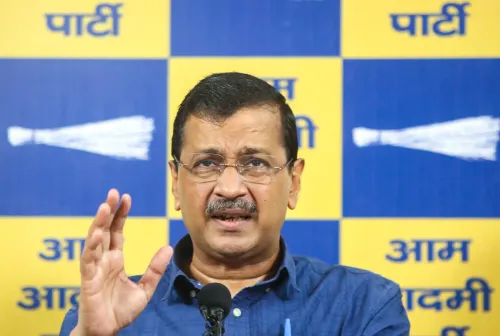
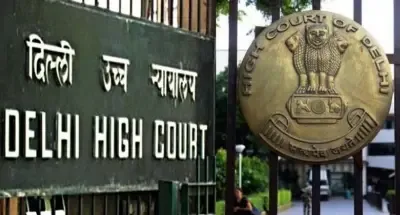
The Delhi High Court on Tuesday, 17 November 2026, issued a stern final warning to Aam Aadmi Party (AAP) Convenor Arvind Kejriwal, former Deputy Chief Minister Manish Sisodia, and other party leaders, granting them one last chance to file their replies in criminal contempt proceedings linked to alleged attempts to scandalise the judiciary over the excise policy case.
Court's Ultimatum
A Division Bench of Justice Navin Chawla and Justice Arun Bharadwaj made it unequivocally clear that the alleged contemnors must submit their responses within three weeks, failing which their right to file replies would be permanently closed. The bench pulled no punches in its remarks from the dais.
'We will not give you further time. You are taking us for a ride. We have a report from the registry that compliance of the court’s order to serve the record of the case on the alleged contemnors has been done. Now you file your replies, otherwise, we will close your right,' the bench stated.
The next hearing has been scheduled for January 2027.
AAP's Objections Overruled
Counsel appearing for the AAP leaders contended during the hearing that the High Court’s earlier directions regarding supply of relevant material had not been fully complied with and that certain documents were yet to be provided. The bench, however, cited a registry report confirming compliance with its earlier order. It added that if any material had not been supplied, the alleged contemnors were free to raise the issue within their respective replies rather than use it as a basis for further delay.
Who Is Named in the Contempt Proceedings
The criminal contempt proceedings were initiated against Kejriwal, Sisodia, Rajya Sabha MP Sanjay Singh, and other AAP leaders — including Saurabh Bharadwaj, Vinay Mishra, and Durgesh Pathak. The case stems from allegations of a coordinated social media campaign designed to scandalise the judiciary.
The proceedings originate in a detailed order passed on 14 May by a single-judge bench of Justice Swarana Kanta Sharma, who took strong exception to material allegedly circulated against the judiciary after she declined to recuse herself from the excise policy case. Justice Sharma held in her order that the actions of the proposed contemnors were 'calculated to scandalise the court, lower the authority of the institution of justice, interfere with the administration of justice, and intimidate the independent exercise of judicial functions.' She later recused herself from the main excise policy case to avoid any perception of bias.
Background: The Excise Policy Case
Following Justice Sharma’s recusal, a single-judge bench of Justice Manoj Jain was constituted to hear the Central Bureau of Investigation’s (CBI) revision plea challenging a trial court order that discharged Kejriwal, Sisodia, and others in the alleged corruption case linked to the now-scrapped Delhi excise policy. The trial court had discharged all accused on the ground that the prosecution failed to establish an overarching conspiracy in the framing and implementation of the policy.
The CBI has contested that discharge, alleging the excise policy crafted by the then AAP-led Delhi government was manipulated to favour select liquor traders in exchange for kickbacks. The contempt proceedings and the main CBI revision plea thus run on parallel tracks, compounding the legal pressure on AAP’s top leadership.
What Happens Next
With the court’s patience visibly exhausted, the AAP leaders face a hard deadline to respond. Any further non-compliance risks the court proceeding ex parte in the contempt matter. The convergence of the contempt case and the CBI revision plea before the Delhi High Court means the coming months could prove legally defining for Kejriwal and his party’s senior ranks.
Point of View
The contempt proceedings are arguably more politically consequential than the main CBI case, because they go to the question of institutional legitimacy: the charge is that the party ran a coordinated campaign to discredit a sitting judge. That narrative, if it solidifies in court, cuts at the party’s self-styled anti-corruption identity. The convergence of the contempt matter and the CBI revision plea in the same court, in the same season, leaves AAP’s top leadership with shrinking legal and political room to manoeuvre ahead of the next electoral cycle.
NationPress
17 Nov 2026
Frequently Asked Questions
What are the criminal contempt proceedings against Arvind Kejriwal and AAP leaders about?
The criminal contempt proceedings allege that AAP leaders — including Arvind Kejriwal, Manish Sisodia, and Sanjay Singh — ran a coordinated social media campaign to scandalise the judiciary in connection with the Delhi excise policy case. The proceedings were initiated following an order by Justice Swarana Kanta Sharma, who found the alleged actions 'calculated to scandalise the court' after she declined to recuse herself from hearing the excise case.
What deadline has the Delhi High Court set for AAP leaders to respond?
The Delhi High Court has given a final three-week deadline to the alleged contemnors to file their replies. The court has warned that if they fail to do so, their right to file replies will be permanently closed, and the next hearing is scheduled for January 2027.
Who are the AAP leaders named in the contempt case?
The contempt proceedings name AAP Convenor Arvind Kejriwal, former Deputy Chief Minister Manish Sisodia, Rajya Sabha MP Sanjay Singh, and party leaders Saurabh Bharadwaj, Vinay Mishra, and Durgesh Pathak.
What is the Delhi excise policy case?
The Delhi excise policy case involves allegations that the AAP-led Delhi government’s now-scrapped excise policy was manipulated to favour select liquor traders in exchange for kickbacks. The CBI is challenging a trial court order that had discharged Kejriwal, Sisodia, and others, arguing that the prosecution had in fact established a conspiracy.
Why did Justice Swarana Kanta Sharma recuse herself from the case?
Justice Sharma recused herself from hearing the main excise policy case to avoid any perception of bias, after her order initiating contempt proceedings against AAP leaders attracted controversy. She clarified that another bench could hear the matter, following which Justice Manoj Jain was constituted to hear the CBI’s revision plea.