CM Revanth Seeks NOC From Chhattisgarh for Sammakka Sagar Barrage
Synopsis
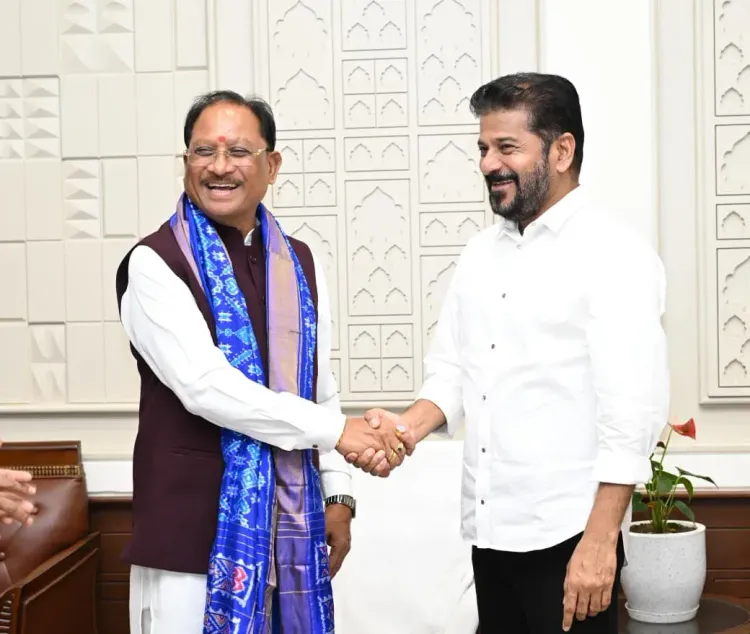
Telangana CM Revanth Reddy met Chhattisgarh CM Vishnu Deo Sai in Raipur on November 17 to request an immediate NOC for the fully built Sammakka Sagar Barrage. The IIT Kharagpur study limits Chhattisgarh submergence to 33 acres. Sai promised to expedite the clearance.
Key Takeaways
Telangana CM Revanth Reddy met Chhattisgarh CM Vishnu Deo Sai in Raipur on November 17 to seek a No Objection Certificate for the Sammakka Sagar Barrage.
The barrage is fully constructed at Thupakulagudem in Mulugu district, with a storage capacity of 6.94 TMC at a full reservoir level of +83 metres .
The site was relocated from Kantanapalli to Thupakulagudem to reduce submergence from an estimated 11,408 acres (affecting 17 tribal villages) to only 33 acres in Chhattisgarh.
IIT Kharagpur submitted its impact study to Chhattisgarh on July 30 , funded by Telangana's payment of Rs 9.883 crore in April.
Chhattisgarh CM Sai responded favourably and committed to expediting the NOC process .
The project aims to meet irrigation and drinking water needs in drought-prone tribal areas, with El Niño-driven water stress cited as a key justification.
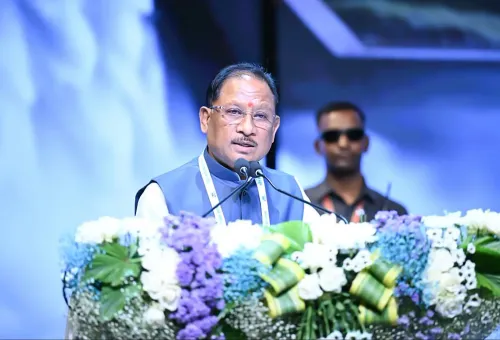
A completed barrage sitting idle — waiting for a neighbour's signature. Telangana Chief Minister Revanth Reddy flew to Raipur on Tuesday, November 17, met Chhattisgarh Chief Minister Vishnu Deo Sai, and made a pointed plea: issue the No Objection Certificate (NOC) immediately so the Sammakka Sagar Barrage on the Godavari River in Mulugu district can begin storing water for drought-hit tribal communities.
The Chief Minister's Office of Telangana confirmed that Irrigation Minister Uttam Kumar Reddy accompanied Revanth Reddy to the bilateral meeting in Raipur. The delegation walked Sai through the full project brief — submergence data, compensation commitments, and the pressing water-security case — and left Raipur with what it came for: a promise.
Why the site moved from Kantanapalli to Thupakulagudem
The project was not always planned for Thupakulagudem. At the originally proposed Kantanapalli site, engineers estimated that the barrage would submerge 11,408 acres of land — including 17 tribal villages — and disrupt security and infrastructure across the upstream belt. That was a non-starter.
Relocating the barrage to Thupakulagudem in Mulugu district transformed the calculus. An independent study commissioned by the Chhattisgarh government and conducted by IIT Kharagpur found that only about 33 acres of Chhattisgarh territory would be submerged under normal conditions. Even during peak flooding, the affected footprint would not exceed 100 acres. The site shift made the project viable without displacing a single village on the Chhattisgarh side.
Telangana's financial commitments and the IIT Kharagpur report
Chhattisgarh asked for a study before moving forward — Telangana paid for it. The Telangana government deposited Rs 9.883 crore in April to fund the IIT Kharagpur assessment. The institute submitted its findings to the Chhattisgarh government on July 30, clearing the technical stage of the NOC process.
The barrage itself is now fully constructed. At full reservoir level of +83 metres, the structure can store 6.94 TMC (thousand million cubic feet) of Godavari water. Revanth Reddy told Sai that Telangana stands ready to meet all obligations — land acquisition costs, compensation, and rehabilitation for any affected Chhattisgarh residents — strictly as per statutory norms.
The El Niño argument and what 6.94 TMC means for Mulugu
Revanth Reddy did not just ask for administrative cooperation; he built a climate case. El Niño conditions and deficient rainfall seasons are raising the probability of acute water stress in Telangana, the CM argued. The Sammakka Sagar Barrage is designed precisely for this scenario: to channel Godavari flows into drought-prone, backward, and tribal areas in Mulugu and surrounding districts for both irrigation and drinking water.
The barrage's tribal dimension carries symbolic and political weight. It is named after Sammakka-Saralamma, the revered Koya tribal goddess whose jatara on the Godavari banks draws millions. Water storage for her people's farmland is a promise loaded with more than hydrology.
Chhattisgarh's response and what comes next
Vishnu Deo Sai's response was described as 'favourable' by the Telangana CMO. The Chhattisgarh government committed to expediting the NOC process and cooperating on remaining clearances. No formal timeline was announced, but the Telangana delegation will now watch for the official document — and any movement on land acquisition proceedings on the Chhattisgarh side.
A barrage that took years of design changes, a site relocation, crores in study fees, and an IIT report to get this far now hinges on a single inter-state letter. For Mulugu's tribal farmers, that letter is the difference between a structure and a lifeline.
Point of View
Named after a revered tribal deity, carries both practical and political significance in Mulugu, a district where tribal welfare is a persistent electoral and governance priority. Chhattisgarh's favourable response signals that BJP-ruled states are willing to cooperate with Congress-led Telangana on technocratic infrastructure matters, insulating water diplomacy from partisan friction. The key test will be whether the NOC translates into formal issuance within weeks or slips into bureaucratic delay — the difference between a campaign deliverable and a continuing grievance.
NationPress
17 Nov 2026
Frequently Asked Questions
What is the Sammakka Sagar Barrage and where is it located?
The Sammakka Sagar Barrage is a completed multi-purpose structure on the Godavari River near Thupakulagudem in Mulugu district, Telangana. It is designed to store up to 6.94 TMC of water at a full reservoir level of +83 metres for irrigation and drinking needs in tribal and drought-prone areas.
Why does Telangana need an NOC from Chhattisgarh for this barrage?
Because the backwaters of the barrage can submerge a small area of Chhattisgarh territory — estimated at about 33 acres under normal conditions — Chhattisgarh must issue a No Objection Certificate before Telangana can begin storing water and operationalising the project.
What did the IIT Kharagpur study find about the Sammakka Sagar Barrage?
The IIT Kharagpur study found that locating the barrage at Thupakulagudem would submerge approximately 33 acres in Chhattisgarh under normal conditions and not more than 100 acres even during heavy floods. The study was submitted to the Chhattisgarh government on July 30.
Why was the barrage site shifted from Kantanapalli to Thupakulagudem?
The original Kantanapalli site would have submerged an estimated 11,408 acres, including 17 tribal villages, with added impacts on security and infrastructure. The site was moved to Thupakulagudem to drastically reduce the submergence footprint.
How much has Telangana paid towards the Chhattisgarh NOC process?
Telangana paid Rs 9.883 crore in April to fund the IIT Kharagpur study commissioned by the Chhattisgarh government to assess the barrage's impact — a prerequisite for the NOC.