Nadda hails 10 years of malaria elimination progress in India
Synopsis
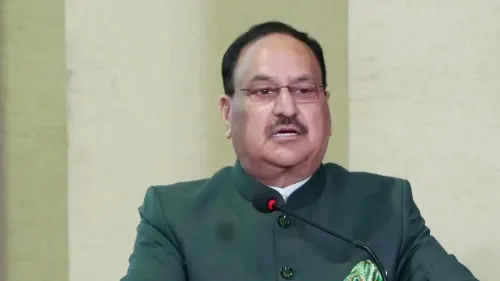
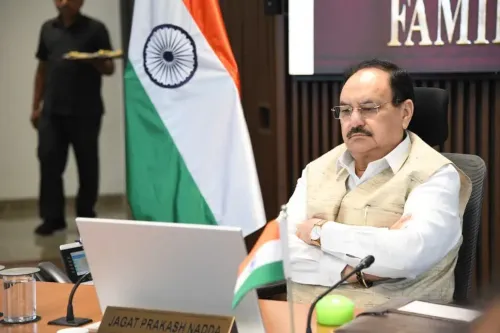
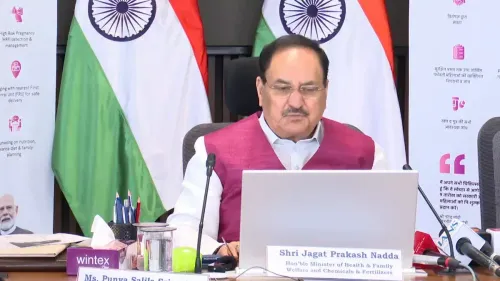
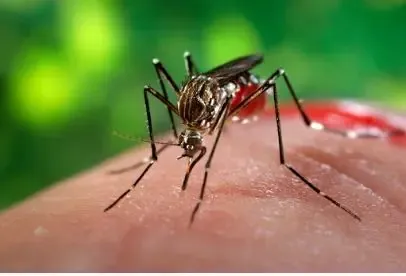
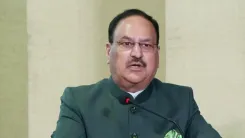
Union Health Minister J. P. Nadda on 17 November 2026 praised ten years of malaria elimination work in India, crediting prevention, rapid diagnosis, treatment and community participation for gains against malaria and drug resistance, as the country eyes its 2030 elimination goal.
Key Takeaways
Union Health Minister J.
Nadda congratulated health workers and communities on 17 November 2026 for a decade of malaria elimination progress.
He cited four pillars of success: effective prevention, early diagnosis, appropriate treatment, and community participation.
Nadda specifically acknowledged progress in tackling drug resistance , a cross-border threat linked to artemisinin partial resistance in the region.
India's National Framework for Malaria Elimination 2016–2030 anchors the strategy, targeting elimination in alignment with WHO goals and SDG 3.
The National Vector Borne Disease Control Programme (NVBDCP) oversees surveillance, integrated vector management and treatment protocols nationwide.
With the 2030 deadline four years away, the milestone marks a midpoint — not the finish line — in India's elimination drive.
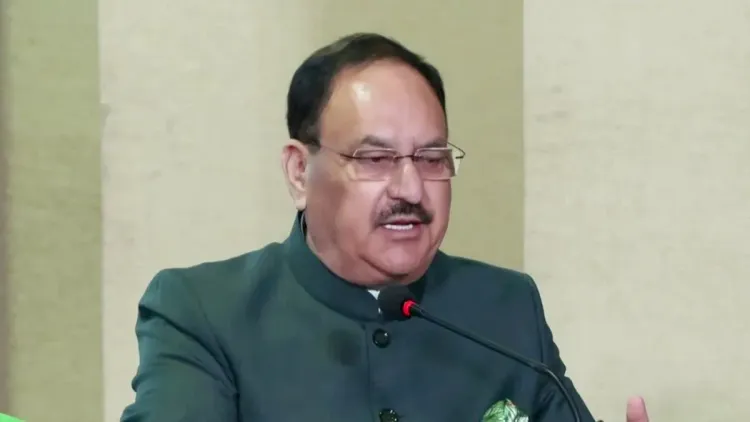
A decade-long campaign against one of India's most persistent public-health threats has drawn a formal salute from the top. Union Health Minister J. P. Nadda on Tuesday, 17 November 2026, congratulated health workers, communities and programme managers for sustained gains in malaria elimination, citing effective prevention, rapid diagnosis, appropriate treatment, and community participation as the pillars of a strategy that has also tackled the growing menace of drug resistance.
Posting in Hindi on X, Nadda wrote: 'पिछले 10 वर्षों में मलेरिया उन्मूलन के लिए एक व्यापक और समग्र प्रयास किया गया' — 'Over the last 10 years, a comprehensive and holistic effort has been made for malaria elimination.' He added that successes had been achieved on challenges including malaria and drug resistance through prevention, early diagnosis, proper treatment and community involvement, and extended 'special congratulations to all of you' for this 'remarkable achievement.'
The 2016 framework that set the clock ticking
The ten-year arc Nadda references traces directly to the National Framework for Malaria Elimination 2016–2030, launched by the Ministry of Health and Family Welfare to steer India from malaria control toward outright elimination. The framework set phased targets and tasked the National Vector Borne Disease Control Programme (NVBDCP) with surveillance, integrated vector management and ensuring rapid diagnostic tests and artemisinin-based combination therapies reached the last mile.
The strategy aligned India with WHO global elimination targets and Sustainable Development Goal 3 on good health, placing the country inside a larger international accountability architecture. Drug resistance — which Nadda specifically flags — has been a cross-border headache across South and Southeast Asia, making India's community-level surveillance work particularly consequential.
Community participation: the unglamorous engine of the drive
Behind every statistic is a network of frontline health workers — ASHA workers, ANMs and village-level volunteers — who conducted home visits, distributed bed nets, administered rapid tests in remote hamlets and tracked fever cases in malaria-endemic states. It is this layer that Nadda's post implicitly honours: the 'community participation' he cites is not an abstraction but millions of household-level interventions over ten monsoon seasons.
Successive annual NVBDCP surveillance reports have recorded declining case incidence across the decade, with several states advancing toward sub-national certification milestones. The 2030 elimination deadline — now four years away — means the pressure to hold and extend these gains is, if anything, intensifying.
Drug resistance: the challenge that refuses to disappear
The Minister's explicit mention of drug resistance is a signal worth noting. Artemisinin partial resistance, documented in parts of Southeast Asia, has long shadowed India's northeastern borders. Integrating resistance surveillance into routine malaria reporting — and refreshing treatment protocols in real time — has been central to keeping combination therapies effective. That Nadda frames this as a challenge 'overcome' rather than merely managed suggests confidence in the programme's adaptive capacity, even as vigilance remains non-negotiable.
With India's 2030 malaria-free goal within the decade's horizon, the minister's post is as much a mid-term accountability marker as a congratulation — a public signal that the momentum built over ten years must not be squandered in the final stretch.
Point of View
Reinforcing the government's public-health credibility ahead of the 2030 deadline. By explicitly naming drug resistance alongside case reduction, the Minister signals that the programme's sophistication — not just its scale — is being claimed as a BJP-era achievement. The framing of community participation as a success factor also serves to validate investment in frontline health infrastructure such as ASHA workers, a consistent NDA talking point. Analysts will watch whether this celebratory communication is followed by NVBDCP data releases that quantify the progress being claimed.
NationPress
17 Nov 2026
Frequently Asked Questions
What is India's target year for malaria elimination?
India's target is to achieve malaria elimination by 2030 , as set out in the National Framework for Malaria Elimination launched in 2016. The framework guides a phased transition from malaria control to full elimination in line with WHO global targets.
What is the National Framework for Malaria Elimination in India?
The National Framework for Malaria Elimination 2016–2030 is a government policy launched by the Ministry of Health and Family Welfare to guide India from malaria control to elimination, using integrated vector management, rapid diagnostic tests and artemisinin-based combination therapies.
What is the NVBDCP and what does it do?
The National Vector Borne Disease Control Programme (NVBDCP) is a central government programme under the Ministry of Health responsible for surveillance, prevention and control of malaria and other vector-borne diseases across India.
Why is drug-resistant malaria a concern in India?
Artemisinin partial resistance, documented in parts of Southeast Asia, poses a risk to India's northeastern states. India has integrated resistance surveillance into routine malaria reporting and updates treatment protocols to keep artemisinin-based combination therapies effective.
What did J. P. Nadda say about malaria in November 2026?
On 17 November 2026 , Union Health Minister J. P. Nadda congratulated health workers and communities for a decade of comprehensive malaria elimination efforts, citing prevention, early diagnosis, treatment and community participation as the drivers of success against malaria and drug resistance.