Odisha CMO mobilises 74 rescue teams for Cyclone Akaban

Synopsis
The Chief Minister's Office of Odisha has announced sweeping cyclone-preparedness measures ahead of Cyclone Akaban, deploying 74 rescue teams, activating 24-hour control rooms in six coastal districts, ordering shelters fully stocked by 17 November, and banning fishing from 18-20 November.
Key Takeaways
74 rescue teams are being deployed, with pre-positioning in the most exposed sub-divisions ahead of Cyclone Akaban.
All shelters in vulnerable districts must have food, water, electricity, and sanitation ready by 17 November 2026 .
Ganjam, Gajapati, Puri, Rayagada, Koraput, and Malkangiri districts have activated 24-hour emergency control rooms .
Fishermen are warned against going to sea from 18 to 20 November ; those at sea are being recalled.
Emergency stockpiles — bleaching powder, bottled water, generator sets, mobile water purification units — are being stored at three times estimated need.
Priority evacuation covers children, senior citizens, persons with disabilities, and pregnant women from high-risk zones.
With Cyclone Akaban bearing down on the Odisha coast, the state government has shifted into full emergency mode — deploying 74 rescue teams, activating round-the-clock control rooms across six vulnerable districts, and ordering all shelters to be fully stocked by 17 November 2026. The Chief Minister's Office of Odisha announced the sweeping preparedness measures on Tuesday, 17 November, laying out a district-by-district response plan built for speed and scale.
Six districts on high alert, shelters stocked by nightfall
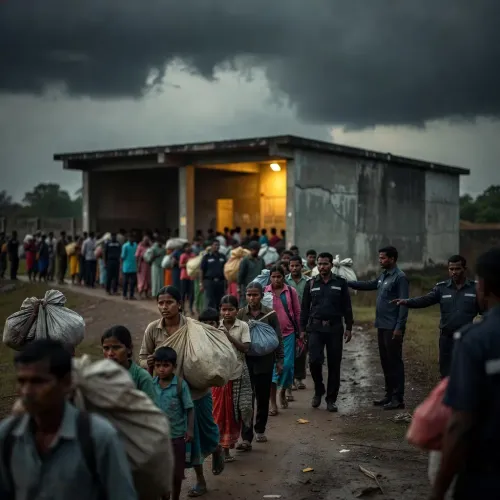
The districts of Ganjam, Gajapati, Puri, Rayagada, Koraput, and Malkangiri have been placed under 24-hour emergency control rooms, with officials ordered to ensure food, drinking water, electricity, and sanitation are in place at every shelter by the end of 17 November. The directive is explicit: no shelter should be found wanting when displaced families arrive. Special emphasis has been placed on the safe evacuation of children, senior citizens, persons with disabilities, and pregnant women from high-risk zones — the most vulnerable moved first, logistics sorted around them.
Fishermen face a hard advisory: no sea entry from 18 to 20 November. Those already at sea are being tracked and recalled to shore. It is a measure that reflects hard lessons — in past Odisha cyclones, fishing communities venturing out during storm windows have faced the heaviest casualties.
74 rescue teams, three times the supply buffer
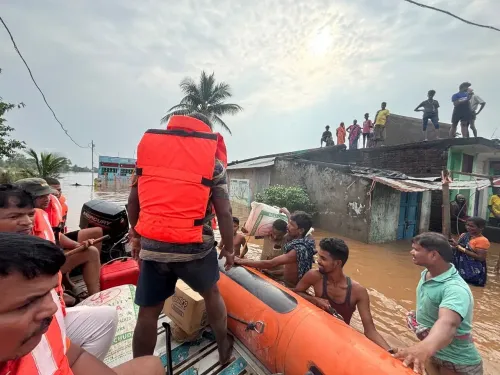
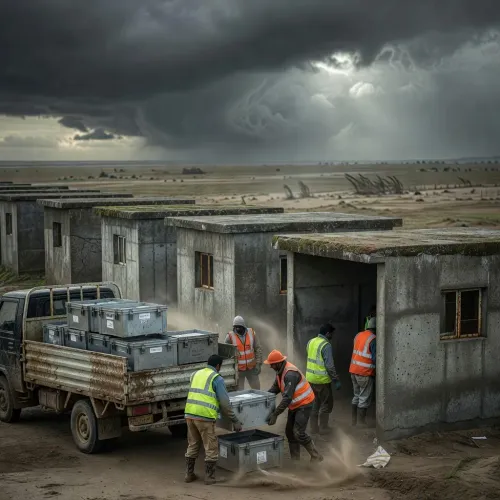
The operational scale is deliberate. A total of 74 rescue teams are being deployed, with units pre-positioned in the most exposed sub-divisions rather than held in reserve. Supply planning goes further: the government has ordered stockpiles of bleaching powder, bottled water, Sintex tanks, generator sets, and mobile water purification units at three times estimated need — a buffer large enough to absorb disruption to supply chains if roads wash out or bridges go under. Dedicated rapid-restoration teams are on standby in vulnerable districts specifically to bring water supply systems back online after the storm passes.
The Panchayati Raj and Drinking Water Department has been directed to map at-risk water sources in advance and pre-deploy water tankers — a recognition that contamination of wells and hand pumps after flooding is as dangerous as the storm itself.
A preparedness model forged in catastrophe
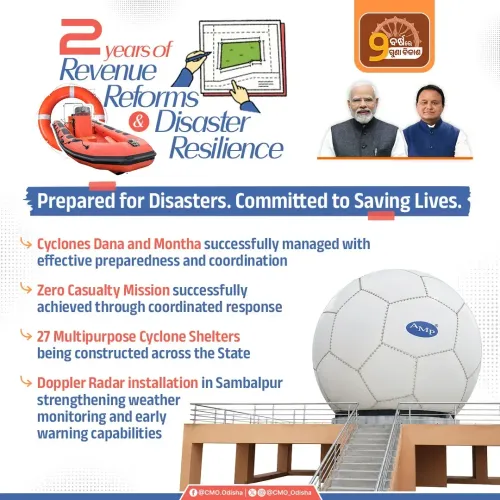
Odisha's current response architecture did not emerge from a manual — it was built from grief. The 1999 Super Cyclone killed more than 10,000 people and left the state's coastline in ruins, exposing the absence of coordinated early warning and mass evacuation systems. The government rebuilt from scratch, creating a dedicated disaster management framework centred on pre-emptive action. By the time Cyclone Fani struck in 2019, that framework had matured: more than 1.2 million people were evacuated to safety, and loss of life was kept to a fraction of what the storm's intensity would once have guaranteed.
The machinery being activated now for Akaban follows the same logic — inter-departmental coordination locked in before landfall, not scrambled after. The CMO's statement closes with a commitment that all departments are 'alert in a coordinated manner' to protect lives and property, ensure uninterrupted drinking water, and deliver rapid rescue and emergency services.
The India Meteorological Department's track updates in the hours ahead will determine whether the current deployment scale holds — or whether the state needs to accelerate further. Odisha is not waiting to find out.
Point of View
Pre-positioned disaster management that became a national template after Cyclone Fani in 2019. The 74-team deployment and triple-buffer supply mandate signal that the state is not calibrating its response to the storm's current track alone, but to worst-case scenarios, a hedge that has historically kept death tolls low even under severe conditions. The explicit call-out of vulnerable groups — children, the elderly, disabled persons, pregnant women — reflects a mainstreaming of rights-based disaster response within what was once a purely logistics-driven framework. Whether this round of preparedness translates into another Fani-style benchmark, or whether Akaban's eventual track demands a step-change in scale, will depend on meteorological updates in the next 24 to 48 hours.
NationPress
17 Nov 2026
Frequently Asked Questions
What is Cyclone Akaban and which districts in Odisha will it affect?
Cyclone Akaban is an emerging cyclonic storm in the Bay of Bengal expected to impact Odisha's coast. The districts identified as most at risk include Ganjam, Gajapati, Puri, Rayagada, Koraput, and Malkangiri, all of which have been placed under 24-hour emergency control rooms.
How many rescue teams has Odisha deployed for Cyclone Akaban?
The Odisha government has planned the deployment of 74 rescue teams, with units to be pre-positioned in the most vulnerable areas ahead of the storm.
Can fishermen go to sea during Cyclone Akaban?
No. The government has issued a warning against sea entry from 18 to 20 November 2026. Fishermen already at sea are being recalled to shore as a safety measure.
What supplies are being pre-stocked in Odisha cyclone shelters?
Shelters are being stocked with food, drinking water, electricity, and sanitation facilities by 17 November. Emergency supplies including bleaching powder, bottled water, generator sets, and mobile water purification units are being stored at three times estimated need.
How has Odisha prepared for cyclones in the past?
After the 1999 Super Cyclone killed over 10,000 people, Odisha built a dedicated disaster management system focused on early warning and mass evacuation. During Cyclone Fani in 2019, over 1.2 million people were evacuated with minimal loss of life, earning the state national and international recognition for its preparedness model.