Delhi CM Rekha Gupta launches 4 tourism circuits to boost spiritual, heritage travel
Synopsis
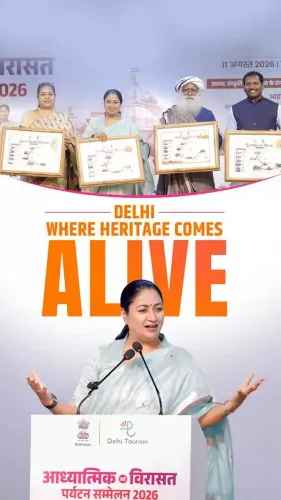
Delhi is betting on spirituality and cultural diversity to reinvent its tourism identity. Chief Minister Rekha Gupta launched four integrated circuits at Akshardham on 11 August 2026, covering temples, gurdwaras, mosques, churches, and Buddhist and Jain sites — a direct push to make visitors stay longer and spend more, not just pass through.
Key Takeaways
Delhi CM Rekha Gupta launched four spiritual and heritage tourism circuits on 11 August 2026 at Akshardham Temple .
The circuits integrate religious, spiritual, cultural, and historical sites across the capital into single travel experiences.
The government aims to shift Delhi's image from a 'Transit City' to a 'Destination City' , encouraging longer tourist stays.
Sites covered include temples, gurdwaras, churches, mosques, Buddhist and Jain centres , and architectural landmarks.
The initiative is expected to generate employment for hotels, tour operators, local guides, artisans, and small entrepreneurs .
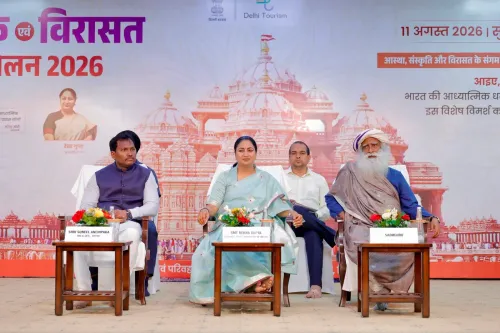
Spiritual leader Sadhguru Jaggi Vasudev was present at the conclave.
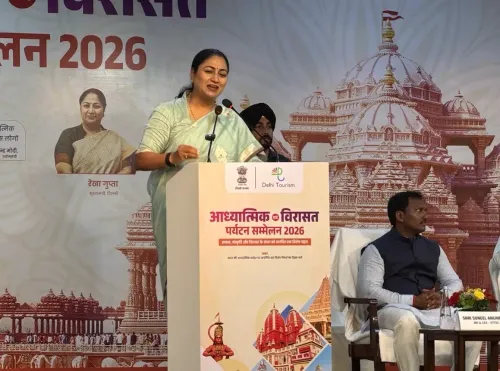
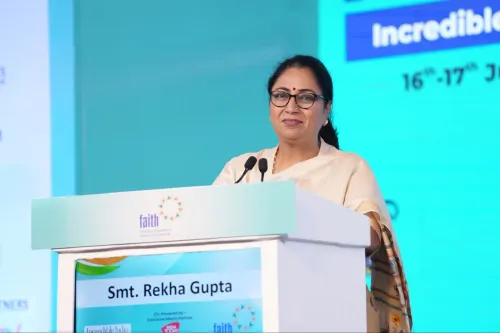
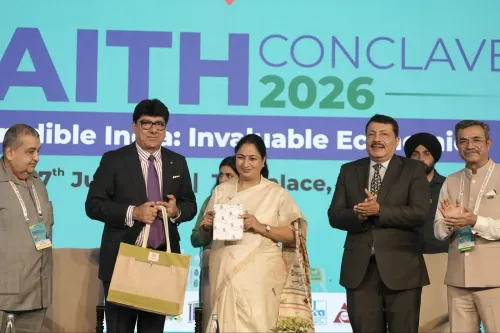
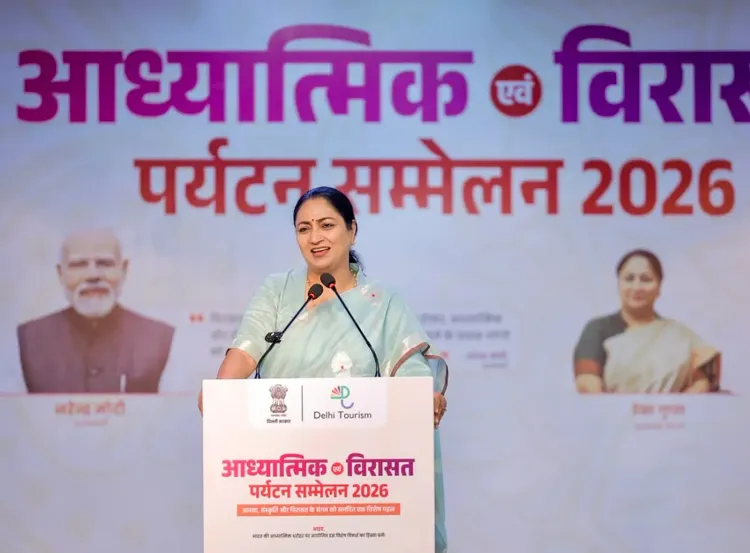
Delhi Chief Minister Rekha Gupta on Tuesday, 11 August 2026 declared that the capital's tourism identity extends well beyond its iconic monuments, and unveiled four integrated spiritual and heritage tourism circuits designed to position Delhi as a full-scale destination city. The announcement came at the Spiritual and Heritage Tourism Conclave-2026, held at Akshardham Temple on the theme 'Delhi: The Capital of Spirituality, Heritage and Experiences'.
What the Four Circuits Cover
The newly launched circuits bring together religious, spiritual, cultural, and historical sites spread across different parts of Delhi into single, cohesive travel experiences. Rather than steering visitors toward a handful of well-known landmarks, the circuits are designed to encourage deeper exploration of the capital's diverse heritage — spanning temples, gurdwaras, churches, mosques, Buddhist sites, and Jain religious centres, alongside architectural landmarks such as Akshardham.
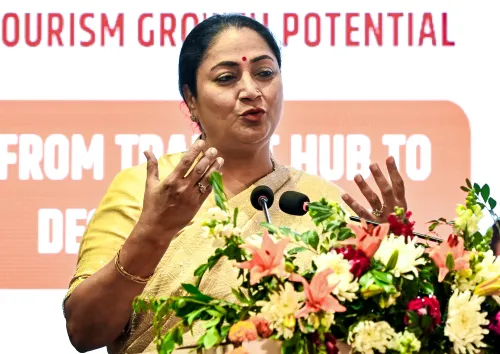
Chief Minister Gupta said the circuits are not merely a connectivity exercise. 'The purpose of these circuits is not merely to connect different tourist spots, but to develop Delhi as a complete tourism experience,' she said, adding that tourists should be able to engage with the city's spirituality, history, architecture, culture, cuisine, folk traditions, and diverse faiths in a single visit.
From Transit City to Destination City
A central ambition of the initiative is to transform Delhi from a 'Transit City' — a stopover for tourists headed elsewhere — into a 'Destination City' that merits extended stays. Gupta said the government wants visitors to remain in the capital not just for a few hours or a day, but for significantly longer, exploring its many neighbourhoods and traditions.
This shift, she argued, would generate new economic activity across hotels, restaurants, tour operators, local guides, artists, artisans, and small entrepreneurs — broadening the direct employment and revenue benefits of tourism beyond the established monument corridors.
Unity in Diversity as Delhi's Competitive Edge
Gupta framed Delhi's multicultural character as its sharpest tourism differentiator. The capital hosts communities from virtually every Indian state, she noted, keeping alive traditions ranging from Gujarat's Garba and Maharashtra's Ganesh Chaturthi to Assam's Bihu and the classical festivals of South and North India. 'Delhi brings the culture of the entire country together. This is why Delhi is a living reflection of India's cultural and spiritual ethos,' she said.
Sadhguru's Presence and Broader Outreach
Spiritual leader Sadhguru Jaggi Vasudev was also present at the conclave. The event was framed as an effort to present Delhi's spiritual, cultural, and historical heritage to audiences both within India and internationally, signalling that the outreach is aimed at the global tourism market, not just domestic travellers.
What Comes Next
The Delhi government has indicated that the four circuits will serve as the foundation for a broader repositioning of the capital's tourism brand. Whether the initiative translates into measurable increases in tourist dwell-time and per-capita spending will depend on infrastructure upgrades, promotional campaigns, and coordination with private hospitality players — details that are yet to be publicly outlined.
Point of View
Qutub Minar, Humayun's Tomb — leaving an enormous slice of the city's spiritual and cultural fabric invisible to the average visitor. The four-circuit framework is a structurally sound idea, but its success hinges on execution details that the government has not yet made public: signage, last-mile connectivity, multilingual guides, and digital discovery. The 'Transit City to Destination City' framing is also not new — successive Delhi administrations have floated versions of it. What is different this time, if anything, is the explicit inclusion of minority religious sites alongside Hindu landmarks, which broadens the circuit's appeal across faith communities and international markets. The real test will be whether dwell-time and per-capita tourist spending data move within the next two years.
NationPress
26 Sept 2026
Frequently Asked Questions
What are the four spiritual and heritage tourism circuits launched in Delhi?
The four circuits, launched by Chief Minister Rekha Gupta on 11 August 2026, connect religious, spiritual, cultural, and historical sites across Delhi into integrated travel experiences. They cover temples, gurdwaras, churches, mosques, Buddhist sites, Jain centres, and architectural landmarks such as Akshardham.
What is the Spiritual and Heritage Tourism Conclave-2026?
It is an event organised at Akshardham Temple in Delhi on 11 August 2026, themed 'Delhi: The Capital of Spirituality, Heritage and Experiences'. The conclave aimed to present Delhi's spiritual and cultural heritage to Indian and international audiences, and served as the platform for launching the four tourism circuits.
Why does Delhi want to shift from a transit city to a destination city?
Delhi currently functions largely as a stopover for tourists travelling to other parts of India. The government wants visitors to stay longer and explore the capital's diverse heritage, which would generate greater economic activity for local hotels, restaurants, guides, artisans, and small businesses.
Who was present at the Delhi tourism conclave?
Chief Minister Rekha Gupta addressed the conclave, and spiritual leader Sadhguru Jaggi Vasudev was also present at the event held at Akshardham Temple on 11 August 2026.
Which sites are included in Delhi's new heritage tourism circuits?
The circuits cover a wide range of sites including temples, gurdwaras, churches, mosques, Buddhist and Jain religious centres, and architectural landmarks such as Akshardham — going beyond the traditionally promoted monuments like the Red Fort and Humayun's Tomb.