Delhi Government Launches Comprehensive Summer Action Plan for Water and Yamuna
Synopsis
On March 30, Water Minister Parvesh Verma introduced an innovative Summer Action Plan aimed at improving water supply and sewer management in Delhi, alongside efforts for Yamuna rejuvenation. The plan includes digital initiatives for enhanced transparency and accountability.
Key Takeaways
Introduction of Summer Action Plan 2026–27 for water supply and sewer management.
Launch of digital initiatives for transparency and citizen engagement.
Peak water production target of around 1,002 MGD for summer 2026.
Deployment of 1,221 water tankers each month during peak summer.
Infrastructure upgrades for old water and sewer pipelines.
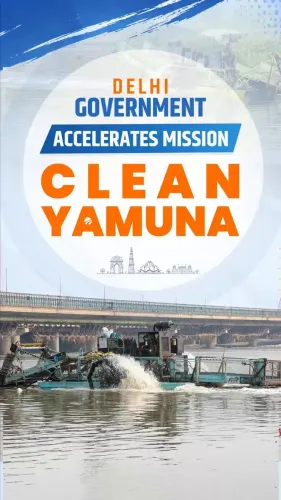
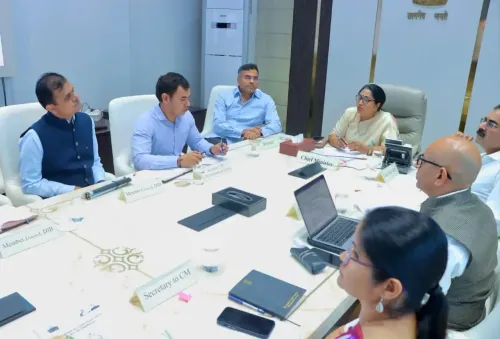
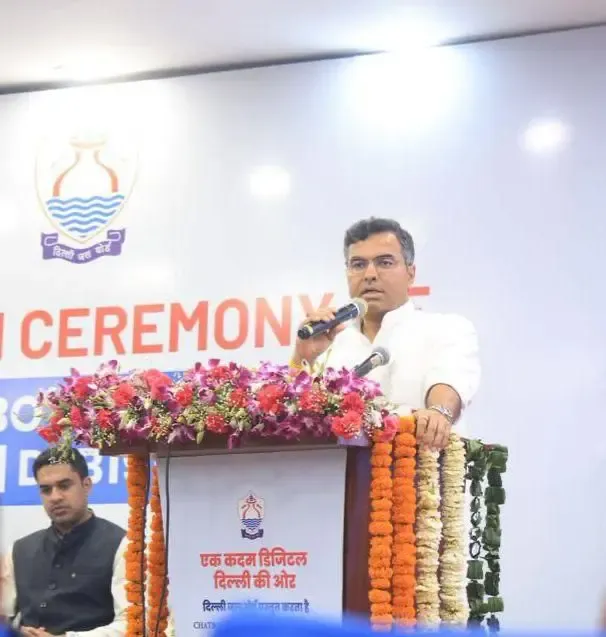
New Delhi, March 30 (NationPress) In a significant initiative to enhance Delhi's water supply, sewer management, and efforts for the rejuvenation of the Yamuna River, Water Minister Parvesh Verma introduced the Summer Action Plan 2026–27 at the Delhi Jal Board headquarters on Monday.
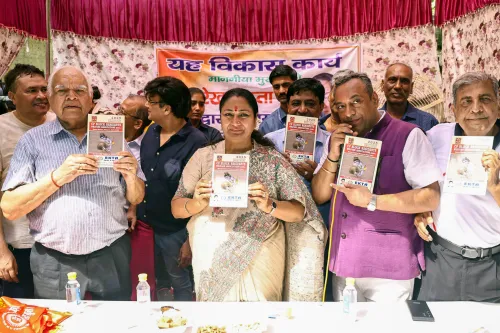
During the event, several digital initiatives were launched, including a Chatbot, an Advanced CRM System, and the DJB 1916 Mobile App, all designed to promote transparency, accountability, and active participation from citizens in water governance.
While addressing officials and stakeholders, the Minister emphasized the need for urgency and responsibility in tackling Delhi’s water issues. “It is a privilege to serve Maa Yamuna, and I view it as a duty and an honor. Every official must regard this as a commitment to provide clean water and safeguard our river,” he remarked.
“Delivering clean water is not merely a service; it is a direct reflection of our dedication to the people of Delhi,” he stated.
The Summer Action Plan features key elements such as enhancing water production and supply, with a target of achieving a peak production of approximately 1,002 MGD during the summer of 2026.
Parvesh Verma noted that all major Water Treatment Plants (WTPs), including Chandrawal, Wazirabad, Haiderpur, Nangloi, Okhla, Dwarka, Bawana, and Sonia Vihar, are fully operational.
“Although Delhi has limited water resources, it is our duty to ensure every citizen has access to sufficient supply,” he added.
The Minister also mentioned plans to expand the city’s tube-well network. Besides the existing 5,854 tube-wells, an additional 436 will be operational before summer.
Focusing on areas facing water scarcity, the Summer Plan is set to improve distribution and manage leaks effectively.
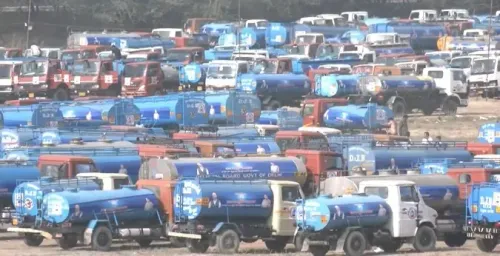
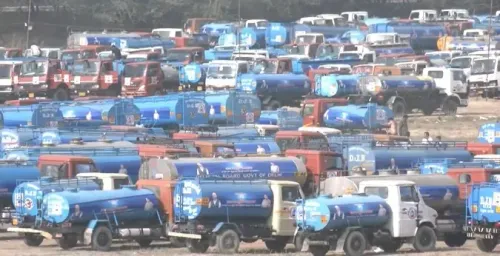
An outlined schedule for water tanker deployment includes approximately 1,221 tankers each month during peak summer, comprising 1,030 hired and 191 departmental tankers. The plan has identified 13,000 fixed supply points.
The GPS-based tracking and geo-tagging of tankers will allow for real-time oversight via dashboards, and digitized route tracking will curb misuse.
“The tanker system is not a long-term solution. Our aim is to ensure transparency and accountability while bolstering pipeline infrastructure,” stated the Minister.
Additionally, the Minister launched a new digital ecosystem designed to enhance service delivery and citizen involvement, featuring an Advanced CRM System for complaint tracking, the DJB 1916 Mobile App for real-time complaint registration, an AI-powered Chatbot for instant grievance support, and a WhatsApp-based complaint interface.
“Previously, outdated systems hampered our progress. Today, we are implementing modern, transparent systems that allow citizens to oversee services,” he remarked.
The complaint redressal system has been fortified with enhancements such as a 24x7 call centre (1916/1800117118), automatic escalation from Junior Engineer to senior levels if unresolved, and real-time updates for citizens with time-bound resolutions under strict monitoring.
Promising structural reforms, the Minister outlined plans for the replacement and upgrading of 80-year-old water and sewer pipelines, enhancements in Wazirabad and other command areas, and infrastructure improvements across 10 Assembly constituencies.
He mentioned that the modernisation of the Chandrawal WTP has commenced and its performance is stabilizing.
Point of View
It's clear that the newly launched Summer Action Plan represents a pivotal moment for Delhi's water governance. The focus on digital transparency and infrastructure development reflects a commitment to address critical water challenges, ensuring that all citizens have access to clean water and a rejuvenated Yamuna.
NationPress
28 Sept 2026
Frequently Asked Questions
What is the Summer Action Plan 2026–27?
The Summer Action Plan 2026–27 is a comprehensive initiative launched by Delhi's Water Minister, aimed at improving water supply, sewer management, and the rejuvenation of the Yamuna River.
What digital initiatives were introduced with the plan?
Key digital initiatives include the DJB 1916 Mobile App, an AI-powered Chatbot, and an Advanced CRM system for enhanced citizen engagement and service delivery.
How many water tankers will be deployed during peak summer?
Approximately 1,221 water tankers will be deployed monthly during peak summer, including hired and departmental tankers.
What measures are being taken for real-time monitoring?
The plan includes GPS-based tracking and geo-tagging of tankers for real-time monitoring and digitized route tracking to prevent misuse.
What improvements are planned for the water supply infrastructure?
The plan includes the upgrading of 80-year-old water and sewer pipelines, expansion of tube-well infrastructure, and structural reforms across 10 Assembly constituencies.