Uttarakhand Cabinet approves Ganga Expressway extension, HC land in Haldwani
Synopsis
The Dhami cabinet's Friday session was unusually wide in scope — from a cross-state MoU to push the Ganga Expressway into Uttarakhand, to a livestock subsidy hike that now covers the general category for the first time. The breadth of decisions, touching judicial infrastructure, labour law, rural welfare, and sports, suggests a deliberate pre-session signal of governance momentum.
Key Takeaways
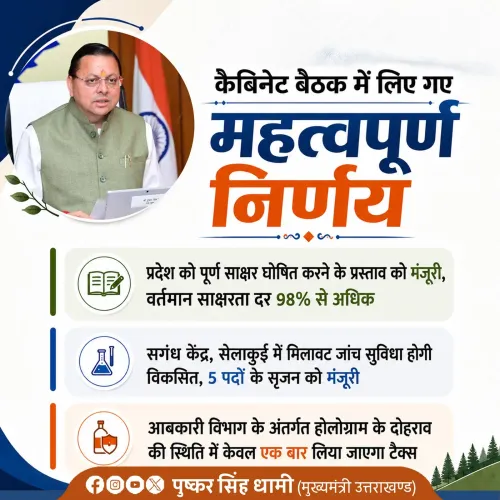
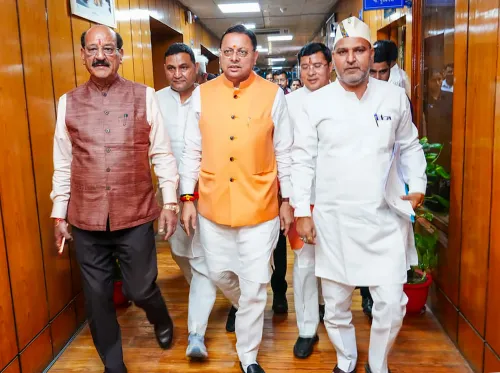
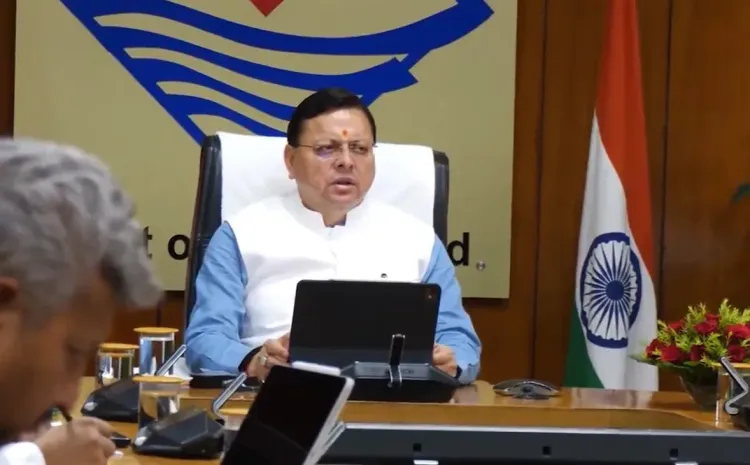
Uttarakhand Cabinet chaired by CM Pushkar Singh Dhami approved multiple decisions on 7 August .
30 hectares of forest land in Lamachaur, Haldwani allotted for a new High Court complex .
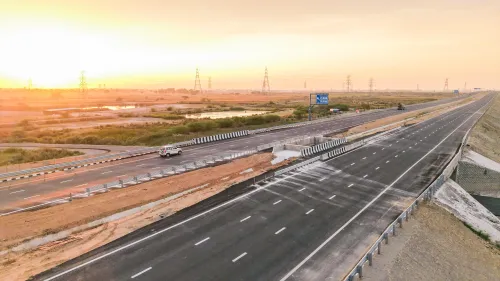
Inter-state MoU approved to extend the Ganga Expressway from Meerut to Haridwar .
Livestock subsidy unit cost raised from ₹40,000 to ₹60,000 ; general category now eligible with up to 60% subsidy.
Uttarakhand Code on Wages Rules, 2026 cleared, mandating equal pay, overtime double pay, and salary by the 7th of each month .
122 posts sanctioned for Uttarakhand State Sports University at Gaulapar, Haldwani.
The Uttarakhand Cabinet, chaired by Chief Minister Pushkar Singh Dhami, on Friday, 7 August approved a wide-ranging set of decisions covering infrastructure, labour rights, rural welfare, sports, and industrial development. Among the most consequential: allotment of 30 hectares of land in Haldwani for a new High Court complex and an inter-state MoU to extend the Ganga Expressway from Meerut to Haridwar.
High Court Complex and Ganga Expressway
Officials confirmed after the cabinet meeting that approximately 30 hectares — drawn from 73 hectares of forest land available in the Lamachaur area of Haldwani — will be transferred for construction of the new High Court complex. Separately, a Memorandum of Understanding (MoU) between the governments of Uttar Pradesh and Uttarakhand was approved to extend the Ganga Expressway to Haridwar, a move expected to accelerate religious tourism, industrial investment, trade, and employment along the corridor.
Labour and Wage Reforms
The cabinet cleared the Uttarakhand Code on Wages Rules, 2026, framed under the central Code on Wages, 2019. Key provisions include minimum wage standards, double pay for overtime, mandatory salary disbursement by the 7th of every month, digital payment modes, and equal pay for men and women performing equal work. The cabinet also approved the Uttarakhand Industrial Relations Rules, 2026, under the Industrial Relations Code, 2020, introducing time-bound resolution of industrial disputes, trade union recognition, grievance redressal committees, and a worker re-skilling fund.
Livestock, Rural Economy, and Water Supply
To widen the cattle rearing scheme, the cabinet extended eligibility to livestock owners from the general category. The unit cost per animal has been raised from ₹40,000 to ₹60,000, with beneficiaries from Scheduled Castes and Scheduled Tribes receiving up to 90% subsidy and those from the general category up to 60%. Beneficiaries may now purchase buffaloes in addition to cows. The government estimates the scheme will benefit over 2,000 livestock owners in its first year. On drinking water, the cabinet adopted the Centre's prescribed protocol for commissioning rural water schemes and transferring them to Gram Panchayats and Village Water and Sanitation Committees under the Jal Jeevan Mission.
Sports, Education, and Eco-Tourism
The cabinet sanctioned 122 regular posts — along with outsourced technical and support staff — for the Uttarakhand State Sports University at Gaulapar, Haldwani. New operational guidelines for SC and ST hostels managed by the Social Welfare Department were also approved. On eco-tourism, the composition of the High-Powered Committee (HPC) was amended to include senior Forest Department officials, strengthening environmental oversight and community coordination.
GST Amendment and Outlook
The cabinet approved an ordinance to amend the Uttarakhand Goods and Services Tax Act, 2017, aligning it with recent central amendments. Taken together, Friday's decisions span judicial infrastructure, connectivity, rural livelihoods, worker protections, sports capacity, and tourism — signalling a broad pre-budget push by the Dhami government ahead of the next legislative session.
Point of View
But the more consequential shift may be the livestock subsidy's expansion to the general category — a politically significant move that broadens the welfare base ahead of local elections. The wage code rules, meanwhile, look progressive on paper, but their enforceability in Uttarakhand's large informal and seasonal labour market remains an open question. Bundling judicial infrastructure, inter-state connectivity, and rural welfare into a single cabinet session is a familiar optics strategy; the test, as always, will be implementation timelines and fund release.
NationPress
22 Sept 2026
Frequently Asked Questions
What did the Uttarakhand Cabinet approve on 7 August?
The Uttarakhand Cabinet, chaired by CM Pushkar Singh Dhami, approved a broad set of decisions on 7 August including an MoU to extend the Ganga Expressway to Haridwar, allotment of 30 hectares in Haldwani for a High Court complex, wage code rules, livestock subsidy expansion, and 122 posts for the State Sports University.
What is the Ganga Expressway extension approved by Uttarakhand?
An MoU between the governments of Uttar Pradesh and Uttarakhand was approved to extend the Ganga Expressway from Meerut to Haridwar. The extension is expected to boost religious tourism, industrial investment, trade, and employment in the region.
How has the livestock subsidy scheme changed for Uttarakhand residents?
The unit cost per animal has been raised from ₹40,000 to ₹60,000, and general category livestock owners are now eligible — a new inclusion. SC/ST beneficiaries receive up to 90% subsidy; general category beneficiaries receive up to 60%. Buffaloes are now covered alongside cows, and the scheme is estimated to reach over 2,000 owners in its first year.
What does the Uttarakhand Code on Wages Rules, 2026 provide?
The rules, framed under the central Code on Wages, 2019, mandate minimum wage standards, double pay for overtime, salary disbursement by the 7th of every month, digital payment modes, and equal pay for equal work regardless of gender.
What is the significance of the High Court land allotment in Haldwani?
Approximately 30 hectares from 73 hectares of forest land in the Lamachaur area of Haldwani will be transferred for construction of a new High Court complex. The decision addresses long-standing demand for dedicated judicial infrastructure in the Kumaon region of Uttarakhand.