How is ECI Shielding Officials from Unjust Transfers in Poll-Bound States?
Synopsis
In a significant move, the Election Commission of India is protecting officials involved in the electoral roll revision process from politically motivated transfers. This directive ensures that any necessary changes are approved to maintain election integrity across five key states.
Key Takeaways
The ECI aims to prevent politically motivated transfers during election preparations.
Consultation with Chief Electoral Officers is mandatory for transfer orders.
Compliance reports are required by February 28 from state officials.
The directive extends to officers in the Prohibition and Excise Department.
Officers involved in elections cannot be posted in their home districts.
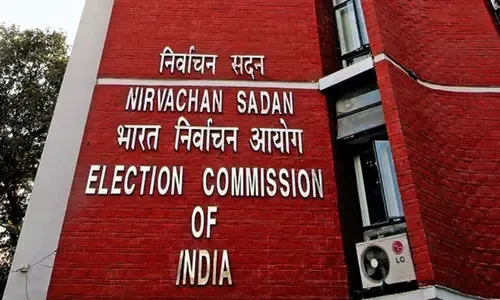
New Delhi, Feb 10 (NationPress) The Election Commission of India (ECI) has provided a protective measure against politically motivated transfers or postings for officials involved in the Special Intensive Revision (SIR) of the electoral roll across five states and union territories preparing for elections. This directive mandates that Chief Secretaries and police chiefs must obtain approval from the ECI for any unavoidable reshuffles.
“Transfer orders concerning officers who are currently engaged in the Special Intensive Revision (SIR) of electoral rolls in various states or the Summary Revision in Assam should be implemented only after the electoral rolls are finalized, in consultation with the Chief Electoral Officer,” stated the ECI in a recent circular.
Should there be a necessity for transfers due to exceptional circumstances, the Commission's approval must be sought, as outlined in the ECI's circular.
These instructions were disseminated by ECI Under Secretary Prafull Awasthi to Chief Electoral Officers and state officials in Assam, Kerala, Puducherry, Tamil Nadu, and West Bengal.
The ECI emphasized that the Chief Electoral Officer of the respective State/UT must always be consulted when appointing new personnel to replace those who have been transferred as per the Commission's policy.
A copy of each transfer order issued under these guidelines is to be submitted to the CEO, as per the ECI's mandate.
Furthermore, the ECI has mandated that all transfers and postings covered by these guidelines must be executed, with compliance reports from the Chief Secretary and DGP detailing actions taken by the relevant State Government departments to be submitted to the Commission by February 28, as stated in the circular.
These directives also extend to officers of the Prohibition and Excise Department at the sub-inspector rank and above.
The ECI's circular reiterated the Commission's longstanding policy to avoid posting officers involved in election oversight to their home districts or areas where they have served for extended periods.
Point of View
It is imperative to recognize the ECI's proactive stance in safeguarding electoral integrity. This initiative is a significant step towards ensuring that political influences do not compromise the democratic process in these critical states. Upholding the principles of fair elections remains paramount for the nation.
NationPress
29 Sept 2026
Frequently Asked Questions
What is the purpose of the ECI's directive?
The ECI's directive aims to protect officials engaged in the Special Intensive Revision of electoral rolls from politically motivated transfers.
Which states are affected by this directive?
The directive affects officials in Assam, Kerala, Puducherry, Tamil Nadu, and West Bengal.
What must be done for unavoidable transfers?
For unavoidable transfers, approval must be sought from the Election Commission.
When should compliance reports be submitted?
Compliance reports detailing actions taken must be submitted to the Commission by February 28.
Does this directive apply to officers in other departments?
Yes, it applies to officers of the Prohibition and Excise Department ranked sub-inspector and above.