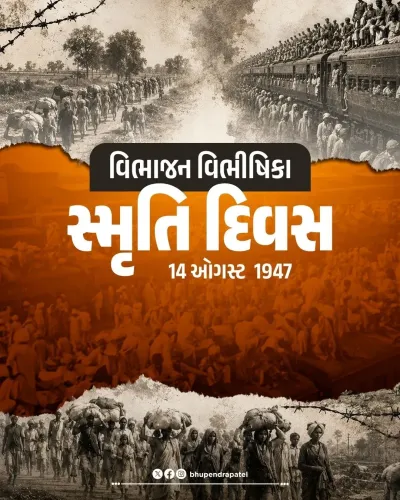
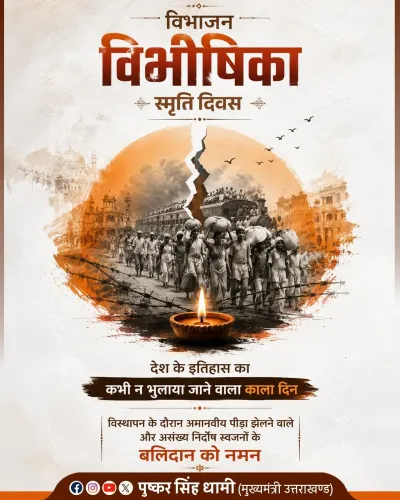
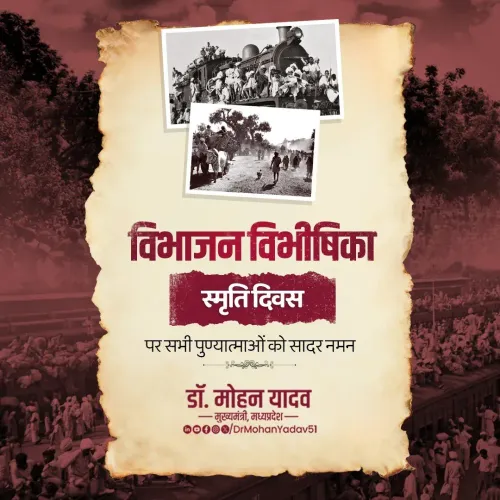
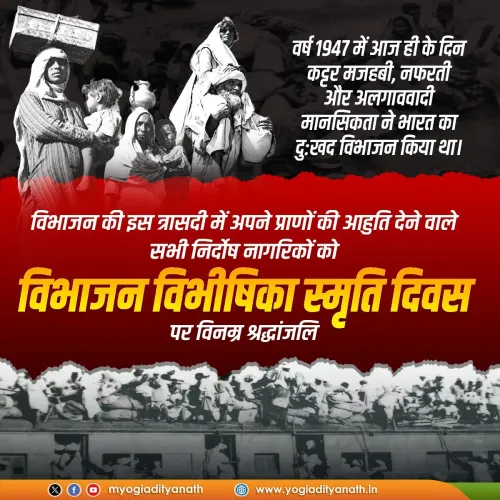
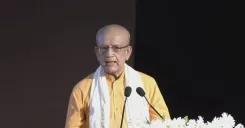
Bhupender Yadav pays tribute on Partition Horrors Remembrance Day
Synopsis
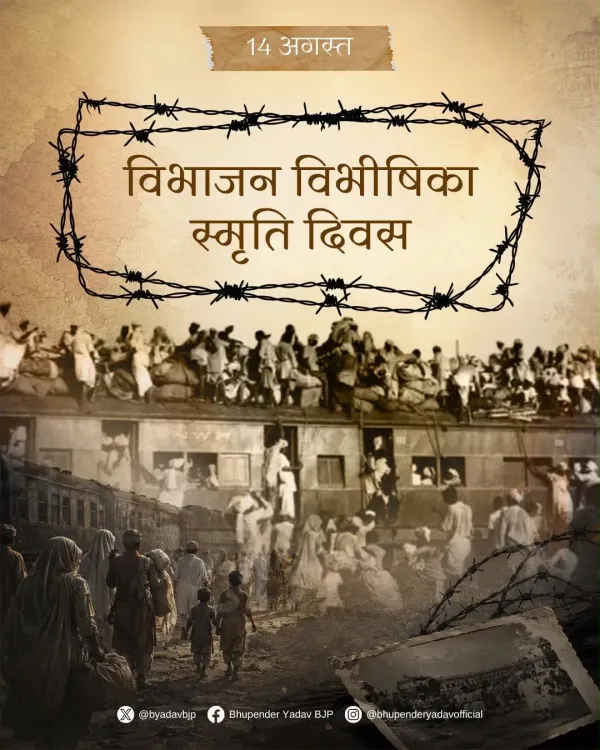
Union Environment Minister Bhupender Yadav marked Partition Horrors Remembrance Day on 14 August 2026 with a Hindi tribute honouring the millions who suffered displacement and loss in the 1947 Partition of British India, a day formally instituted by the Government of India in 2021.
Key Takeaways
Bhupender Yadav , Union Environment Minister and senior BJP leader, posted a solemn tribute on 14 August 2026 for Partition Horrors Remembrance Day.
He paid homage to 'countless innocent citizens' martyred in the 1947 Partition and saluted every family that endured displacement.
Partition Horrors Remembrance Day was formally designated on 14 August by the Government of India in 2021 .
The 1947 Partition of British India into India and Pakistan triggered one of history's largest forced migrations, with immense loss of life and home.
The BJP-led central government has made annual remembrance on 14 August a recurring feature of the independence-week calendar since 2021.
On the eve of India's Independence Day, Union Environment Minister Bhupender Yadav paused to remember those for whom 14 August 1947 was not liberation but loss — the millions uprooted, bereaved, and broken by the Partition of British India. His tribute, posted on 14 August 2026, honours the courage of families who rebuilt lives from nothing.
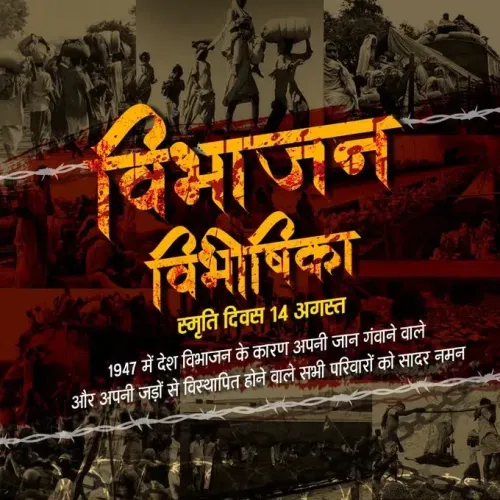
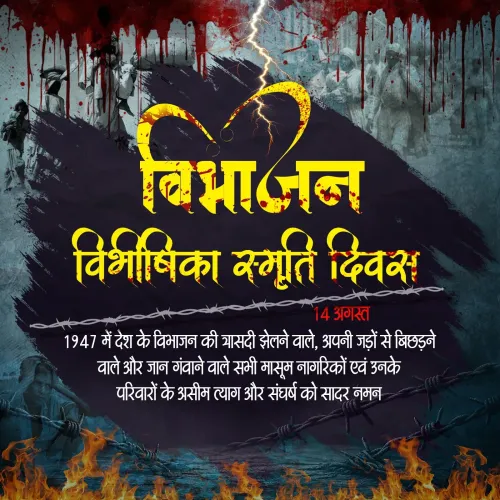
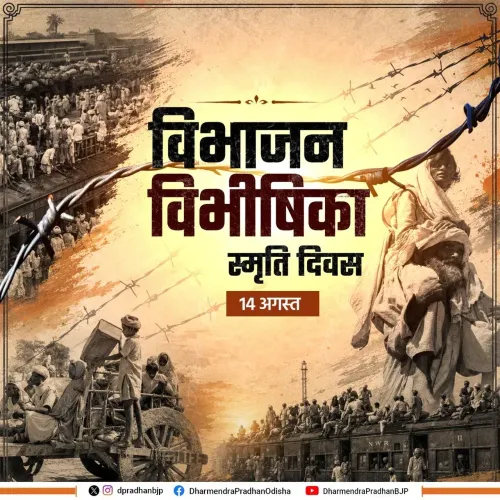
Writing in Hindi, Yadav described Vibhajan Vibhishika Smriti Divas — Partition Horrors Remembrance Day — as 'a day to recall the sacrifice, suffering, and struggle of countless innocent citizens who endured the tragedy of the country's division and displacement.' He offered his 'humble tribute to all citizens who were martyred in the horrors of Partition' and saluted 'each and every family that bore the anguish of displacement.'
A government-instituted day of national memory
The observance is not spontaneous sentiment — it is policy. In 2021, the Government of India formally designated 14 August as Partition Horrors Remembrance Day, institutionalising public remembrance of the 1947 catastrophe. The date was chosen deliberately: the day before Independence Day, so that the grief of Partition and the joy of freedom are held together in national consciousness.
The 1947 Partition of British India into India and Pakistan triggered one of the largest forced migrations in human history. Families were cleaved across new borders; homes, fields, and ancestral roots were abandoned overnight. The violence that accompanied the displacement claimed hundreds of thousands of lives, a toll that official records never fully captured.
Remembrance as a living commitment
Since 2021, senior ministers and the central government have marked 14 August with statements, events, and calls to preserve partition memory in national discourse. The BJP-led administration has made the commemoration a recurring feature of the independence-week calendar, framing it as an act of historical justice for survivors and their descendants whose suffering long went unacknowledged in public life.
Yadav closed his message with a line that carries the weight of the day: 'Unka sangharsh aur unka sankalp sadaiv smaraniya rahega' — 'Their struggle and their resolve shall always be remembered.'
Seventy-nine years on, the wounds of Partition still run through living memory. The day exists so they are not forgotten when that memory is gone.
Point of View
Cultural, and political. By institutionalising grief on the eve of Independence Day, the administration frames the two events as inseparable: freedom cannot be fully understood without reckoning with the cost at which it came. Yadav's tribute, one of many from senior ministers each year, reinforces the signal that this commemoration is governmental policy, not personal sentiment. The longer arc points toward potential expansion into school curricula and memorial infrastructure — a watch-point for how partition history is shaped for future generations.
NationPress
14 Aug 2026
Frequently Asked Questions
What is Partition Horrors Remembrance Day?
Partition Horrors Remembrance Day is observed every year on 14 August to commemorate the millions of people who were displaced, killed, or uprooted during the 1947 Partition of British India into India and Pakistan. The Government of India formally designated the day in 2021 .
Why is Partition Horrors Remembrance Day on 14 August?
14 August was chosen because it falls the day before India's Independence Day on 15 August , placing the grief of Partition alongside the celebration of freedom so that both are held together in national memory.
What did Bhupender Yadav say on Partition Remembrance Day 2026?
Bhupender Yadav posted a Hindi tribute describing the day as one to recall the 'sacrifice, suffering, and struggle of countless innocent citizens.' He offered a humble tribute to those martyred in the Partition and saluted every family that bore the anguish of displacement.
When did the Government of India start Partition Horrors Remembrance Day?
The Government of India formally announced Partition Horrors Remembrance Day in 2021 , making 14 August an annual official observance to honour victims of the 1947 Partition.
How many people were displaced in the 1947 Partition of India?
The 1947 Partition of British India triggered one of the largest forced migrations in recorded history, displacing millions of families across the new India-Pakistan border, with hundreds of thousands of lives lost to the accompanying violence.